Begin with the source
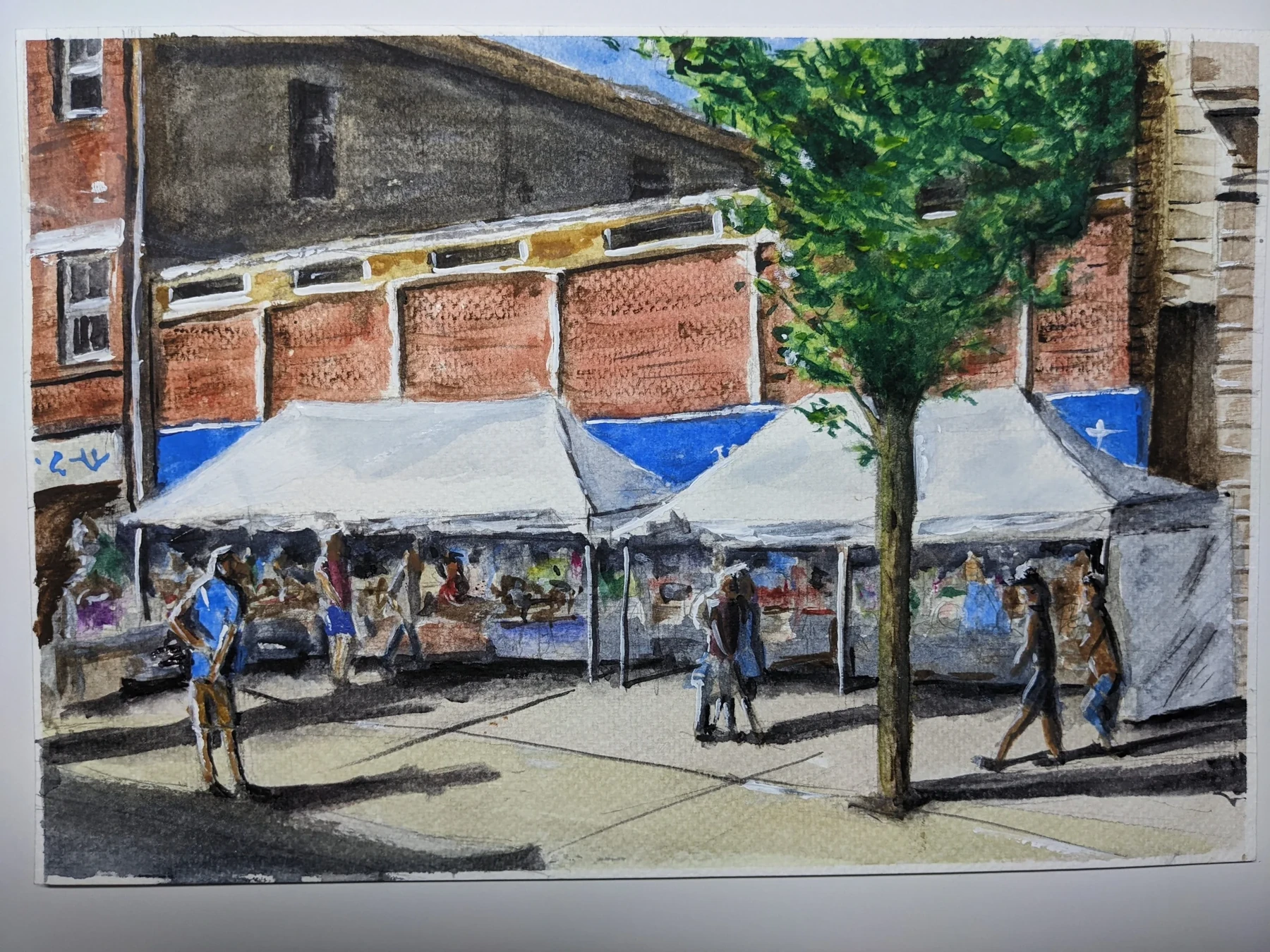
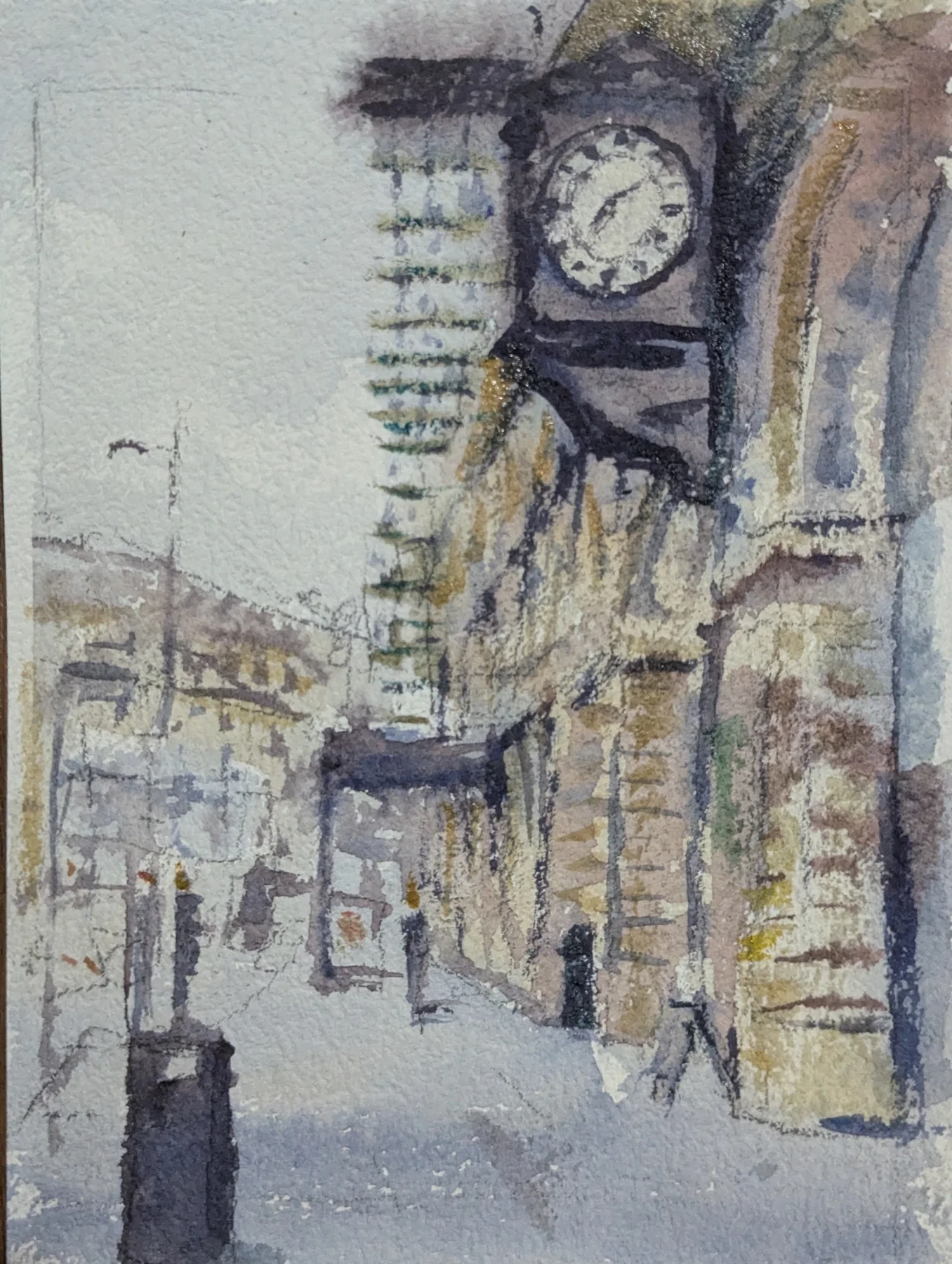
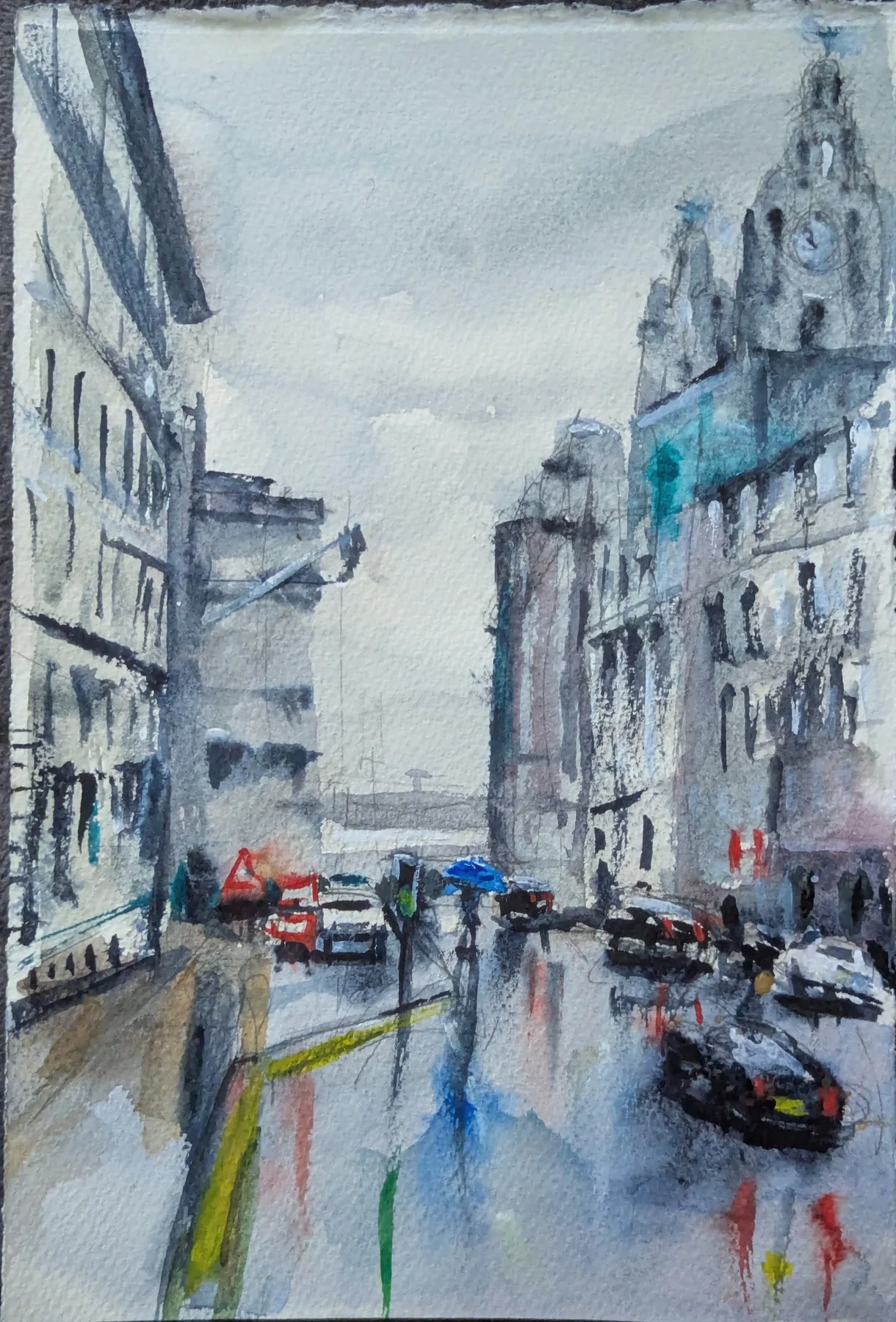
Sydney-based sketcher Liz Steel writes about drawing on location, architecture and the mental habits that help a page get started. Her introductory guide encourages beginners to get outside and to pay attention to the experience rather than wait for perfect equipment. Read her own illustrated guide through the source link below; the painting on this page is Mark C Grant’s, not Steel’s.
Give the inner commentary a useful task
Instead of judging whether a line looks talented, ask an observable question. Is that edge longer than the gap beside it? Does the top slope more or less than you first thought? This editorial exercise turns vague self-criticism into a sequence of comparisons. A comparison can be checked. A verdict about your worth as a sketcher cannot.
Architecture without a complete survey
Choose a small part of a building and describe how its planes meet. A window recess, porch or shelf can give enough complexity for a useful session. Keep the drawing small enough to finish while you can still remember why you began. A notebook is allowed to contain a study rather than a fully resolved portrait of the premises.
Your turn · 20 minutes
Take it to the page.
- Before drawing, write three questions about the shapes you see.
- Spend fifteen minutes making a page that answers those questions.
- Finish with one observation you did not know at the start.
Look back: Did a specific question help more than a general demand to draw well?
Sources & further looking
Close-looking observations and practical exercises are this publication’s interpretation. Illustration credits are shown beside each work.