A modest subject, firmly organised
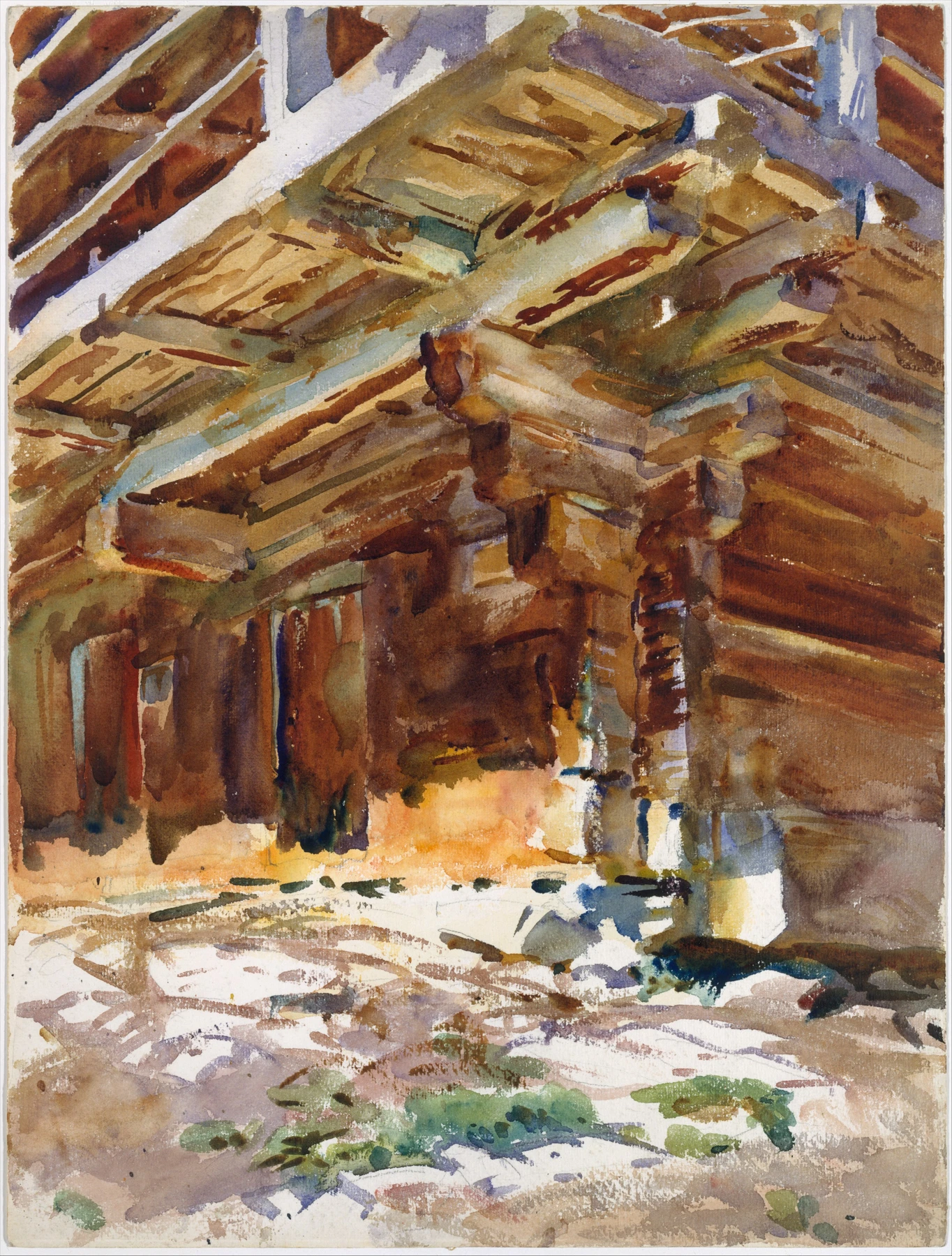
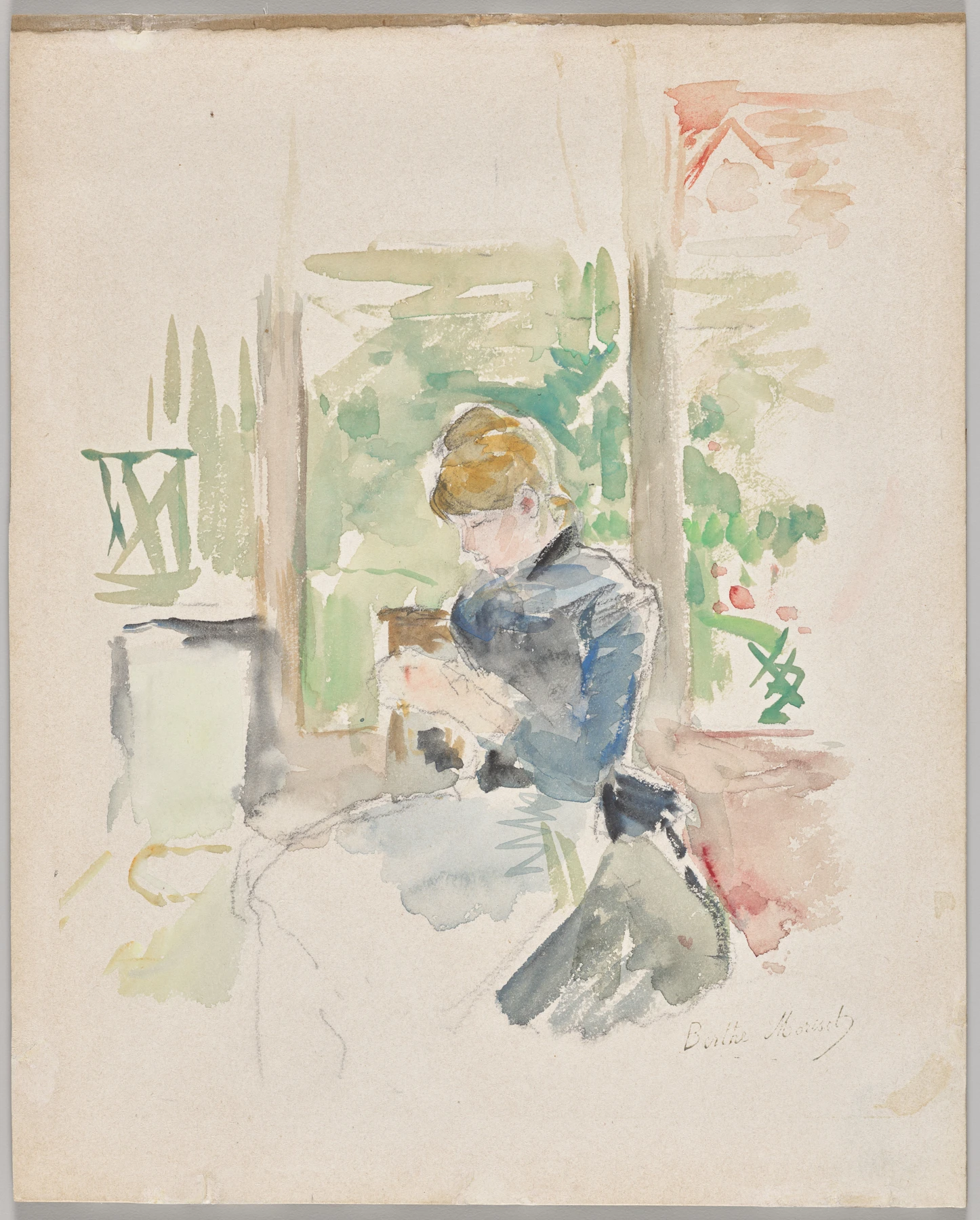
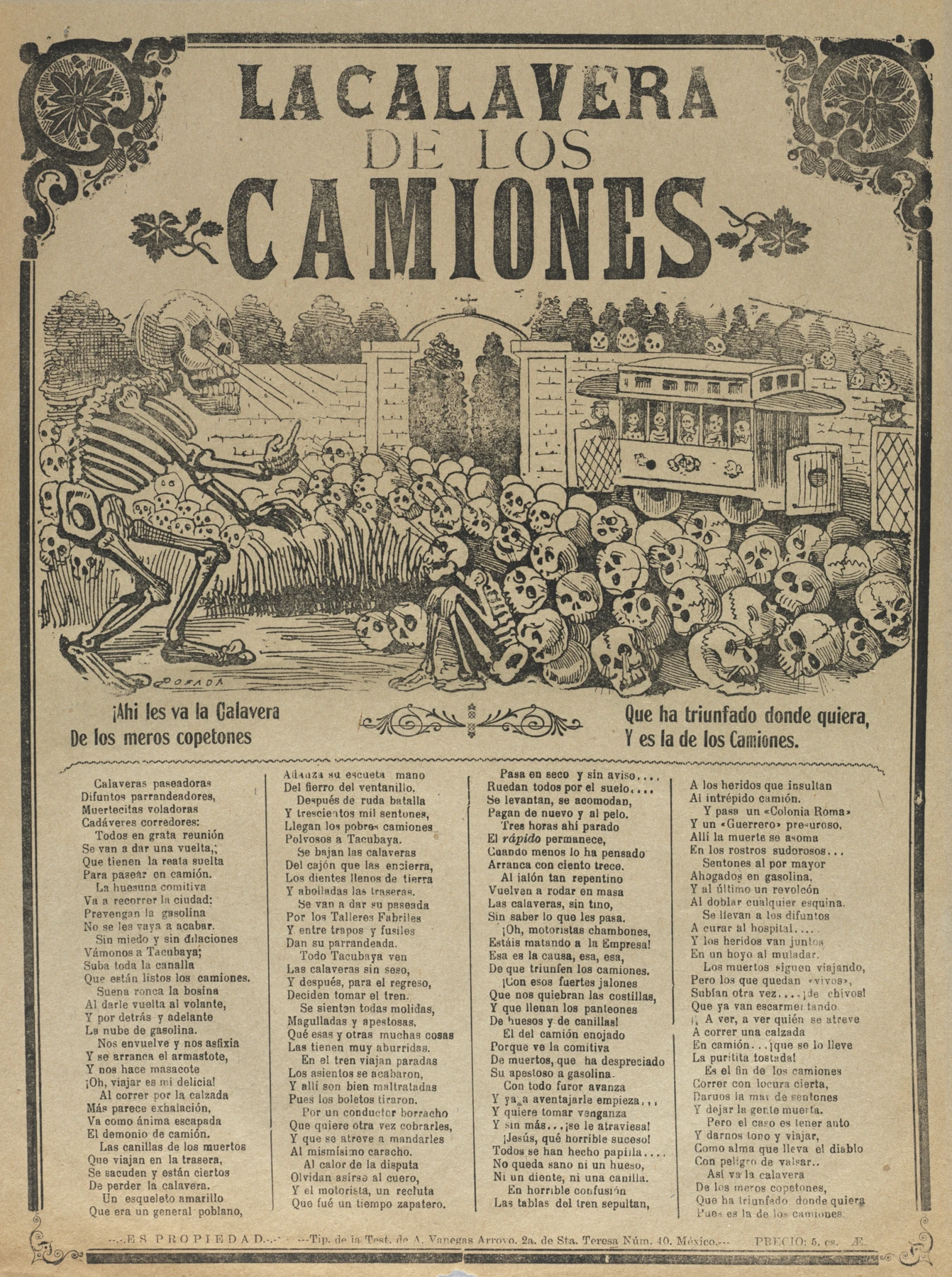
John Sell Cotman’s Farm Building by a Pond is dated 1808–11, with uncertainty, in the Met’s record. The watercolour presents a timber-and-plaster building beside water. Its rural setting makes it a companion study in architectural looking, rather than an urban scene. The question it offers a street sketcher is direct: what holds a building together before the surface detail arrives?
Read the roof as one shape
The large sloping roof establishes a clear mass. Pale wall areas sit beneath it, interrupted by darker timber. The structure reads because those relationships are organised. Look at the meeting of roof and wall, then the relation of the building to the ground and pond. Small marks contribute texture without taking responsibility for the whole picture.
Leave a surface mostly alone
On your next street study, find the broad face of a wall. Draw its boundary and one important interruption. Add just enough texture to identify the surface, then stop. The viewer can often extend a small passage of brickwork across a wall. Repeating it everywhere can flatten the picture and remove the hierarchy you had already built.
Test the drawing at a small size
Stand back or look at a thumbnail. If the building disappears when details become too small to see, strengthen the large value groups before adding more. A strong small drawing can carry a little awkwardness in the windows. A weak arrangement cannot be negotiated into shape by a hundred tiny bricks.
Your turn · 20 minutes
Take it to the page.
- Make a five-shape drawing of a modest building.
- Assign each shape white, middle or dark; keep the number of groups small.
- Add one patch of surface texture and compare the drawing before and after.
Look back: Can the building be read as five shapes? Which detail can you remove without losing it?
Sources & further looking
Close-looking observations and practical exercises are this publication’s interpretation. Illustration credits are shown beside each work.