Find a workable position
Choose shelter before unpacking: a covered public place where you are welcome, a café with permission, or a window at home. Keep exits clear. A dry page and a comfortable hand matter more than proving that a sketcher can withstand a horizontal forecast. If the weather makes the location impractical, change the exercise.
Look for the large weather shapes
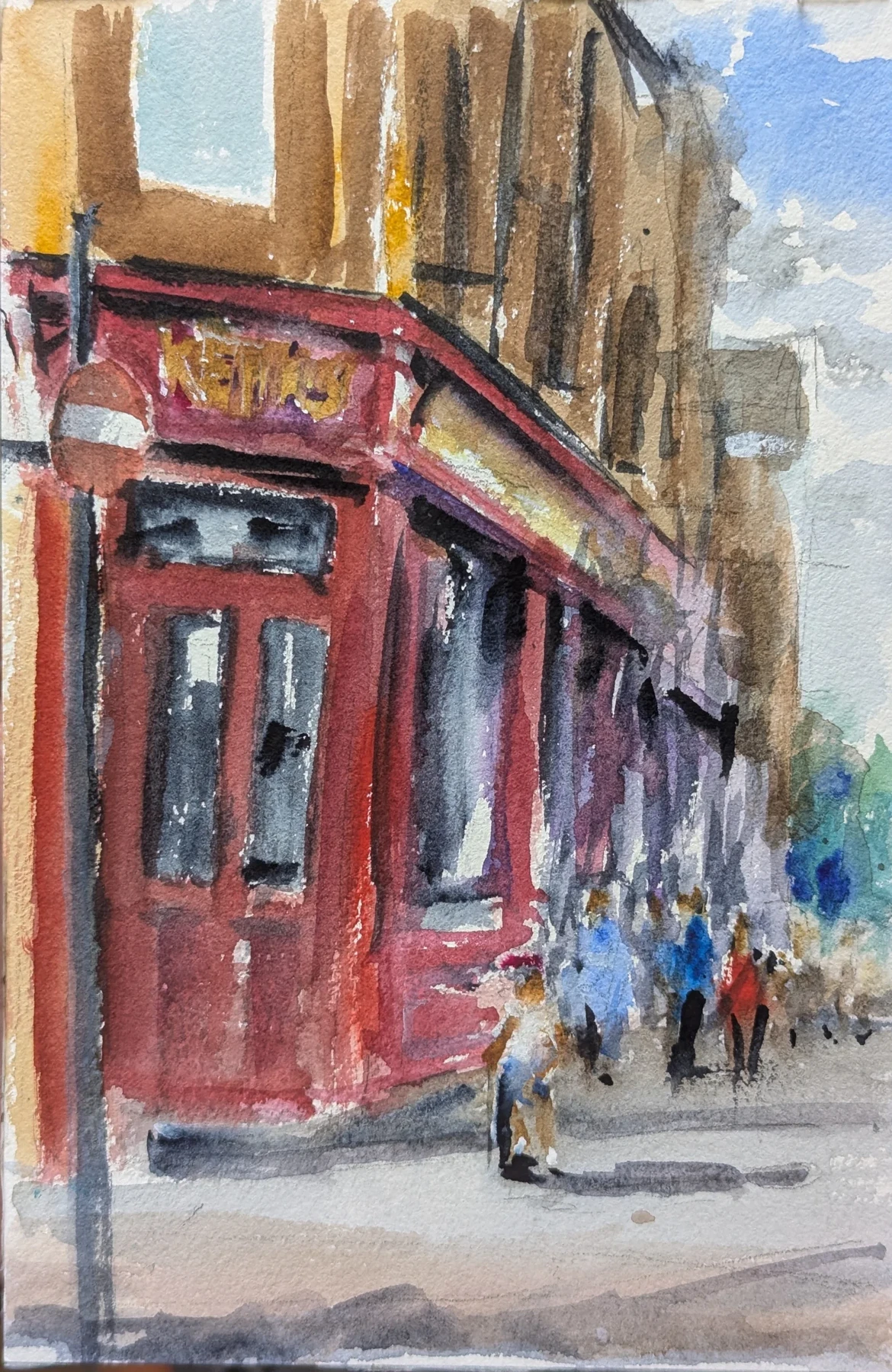
Wet streets often simplify the scene into long light passages and darker vertical masses. In Mark’s Water Street painting, pale blue-grey space and small coloured interruptions make the street read before the details do. Study which edges stay firm and which soften. For your own view, pick a light pattern and keep it consistent rather than chasing every change.
A reflection is a relationship
Look beneath the object making the reflection, then compare the reflection’s width, length and broken edges. The surface interrupts the image. Do not assume that every window produces a neat vertical stripe. Make a small note of direction and value before painting; a few connected shapes can suggest wet ground without describing each puddle.
Give the page a weather note
Write the condition and the time you observed it. A colour note made on site can help if you continue later. Keep the difference clear: a field sketch developed at home has a different history from a page completed entirely outdoors. Neither needs to borrow the other’s story.
Your turn · 25 minutes
Take it to the page.
- From shelter, draw a simple light-and-dark plan of a wet street or window view.
- Identify three reflected shapes and compare their edges with the objects above.
- Use a restrained wash or pencil tone; add the time and weather beside the sketch.
Look back: Does the ground feel wet because of relationships, or only because you labelled it “rain”?
Sources & further looking
Close-looking observations and practical exercises are this publication’s interpretation. Illustration credits are shown beside each work.