Spend the time on decisions
A short session is not a full painting performed at an unreasonable speed. It is a smaller agreement with the page. Give yourself two minutes to look, three to place the large shapes, ten to develop the important relationships and five to decide what deserves the last marks. The divisions are a guide, not a sporting event.
Choose what will survive
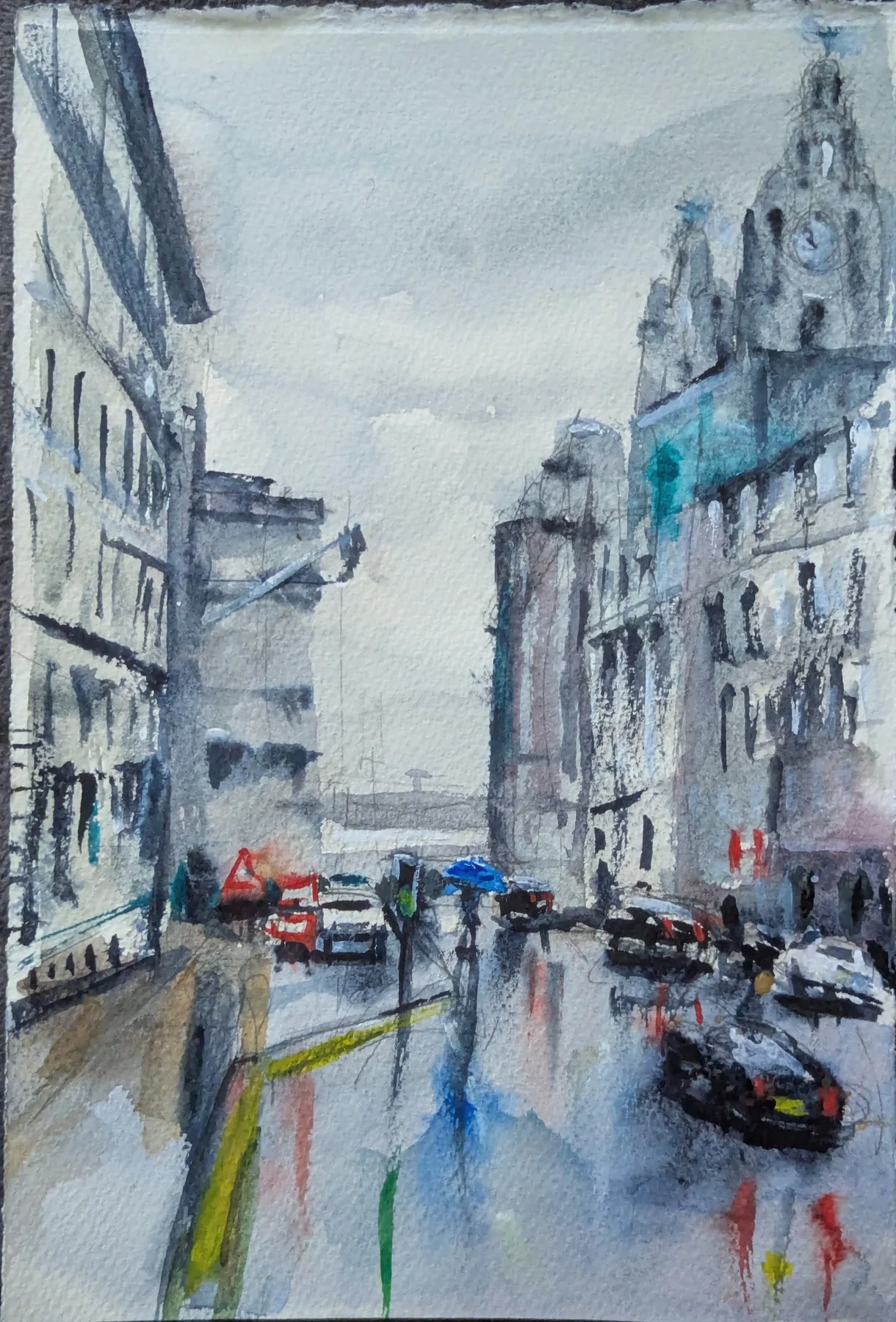
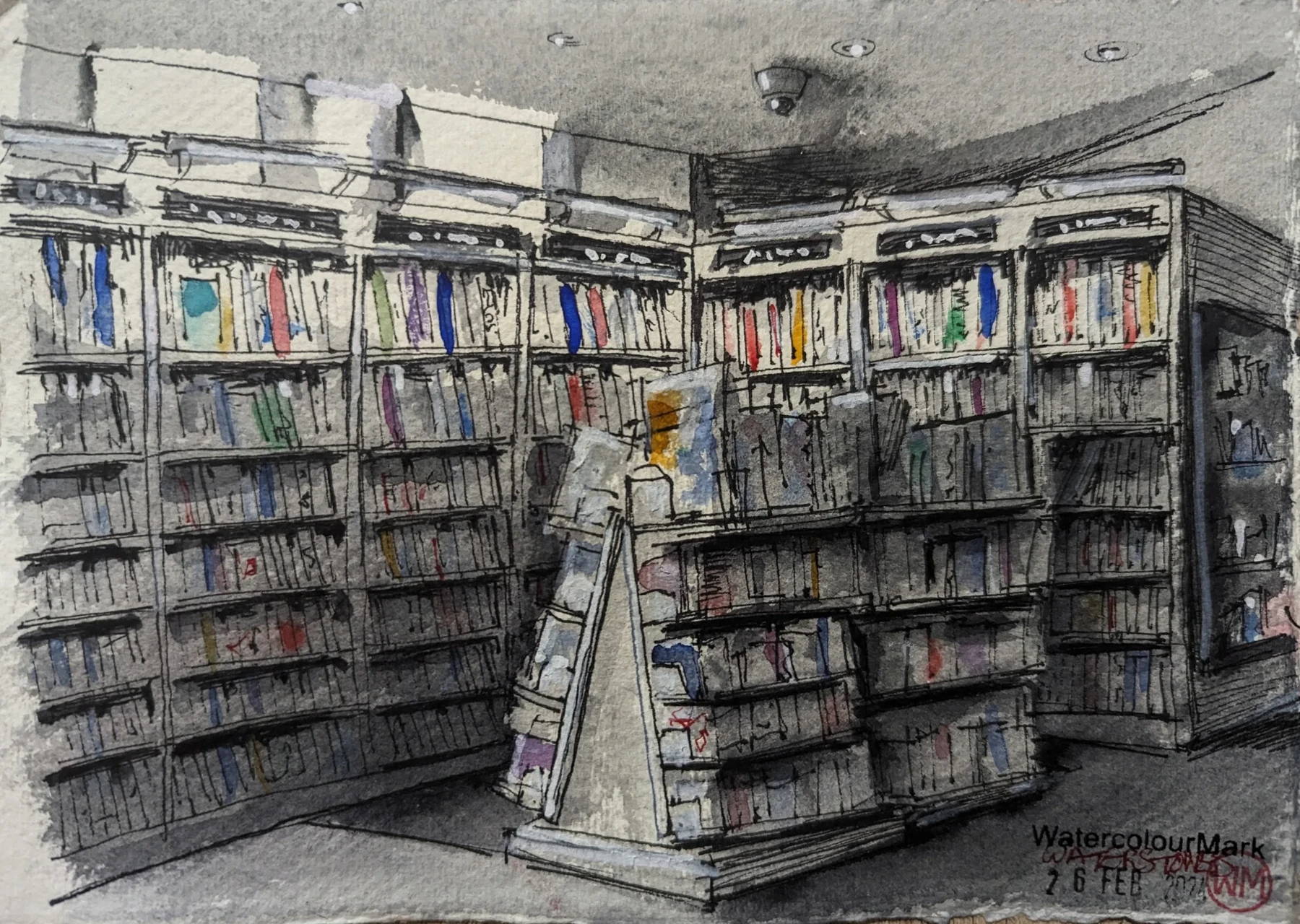
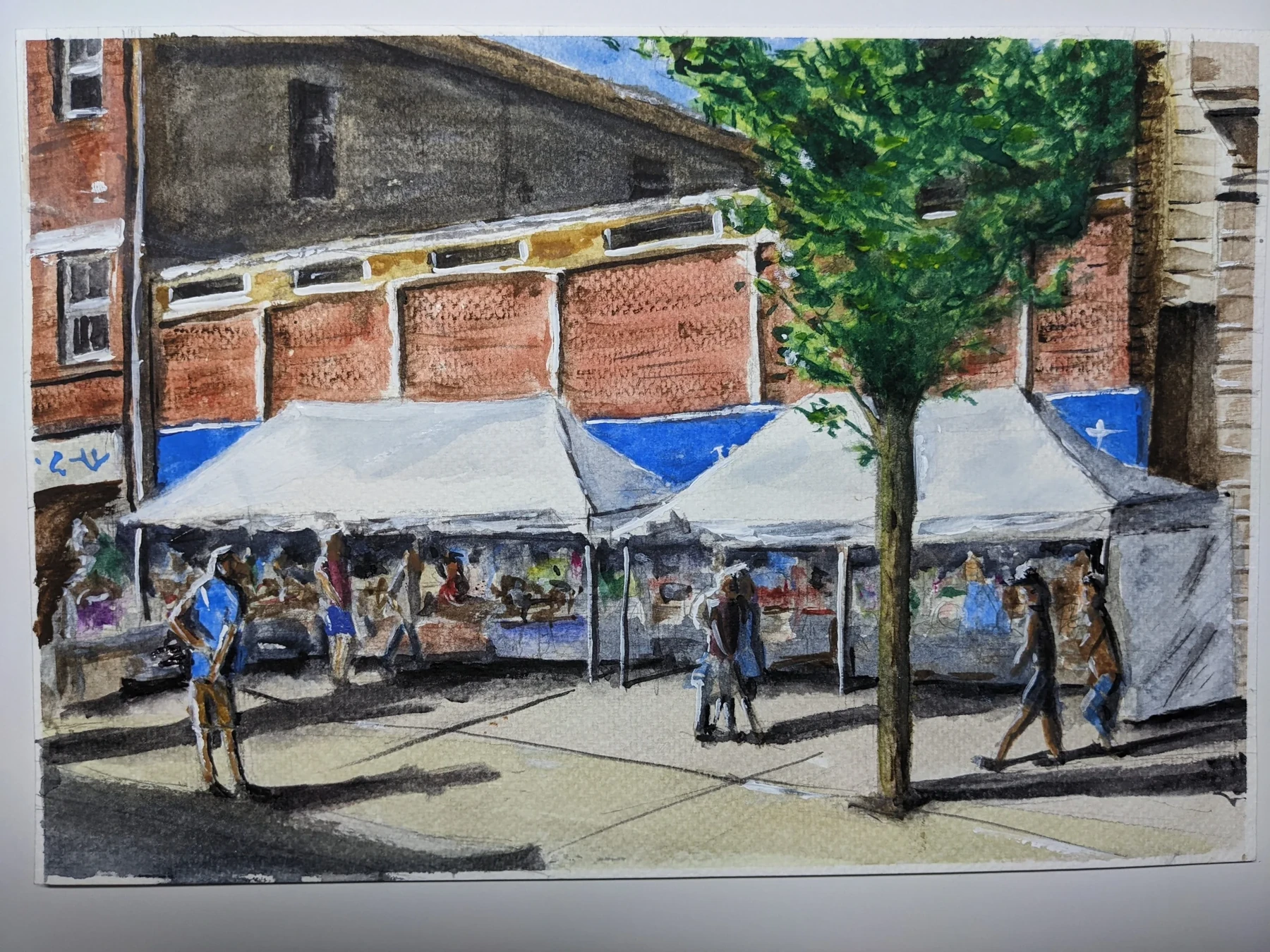
Identify the thing that makes the corner recognisable: the red frontage, the angle of the junction, the sign above the door. Give it room. Simplify neighbouring detail into larger shapes. In Mark’s painting of Keith’s, the red frontage gives the eye a strong point of arrival. That visual reading suggests a useful task: choose one colour or tonal contrast that carries your own subject.
Keep the last five minutes honest
When the timer is nearly finished, stop hunting for missing objects. Check whether the pavement meets the building and whether the darkest shape belongs where you placed it. Add a date and a sentence about the weather. A drawing benefits more from one repaired relationship than a rushed population of tiny windows.
Take a second look later, after the disappointment or excitement has settled. Write one practical instruction for the next visit. “Leave the light wall alone” is actionable. “Become better at art” will not fit usefully on the bus timetable.
Your turn · 20 minutes
Take it to the page.
- Set the Field desk timer to twenty minutes and choose one modest corner.
- Draw the broad arrangement first, then develop one focal area.
- Stop at the timer; record one thing to repeat and one thing to change.
Look back: Does the page have a clear subject? Which late mark helped, and which merely filled time?
Sources & further looking
Close-looking observations and practical exercises are this publication’s interpretation. Illustration credits are shown beside each work.