A portable drawing practice
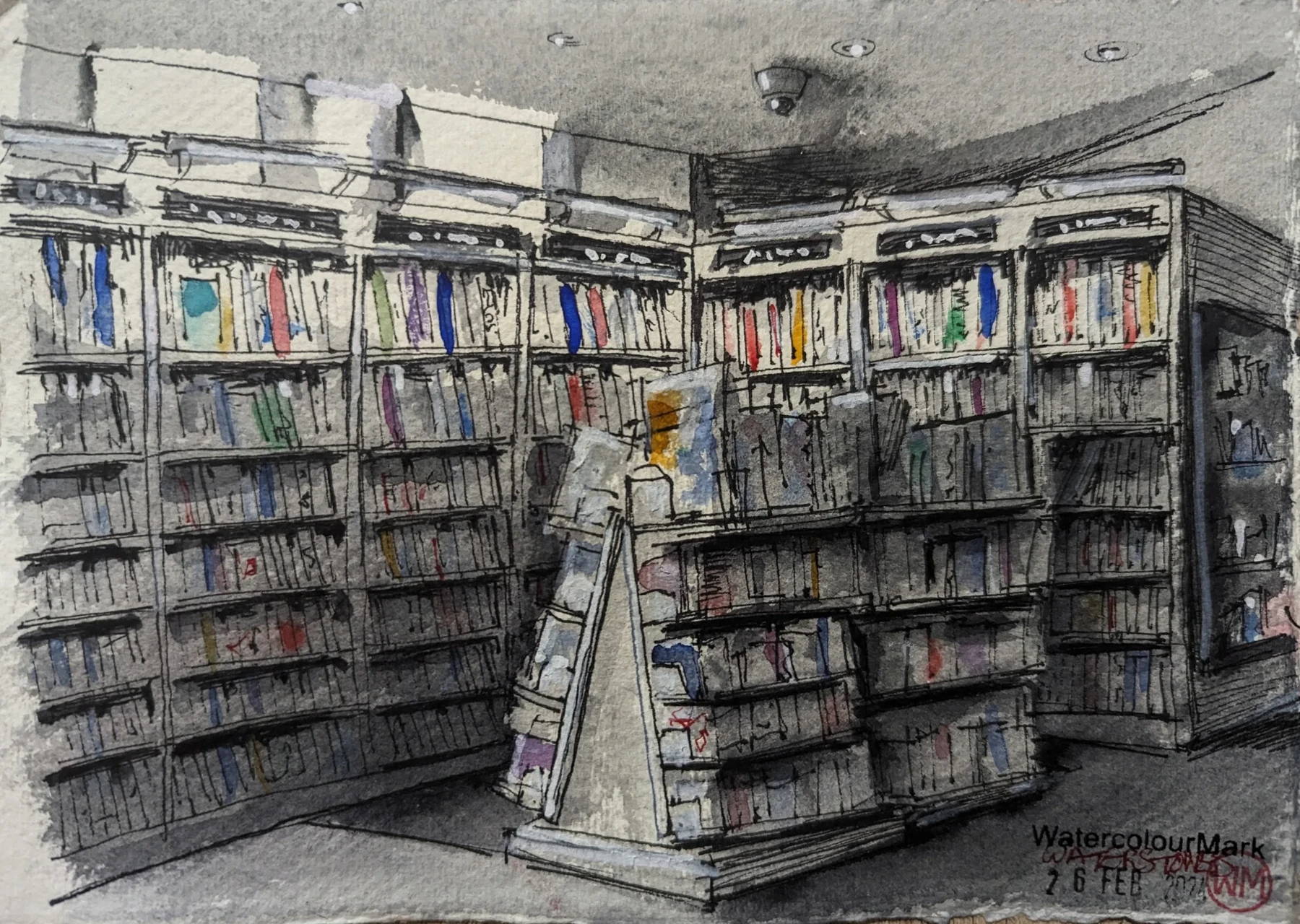
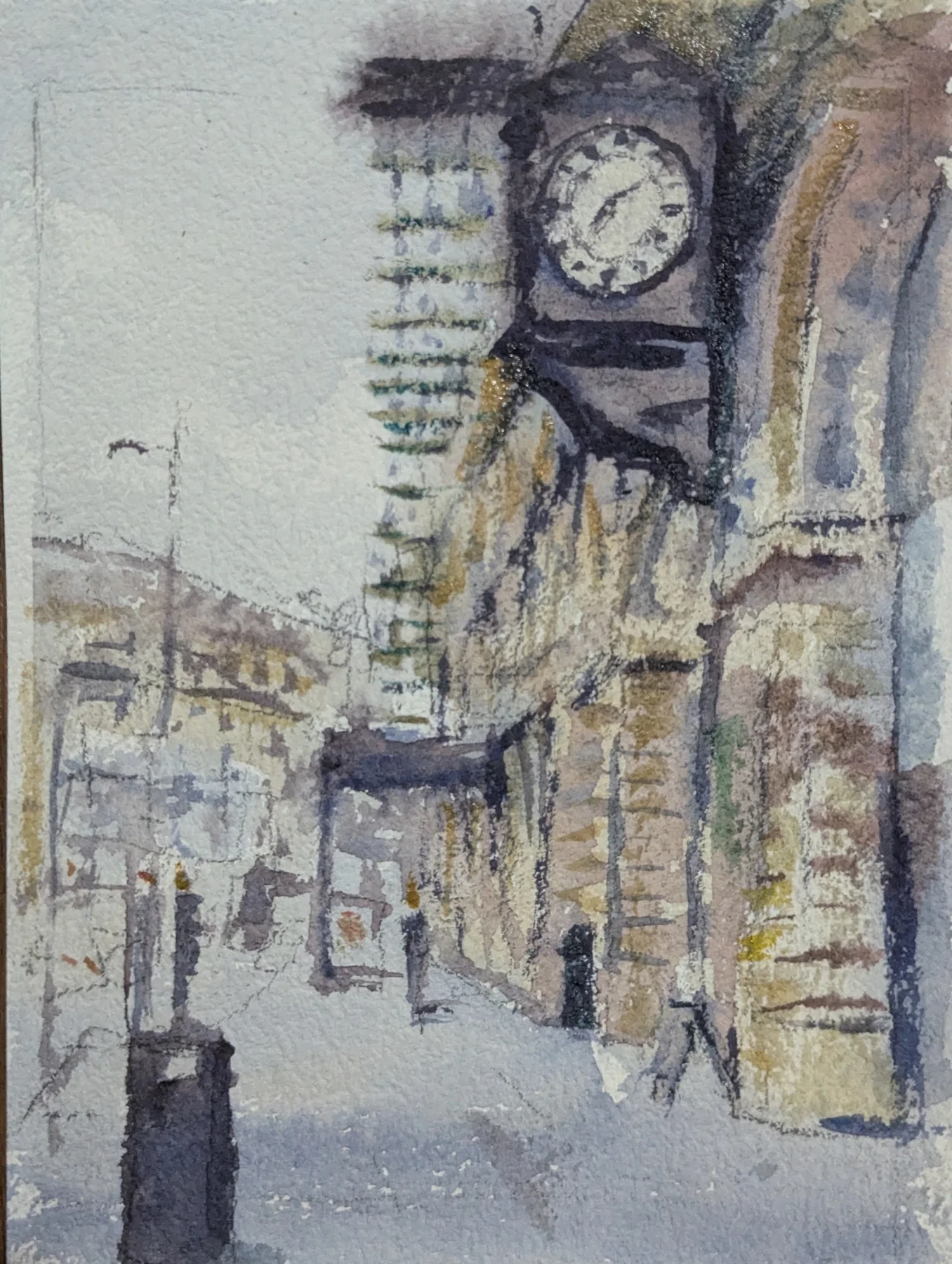
The French-born, Barcelona-based artist Lapin was among the early contributors to the Urban Sketchers blog. Sketcher Press’s 2024 introduction describes his work with fineliners and watercolour in vintage ledger books, and his practice as a mobile illustrator. Read that introduction and follow its links to his original drawings. The painting on this page is a separate companion work by Mark C Grant.
Look at the page as well as the subject
When viewing a sketchbook, notice how a drawing begins, where it expands and how writing shares the space. A page can contain several related observations without pretending they were all seen from the same viewpoint at the same instant. Dates, arrows, small captions and clear separations can help the reader follow those relationships. Layout is part of the account, not merely packaging applied after the drawing.
Let one observation lead to another
For your own exercise, begin with a small street detail and leave generous room around it. Add a second observed subject nearby, then a short factual caption linking the two. Keep the additions distinct if they come from different positions or moments. You might connect a shop sign with its doorway, or a public clock with the people waiting below it. The page can discover its structure while remaining honest about the sequence.
Know where to stop
An expanding page still benefits from quiet space. Leave one area unfilled and check whether the eye can move through the subjects without getting lost. This is an independent compositional exercise, not a copy of Lapin’s working process. The useful permission is to consider the whole book as a place for observation rather than treating each sheet as a miniature framed painting.
Your turn · 30 minutes
Take it to the page.
- Draw one observed detail with room around it.
- Add a related subject from the same outing and label any change of viewpoint.
- Use a short caption and open space to connect the page.
Look back: Can a reader follow the relationship between the observations?
Sources & further looking
- Illustration: Chinatown Arch, Liverpool by Mark C Grant ↗
- Sketcher Press: introduction to Lapin and his work ↗
- Urban Sketchers: instructor directory ↗
Close-looking observations and practical exercises are this publication’s interpretation. Illustration credits are shown beside each work.