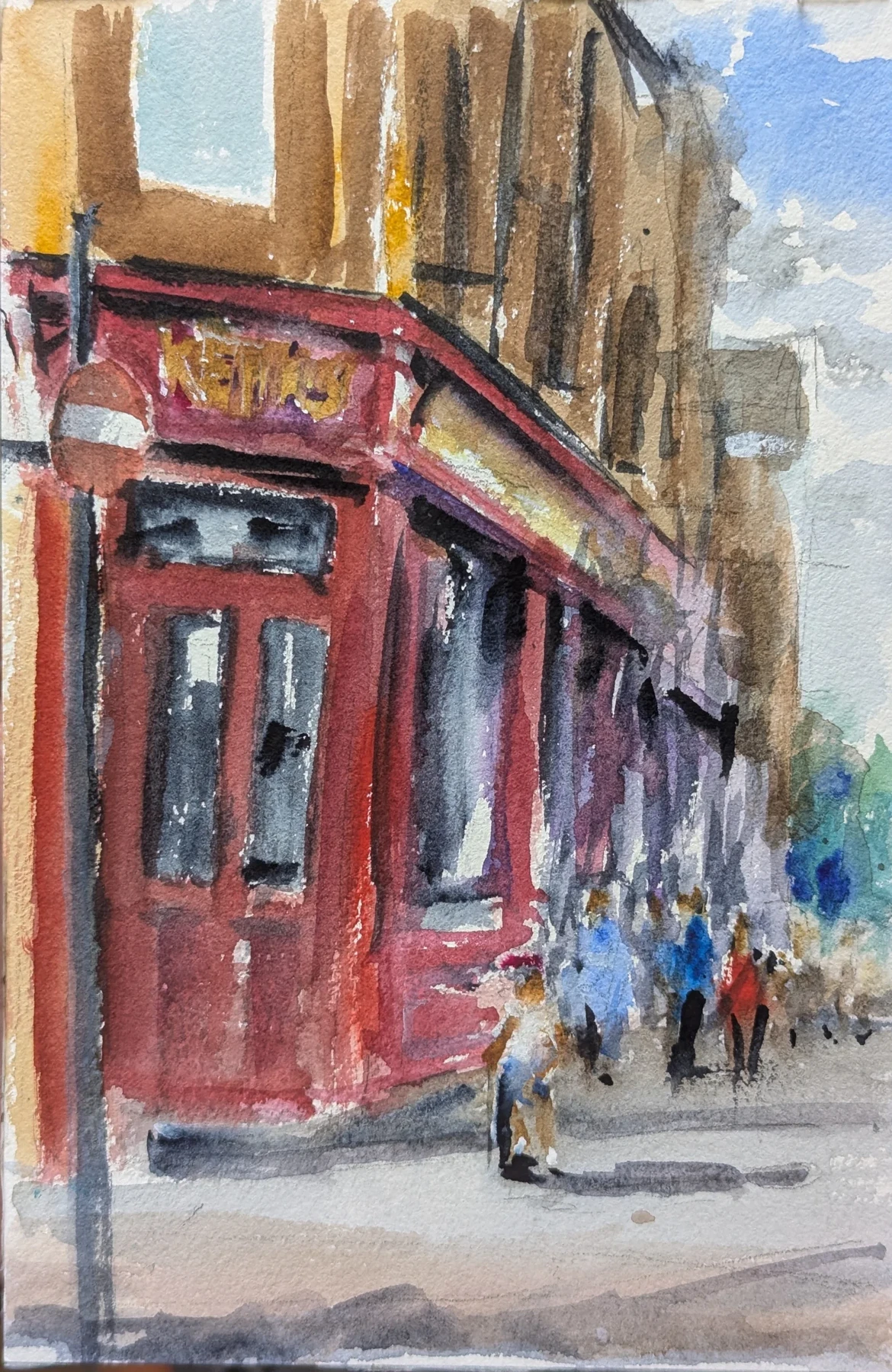
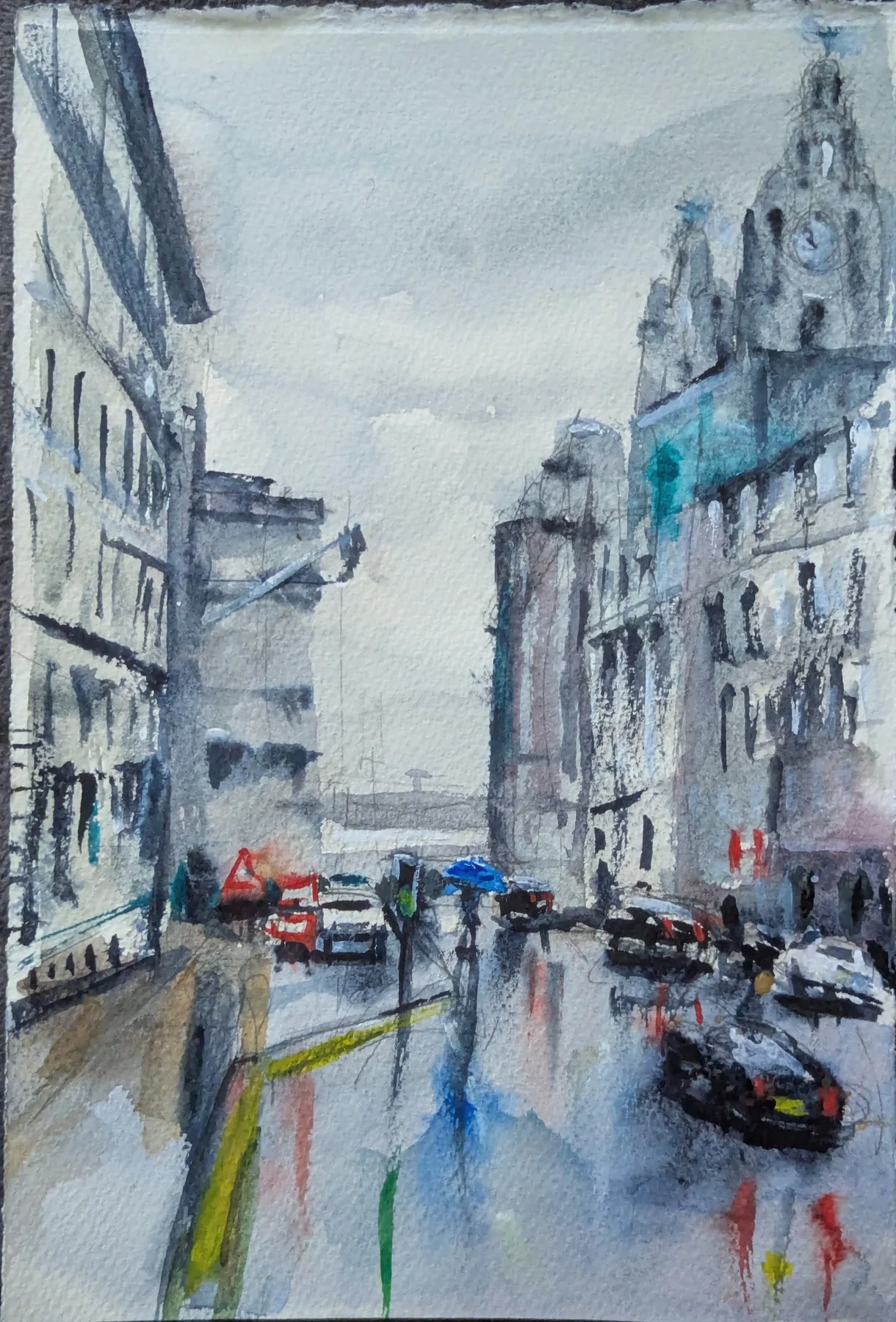
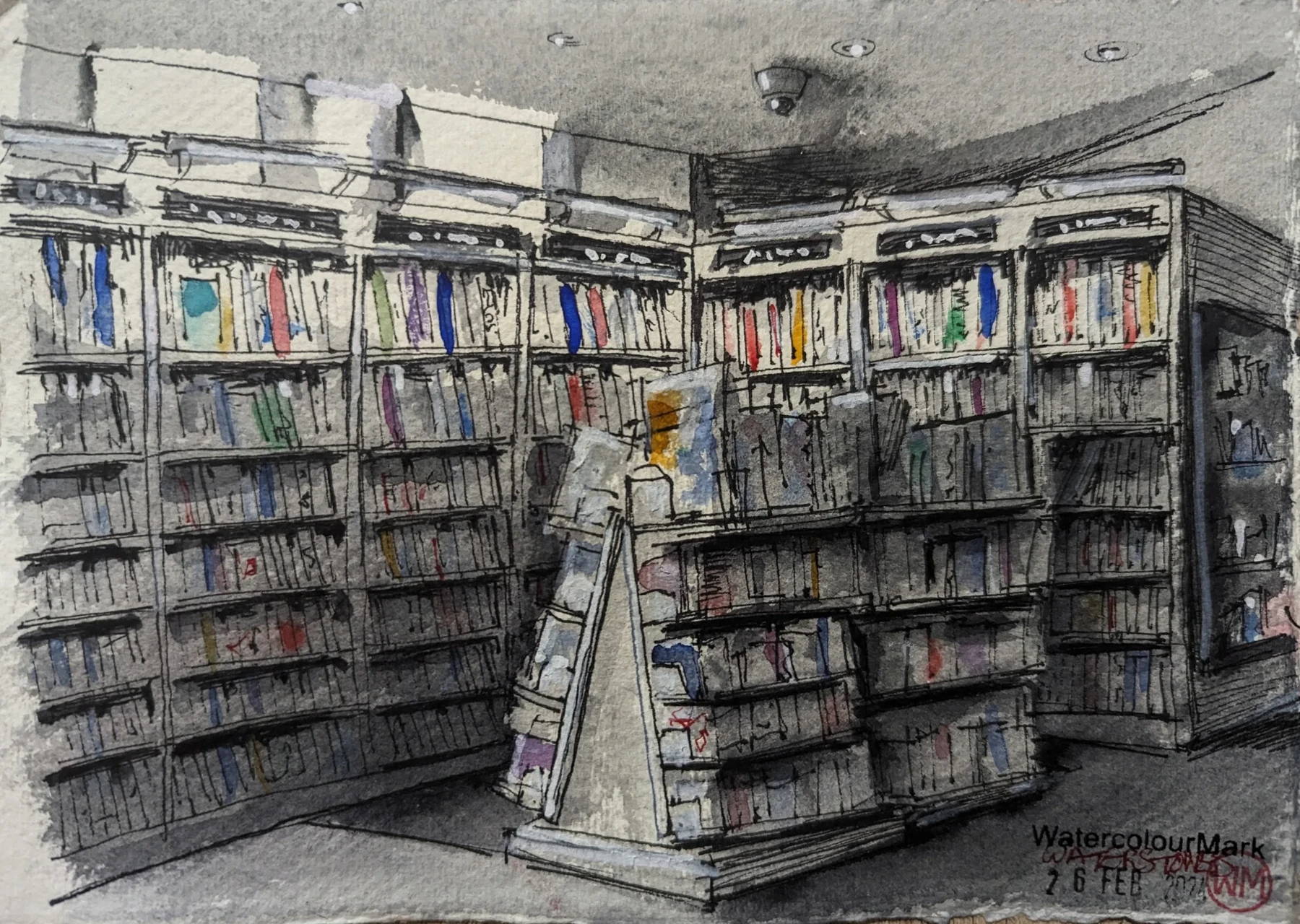
Give the route a question
Choose three nearby stops connected by an idea: a wide view, a closer structure and a human detail; or three examples of the same kind of shopfront. Keep the route practical for your own access needs and available time. Check current opening and entry arrangements if an indoor stop is involved. A route is a plan for attention, not a competitive tour of every landmark in the postcode.
Vary the scale
At the first stop, make a broad establishing drawing. At the second, choose a tighter subject. At the third, record a detail or activity that changes how the first two pages are understood. This variation makes the sequence more informative than three equally wide views. Allow time between stops to look without drawing; the connecting street may offer the most useful surprise.
Leave space for a change
Have a simple alternative if a view is blocked or a place is too busy. Shorten a session rather than trying to recover time through frantic linework. End with a few minutes to put the pages beside one another. Note what the route revealed and what you would change next time. A completed three-page sequence has more to say than a splendid itinerary with one half-drawn lamp post attached.
Your turn · 60 minutes
Take it to the page.
- Choose three nearby, accessible stops and a shared question.
- Make a wide, medium and close study across the route.
- Review the sequence together and write a short connecting caption.
Look back: Does each page add something the others do not?
Sources & further looking
Close-looking observations and practical exercises are this publication’s interpretation. Illustration credits are shown beside each work.