Choose comfort before atmosphere
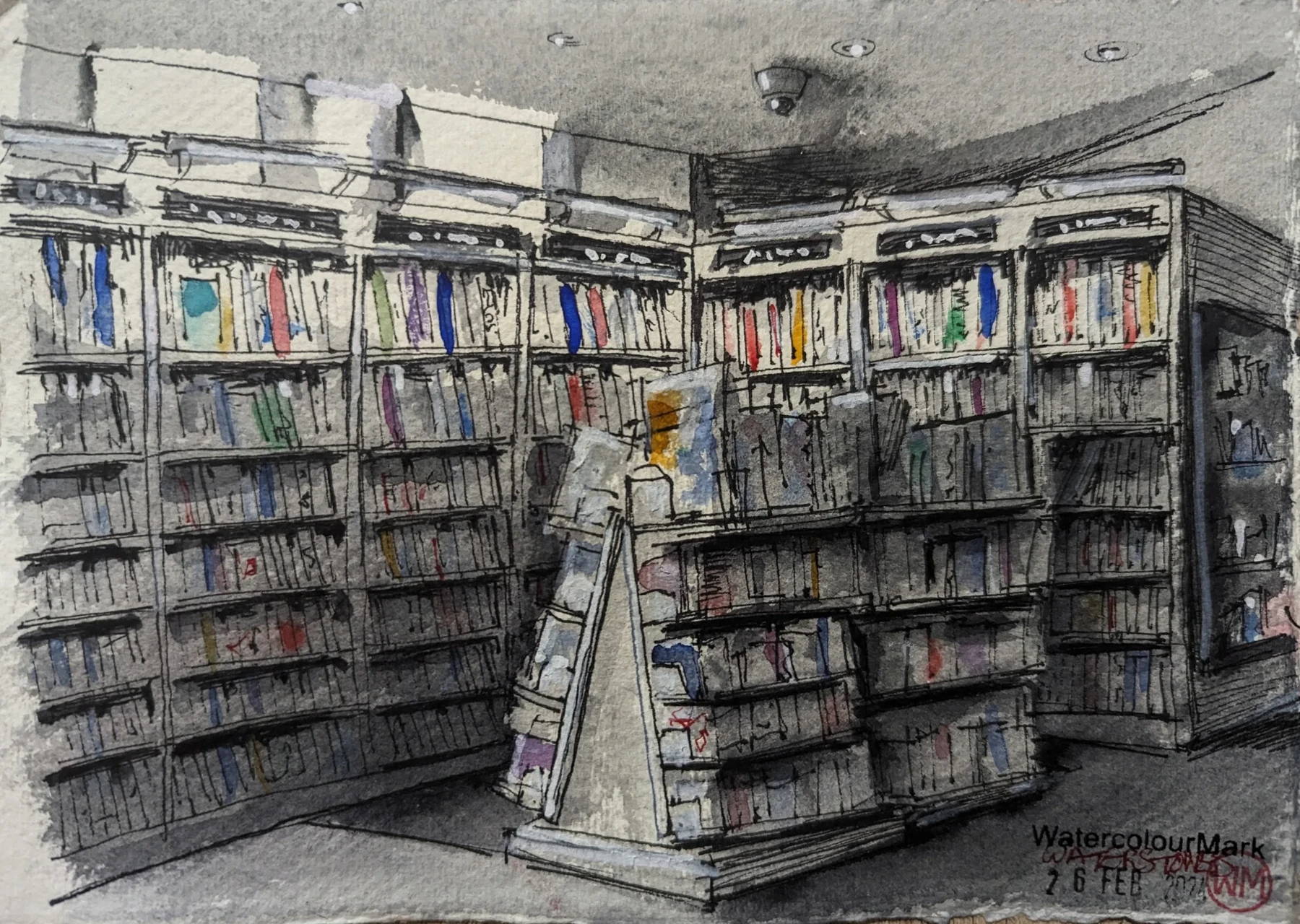
Work in a familiar, permitted and comfortably lit place. A view through a café window can be as useful as standing outside. Make sure you can see your page without shining a light into other people’s eyes. Choose a small subject. Night reduces some information and complicates other things; it does not require a heroic expedition for the sake of a sketch.
Reserve the brightest shapes
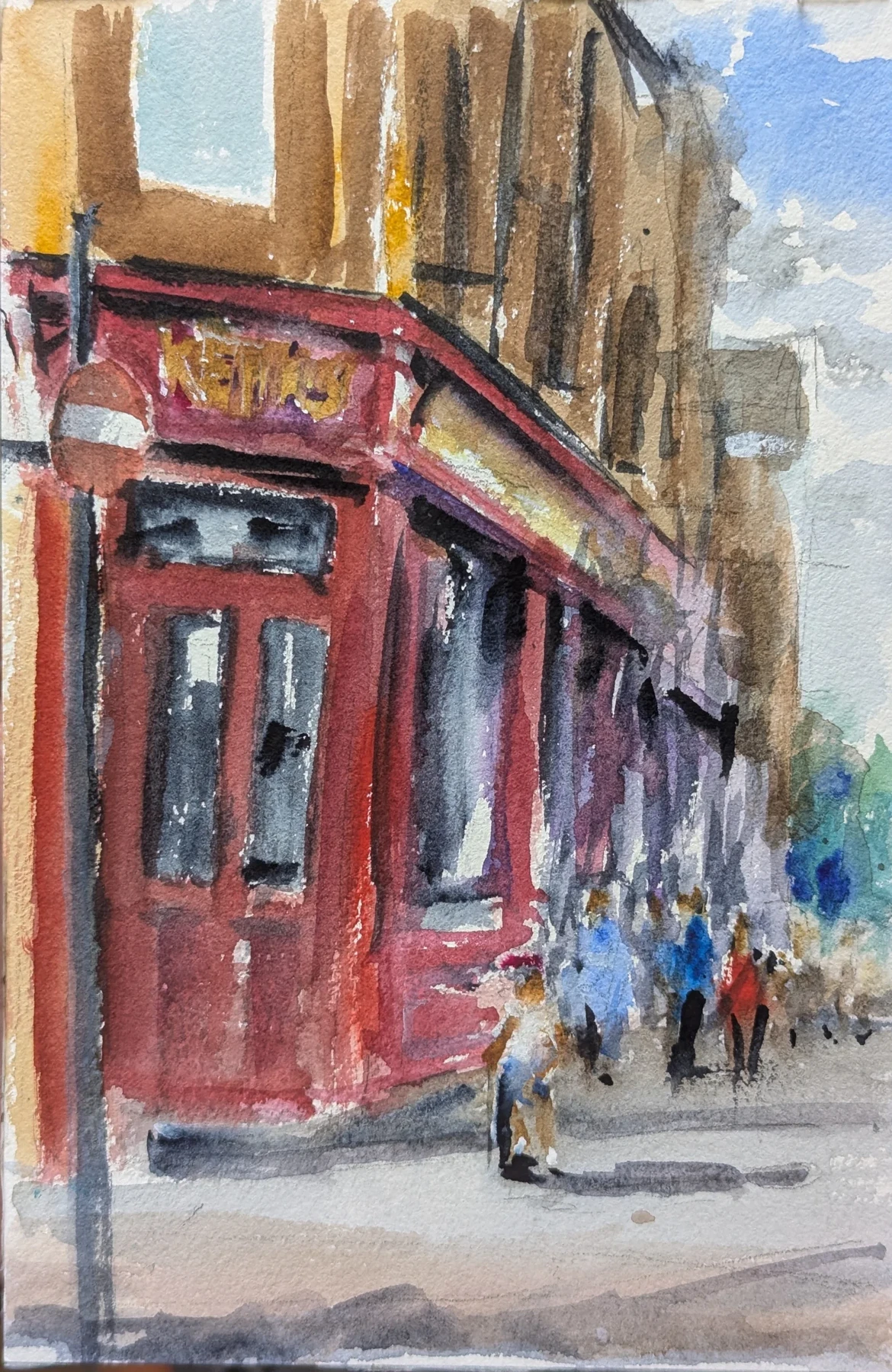
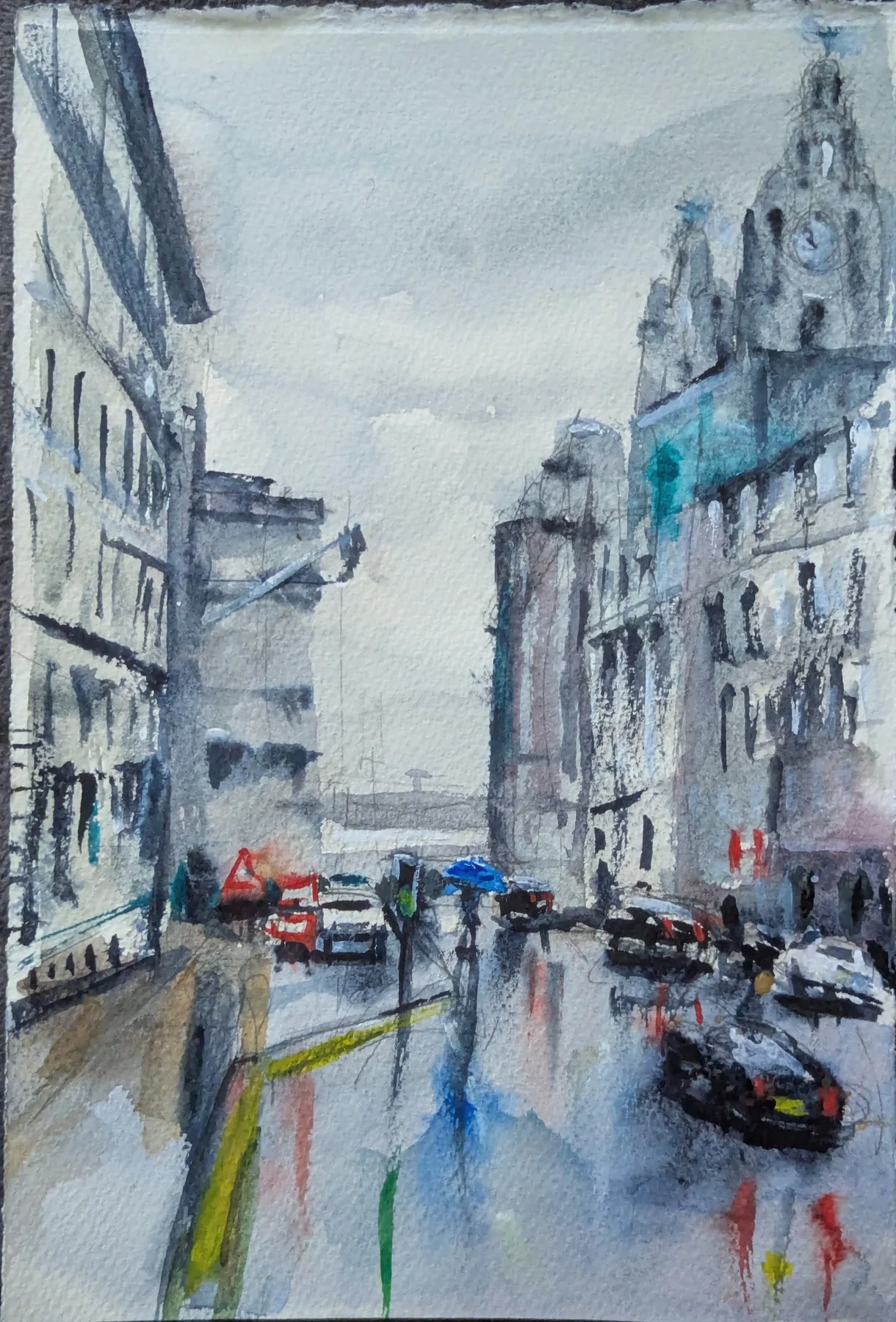
Identify the few lights that give the scene its structure: a window, doorway, reflected strip or illuminated sign. Mark their boundaries lightly and plan the larger dark around them. The brightest point needs surrounding contrast. If every window becomes equally bright and detailed, the street starts advertising all its businesses at once.
Simplify the colour decisions
Artificial light can alter how your paints look while you work. Use mixtures you know and keep notes about what you observed. Judge the dried page again in daylight before making major corrections. A night scene often benefits from broad dark families and a small warm or cool accent, but observe the particular light rather than automatically reaching for black. Let some edges disappear into neighbouring shadows; the eye expects less information after dark.
Your turn · 25 minutes
Take it to the page.
- Choose three light shapes in a small evening view.
- Reserve them while painting one broad dark arrangement.
- Review the dry colours in daylight and note any difference.
Look back: Do the lights organise the scene, or compete equally for attention?
Sources & further looking
Close-looking observations and practical exercises are this publication’s interpretation. Illustration credits are shown beside each work.