Check the current drawing rules
Museums and galleries differ about materials, stools, room access and copying. Check the venue’s current visitor guidance and ask staff where needed. A small pencil study may be easier to accommodate than wet materials, but do not assume permission. Keep routes and other visitors’ sightlines clear. The collection has enough conservation problems without your water pot volunteering for one.
Choose the relationship
You might study the shape of a room, a visitor looking at a work, the gap between two display cases or the way light reaches a wall. These are location drawings in their own right. If copying an artwork, name its maker and title in your notes and distinguish the study from your own composition. That small habit keeps the sketchbook informative when you return to it months later.
Simplify the layers
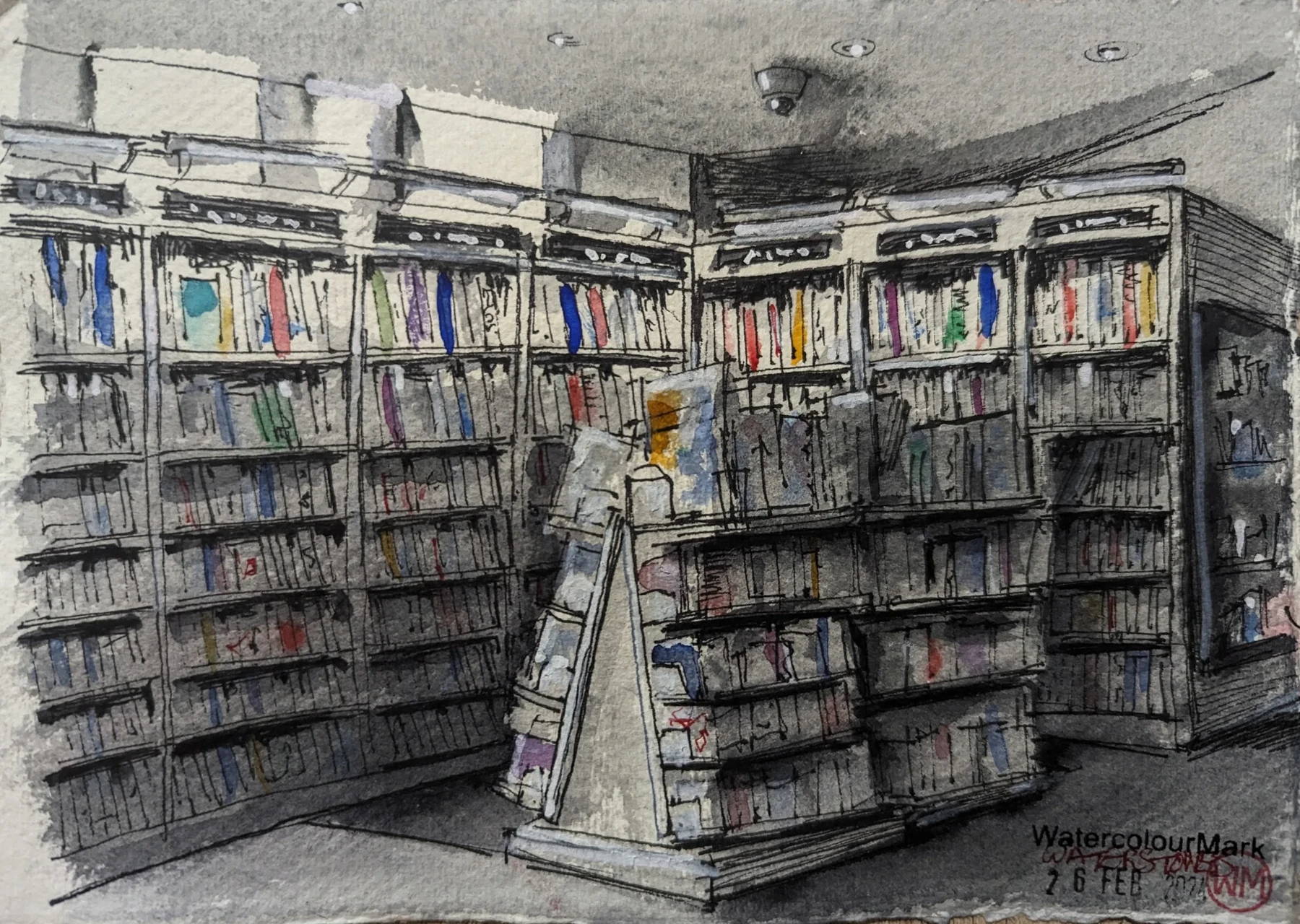
Place the room’s broad planes first, then the main display shapes, then a few figures or objects. Give the focal relationship the strongest contrast. Avoid drawing every framed rectangle to the same intensity. A museum interior can tell a story about looking: people approach, pause, compare and move on. You may find that the visitor’s posture is the most interesting thing in a room full of masterpieces.
Your turn · 25 minutes
Take it to the page.
- Check the venue’s rules and choose an unobtrusive position.
- Draw one room relationship using three large shapes.
- Add a brief observed gesture and accurate identification for any copied work.
Look back: Does the sketch show how the space is experienced?
Sources & further looking
Close-looking observations and practical exercises are this publication’s interpretation. Illustration credits are shown beside each work.