Paint the wall first
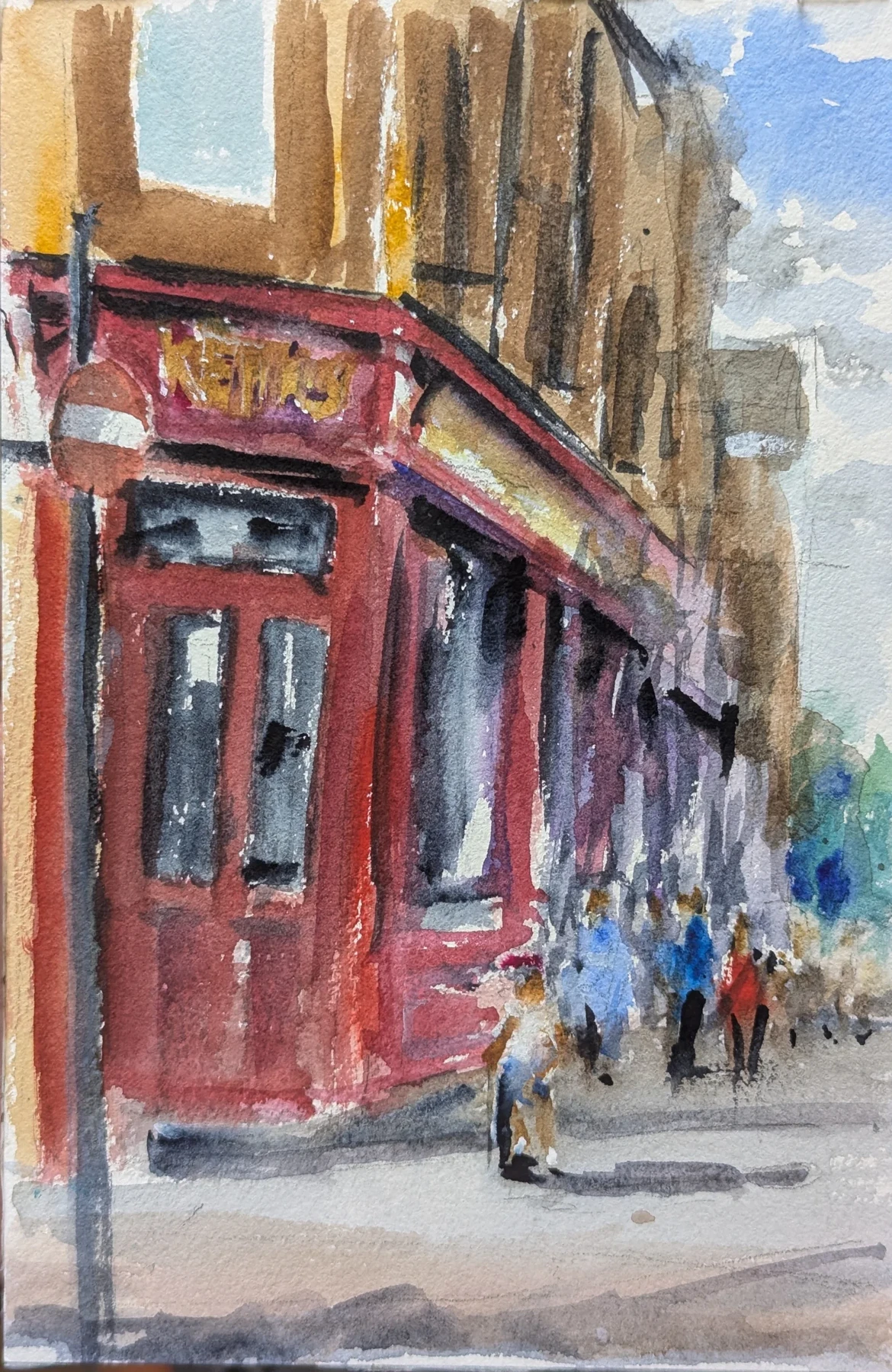
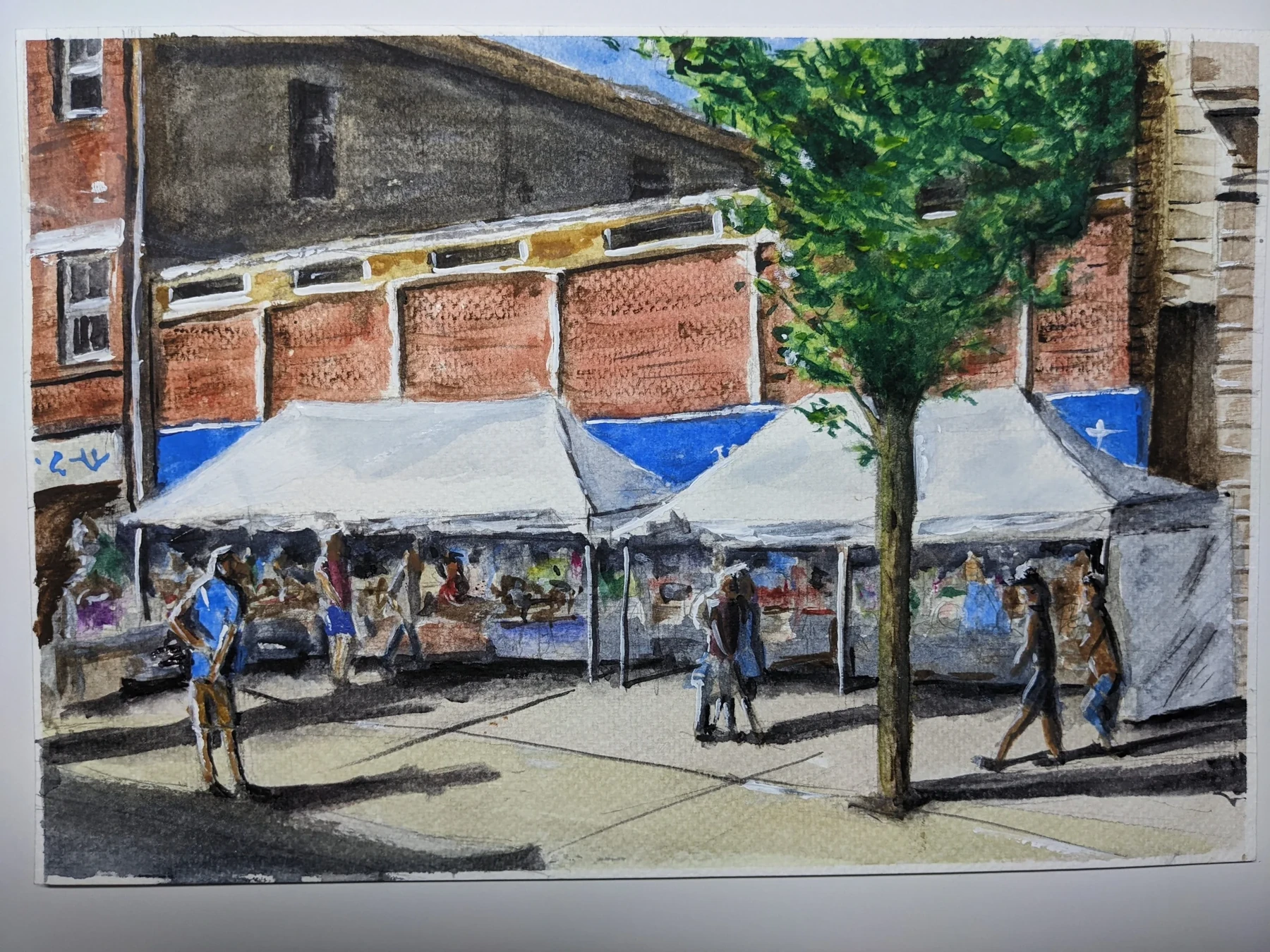
Begin with the broad wall shape and its light or shadow. Let the wash vary slightly if that suits the surface, then allow it to dry. The underlying plane must read before texture arrives. If you start by drawing a full brick grid, you can spend half an hour producing a convincing diagram of brickwork that has no useful relationship with the rest of the street.
Choose a patch of information
Describe a few bricks near a corner, opening or focal area. Let those marks become sparser as they move away. Follow the wall’s perspective: horizontal courses converge with that wall’s receding edges, and apparent intervals compress with distance. Do not keep the same brick size across two differently angled faces simply because your hand has found a comfortable rhythm.
Vary the mark, not the explanation
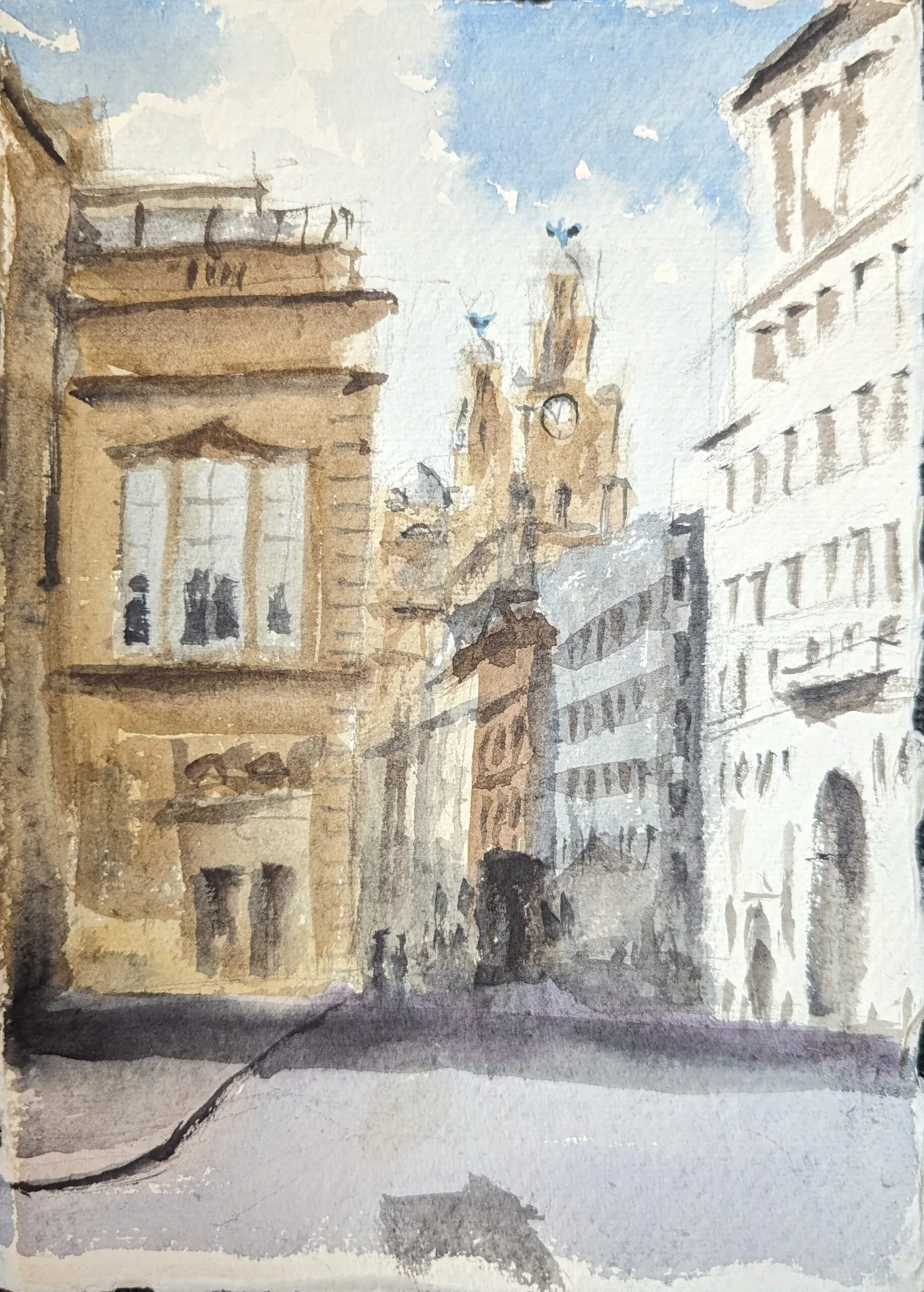
A broken dry-brush stroke, a short warm accent and a small dark joint can each suggest material. Use them where the observed surface changes or catches light. Leave some areas entirely to the wash. In a dock building, repeated windows and the relationship with the water may matter more than surface texture. Stand back before adding another row. If the eye can already read brick, the wall has made its point.
Your turn · 25 minutes
Take it to the page.
- Paint a simple wall plane and one opening.
- Add texture in a small focal patch, following the wall’s angle.
- Leave at least half the wall free of individual brick marks.
Look back: Does texture explain the surface without flattening its form?
Sources & further looking
Close-looking observations and practical exercises are this publication’s interpretation. Illustration credits are shown beside each work.