Start with where your eyes are
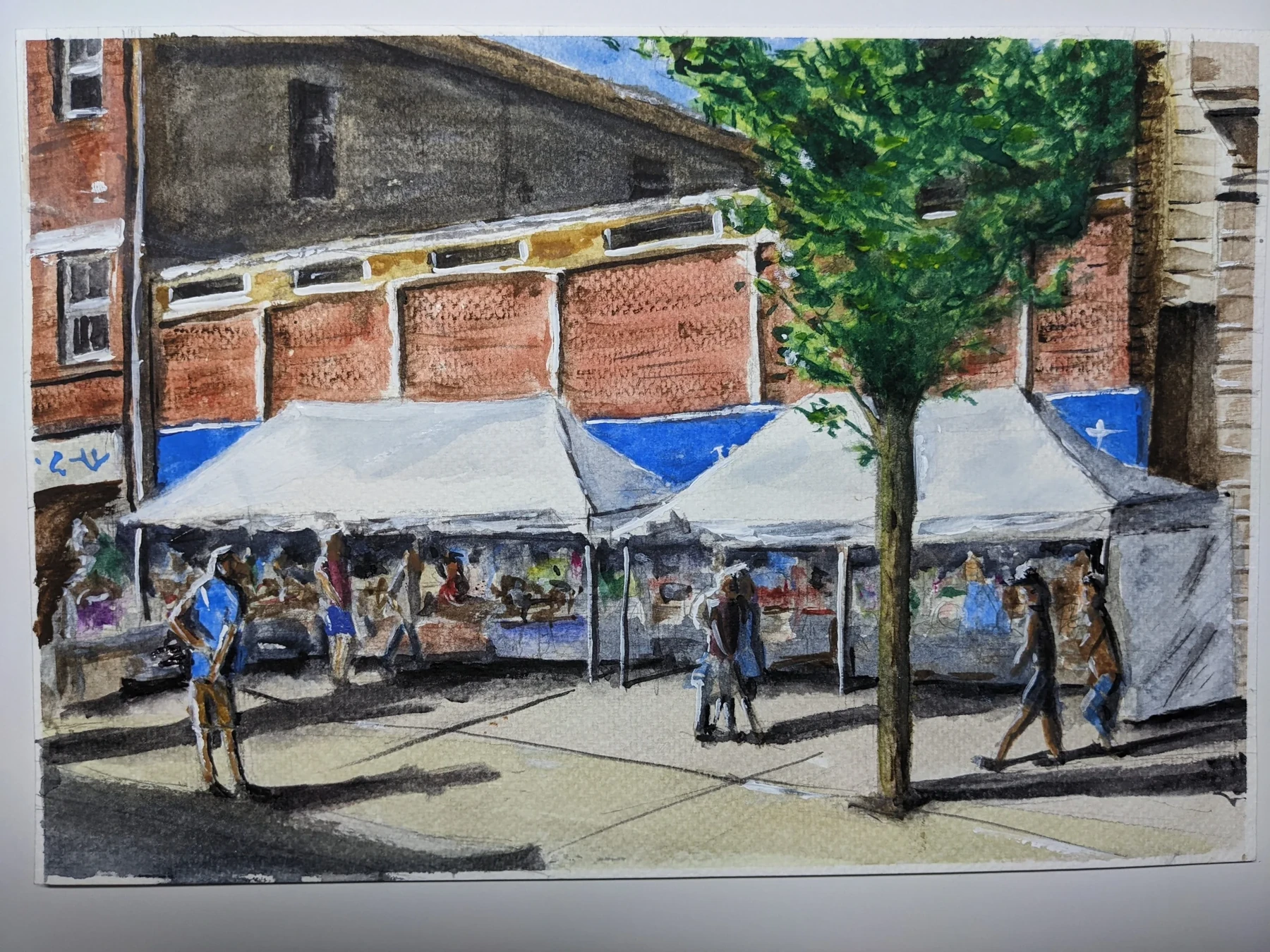
The horizon in a level perspective drawing represents your eye level. It can be hidden by buildings; you do not need to see the sea. On level ground, the eye height of people of similar height to you is a useful clue. A seated observer has a lower eye level. Hills, steps and people of different heights complicate that shortcut, so treat it as a check rather than a law.
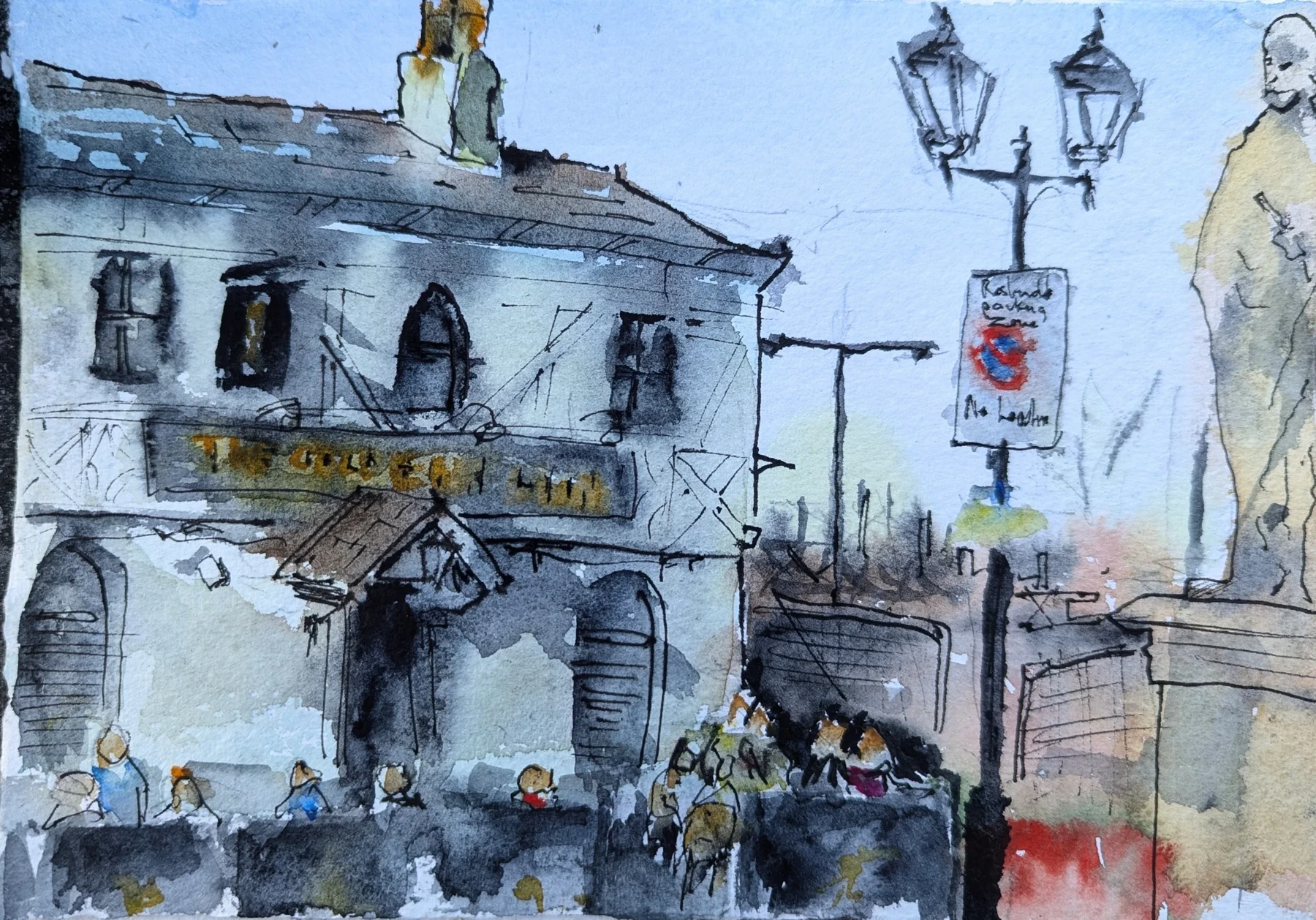
Parallel horizontal edges receding in the same direction tend towards a common vanishing point. A street corner often gives you two families of edges and two vanishing points. These may sit far beyond the paper. Forcing both into a small drawing is one reason buildings become strangely pointy.
Find the big turn first
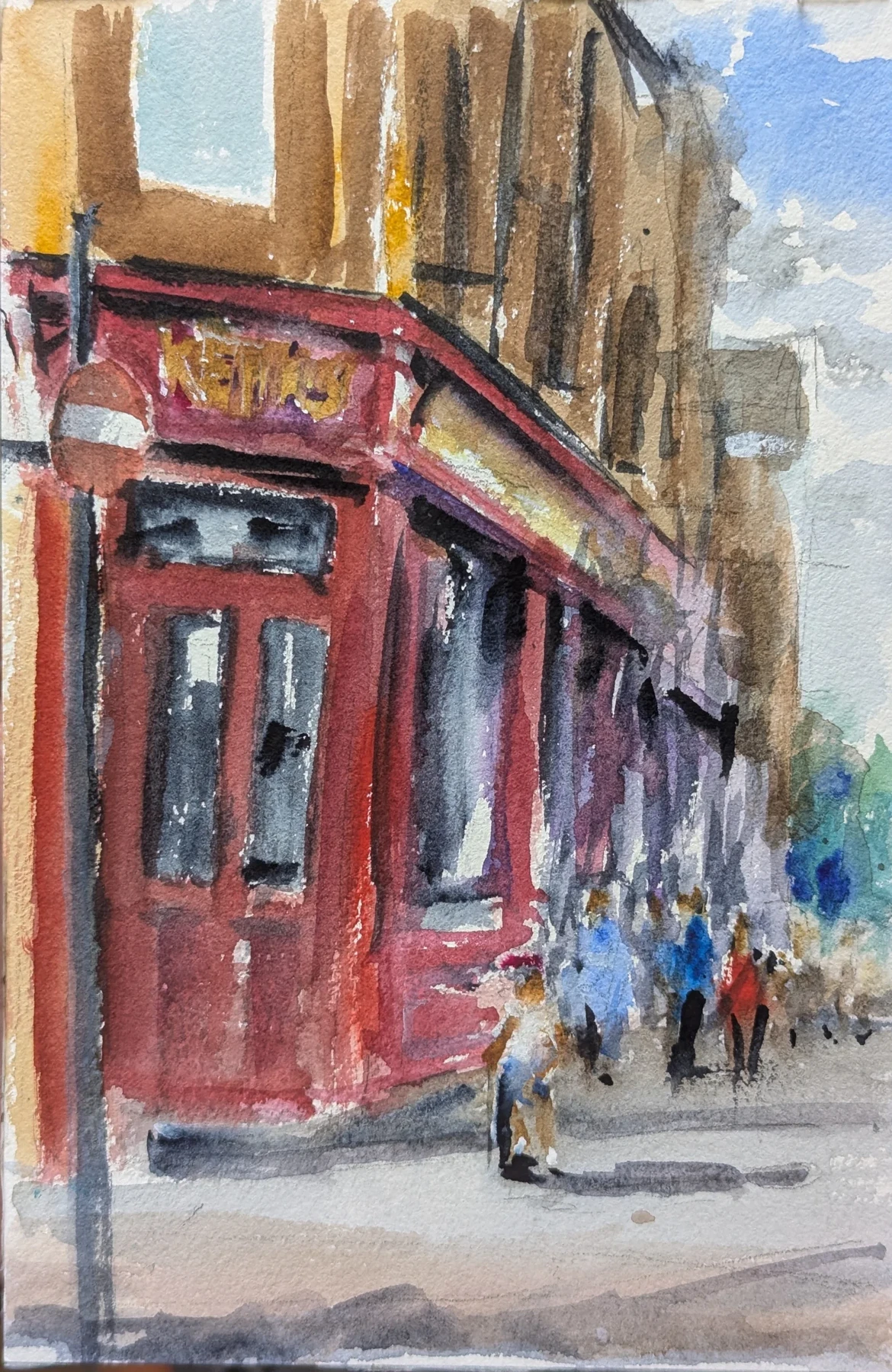
Choose the nearest vertical corner and compare the two visible faces. Which looks wider? With your head in the same place, use your pencil as a sighting aid to compare roof angles with a horizontal. Transfer the angle, then check it against a second edge in the same family. Keep the first marks light. A useful correction at this stage saves a heroic amount of window repair later.
Let the observed view correct the diagram
A building can taper, lean or have an irregular roof. The rules describe a model; the drawing describes what you see. Keep checking widths, slopes and overlaps. If you look steeply up or down, verticals can converge too. For your first exercise choose a modest building viewed approximately level, so one problem does not arrive with six cousins.
Your turn · 25 minutes
Take it to the page.
- Use the perspective explorer in the Field desk to compare low and high eye levels.
- On location, draw one corner, the top edges and the base before adding anything inside.
- Place three windows by comparing their widths and spacing; let the far ones compress.
Look back: Do edges belonging to the same direction agree? Did you preserve the difference between the two faces?
A companion film
Starting out · Sketching Scottie
How To Start URBAN SKETCHING For Beginners - FUNDAMENTALS GUIDE
Look for: Watch for the move from a broad composition to the main shapes.
Then try: Choose a corner of a room and draw its three largest shapes before any detail.
Watch on YouTube ↗Sources & further looking
Close-looking observations and practical exercises are this publication’s interpretation. Illustration credits are shown beside each work.