An ordinary corner is enough
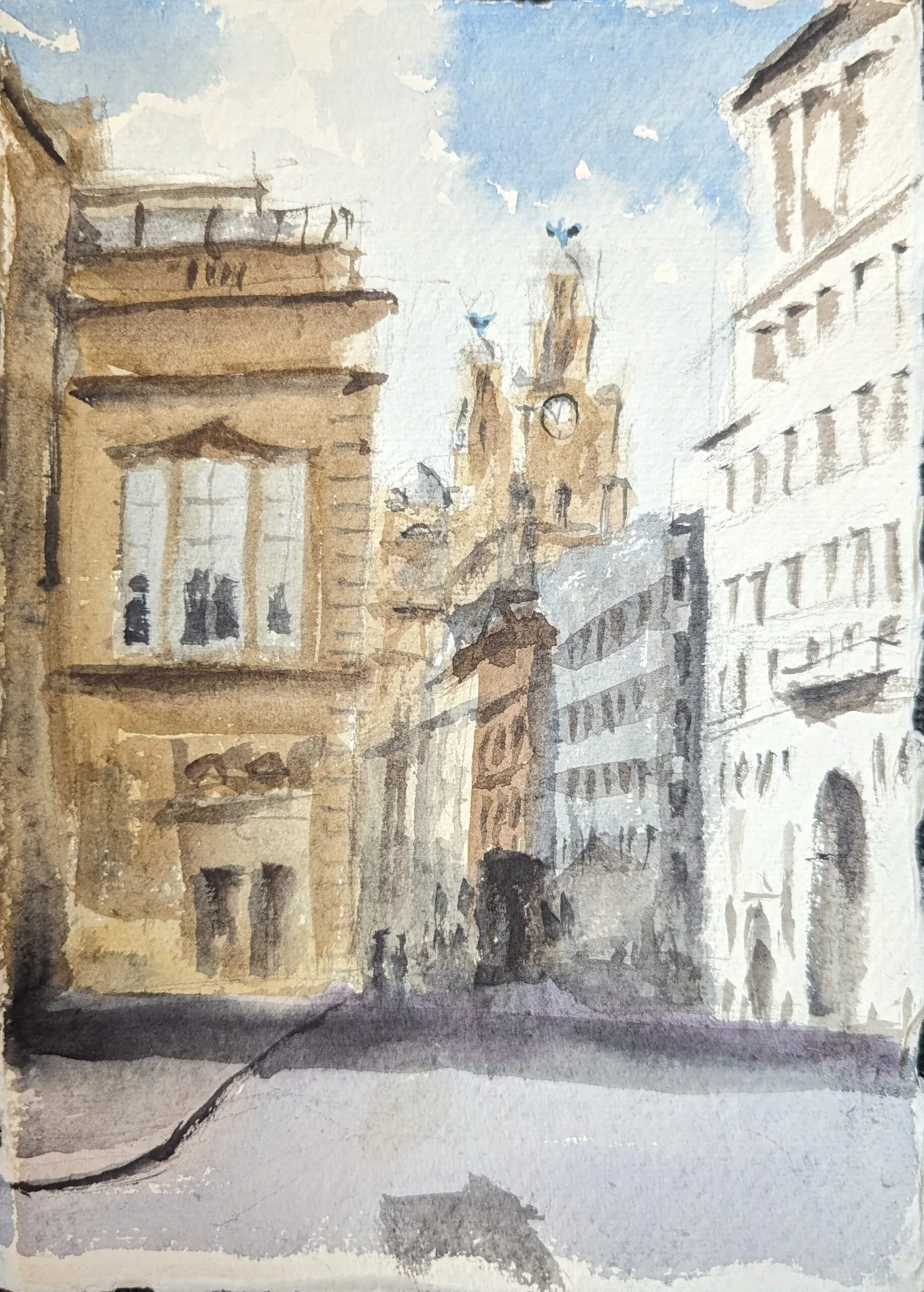
Urban sketching begins with a particular relationship: you are there, and the drawing responds to what is in front of you. A familiar shop, a bus shelter or the view from a kitchen window can give you more to work with than a famous building you feel obliged to get right. Start by noticing the shape that brought your eye back a second time. That is a better brief than “draw the entire city”.
The international Urban Sketchers organisation puts direct observation, the record of a place and time, and individual ways of working at the centre of its manifesto. This independent publication shares that interest in looking. It is not an official chapter. Drawing from a photograph remains useful practice; simply describe it honestly when you share it.
Make the first decision small
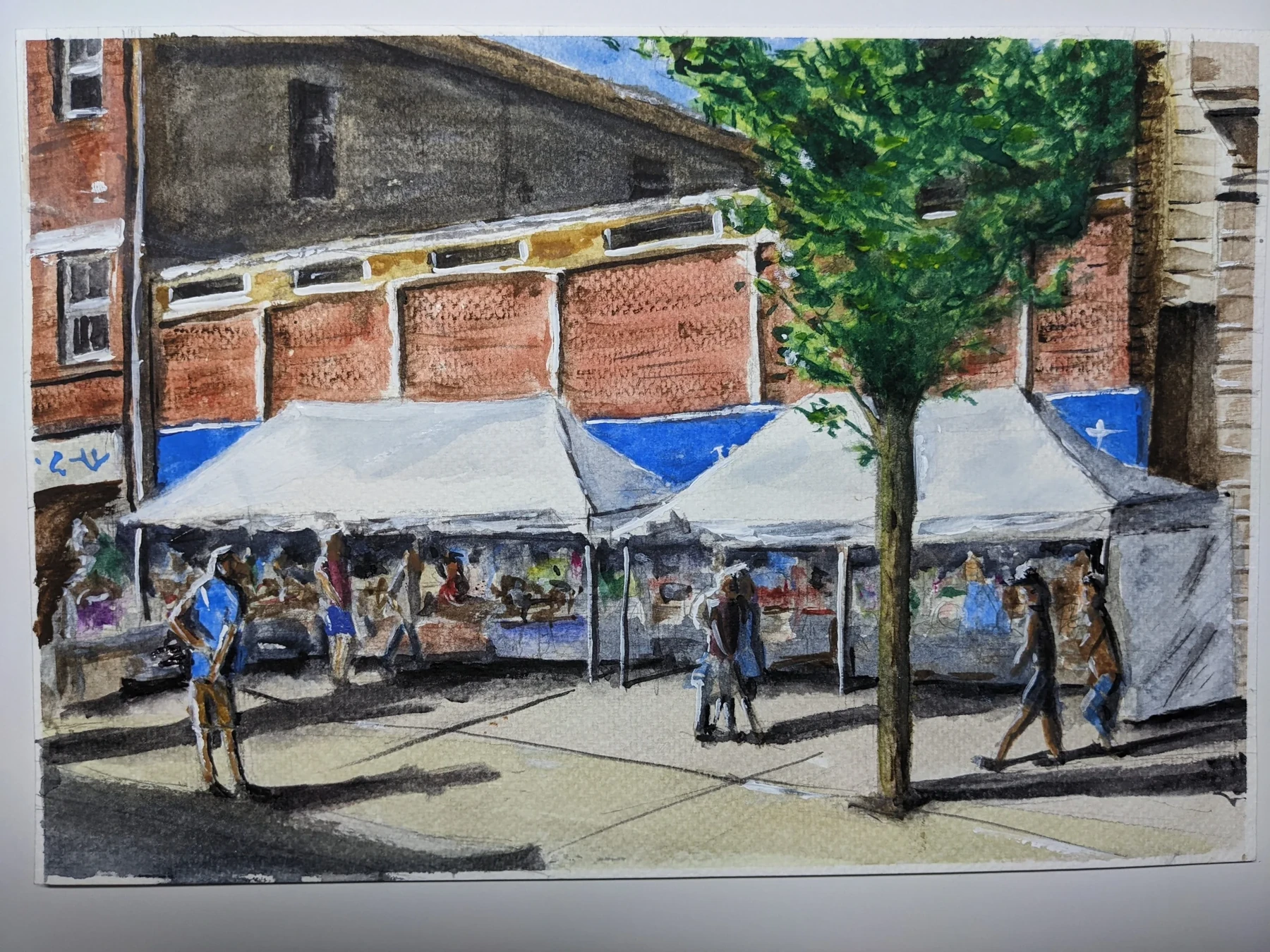
Choose one bounded subject: a doorway with part of its wall, a table and a chair, a corner of a market stall. Put four light marks on the page for the highest, lowest, leftmost and rightmost points. Leave a little space around them. You now have a drawing that can fit, which is a considerable improvement on discovering halfway through that the roof has moved into next door’s sketchbook.
Spend a minute looking without drawing. Identify one large shape, one gap and one dark. Make those three things readable before adding lettering or windows. When a line lands in the wrong place, use the next line to clarify the relationship; a page can hold a correction without becoming a confession.
Know what counts as a useful page
Write the location, date and a short observation beside the drawing. Record something a photograph might not retain: the repeated clatter of a delivery trolley, the wait between customers, the way a cloud changed a wall. At the end, choose one relationship you saw more clearly. Progress is not restricted to a drawing you would frame. A page that taught you how the corner turns has done a proper day’s work.
Your turn · 15 minutes
Take it to the page.
- Choose a doorway or street object you can observe comfortably for fifteen minutes.
- Place four boundary marks; draw the main shape and its largest neighbouring gap.
- Add one connected dark, then stop. Write where you were and one thing you noticed.
Look back: Can another person find the subject without the caption? Which proportion became clearer while you looked?
A companion film
Starting out · Sketching Scottie
How To Start URBAN SKETCHING For Beginners - FUNDAMENTALS GUIDE
Look for: Watch for the move from a broad composition to the main shapes.
Then try: Choose a corner of a room and draw its three largest shapes before any detail.
Watch on YouTube ↗Sources & further looking
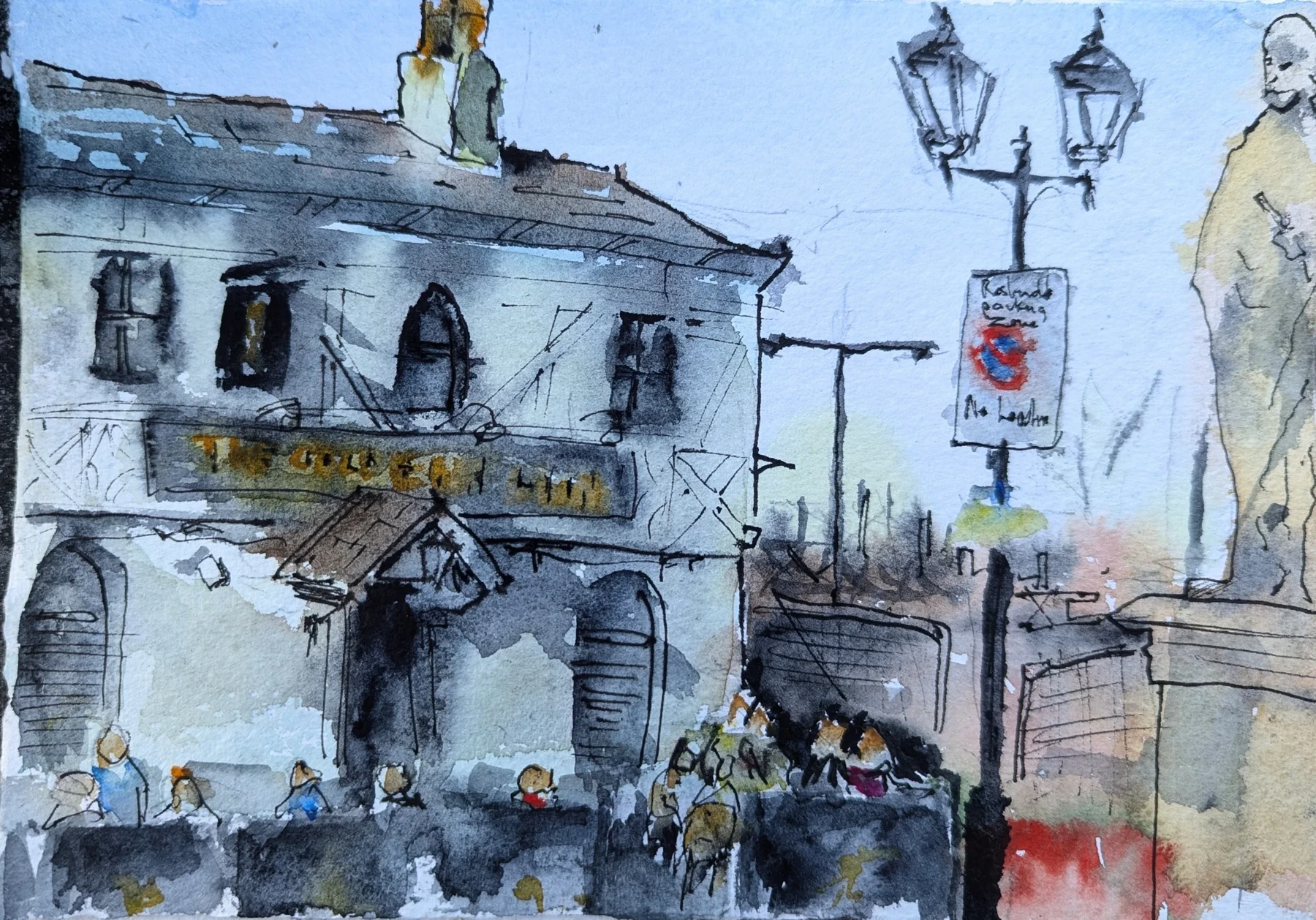
- Illustration: Keith’s, Lark Lane, Liverpool by Mark C Grant ↗
- Urban Sketchers: history and manifesto ↗
- Liz Steel: starting on location ↗
Close-looking observations and practical exercises are this publication’s interpretation. Illustration credits are shown beside each work.