Choose what the page is about
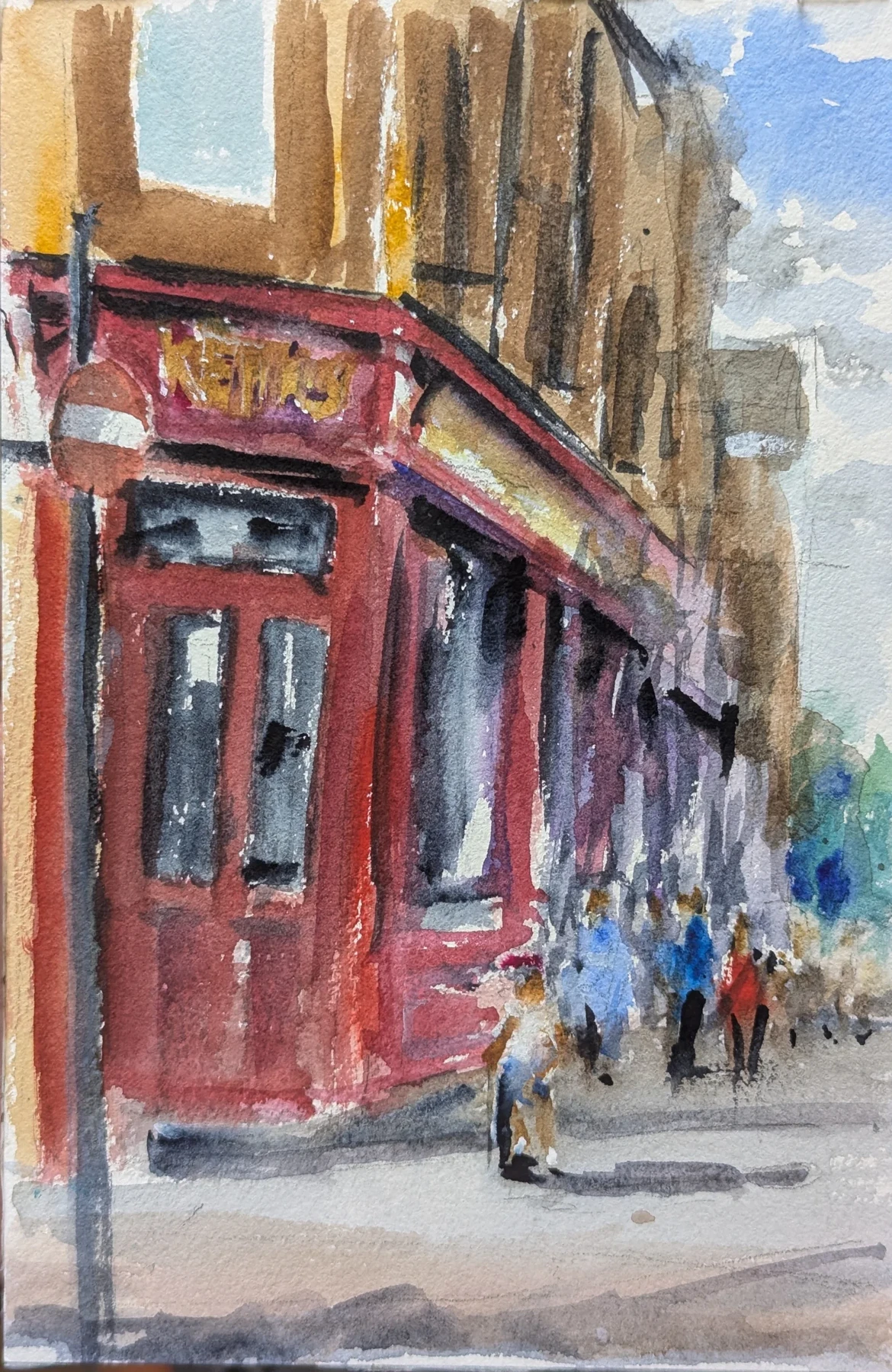
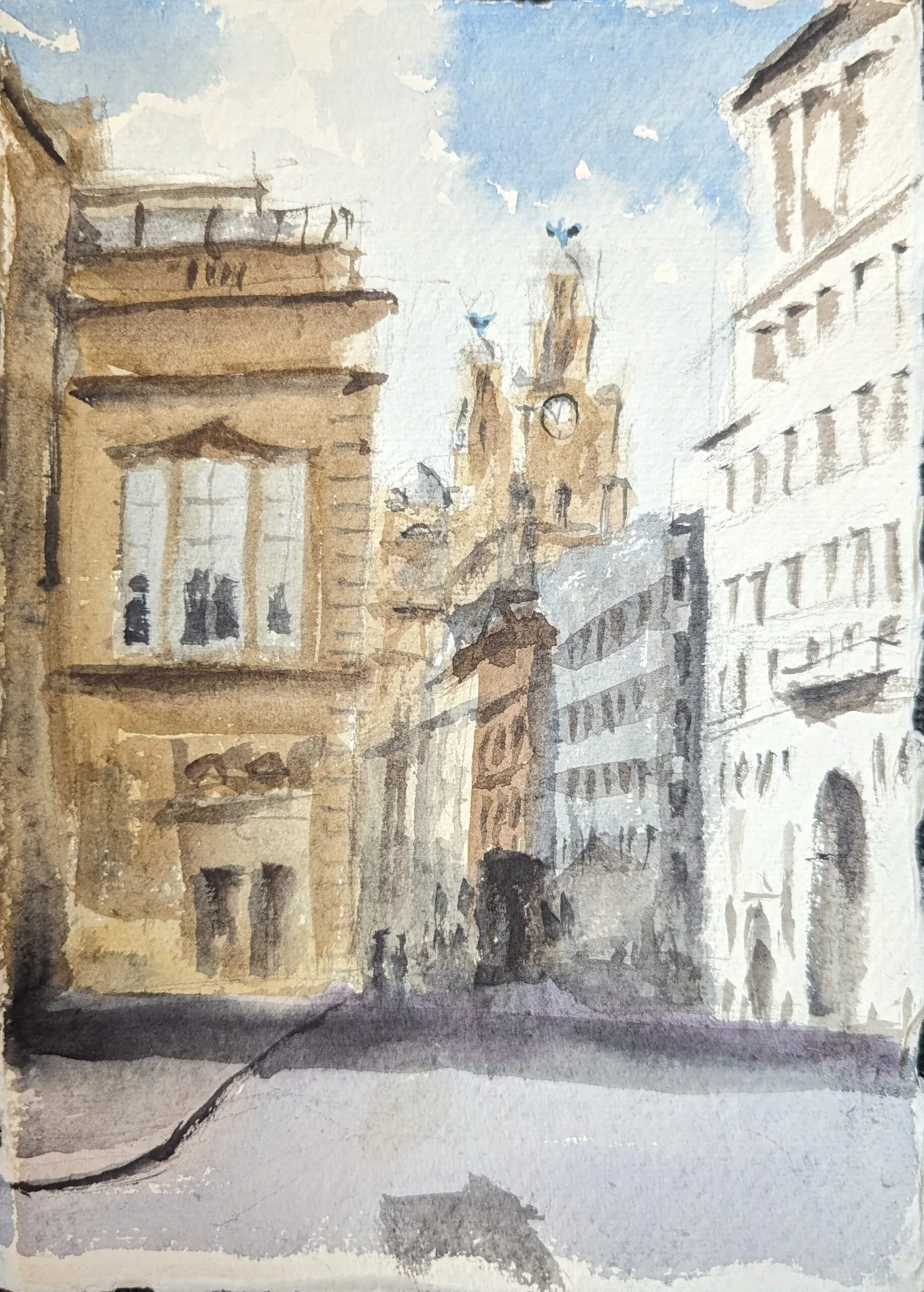
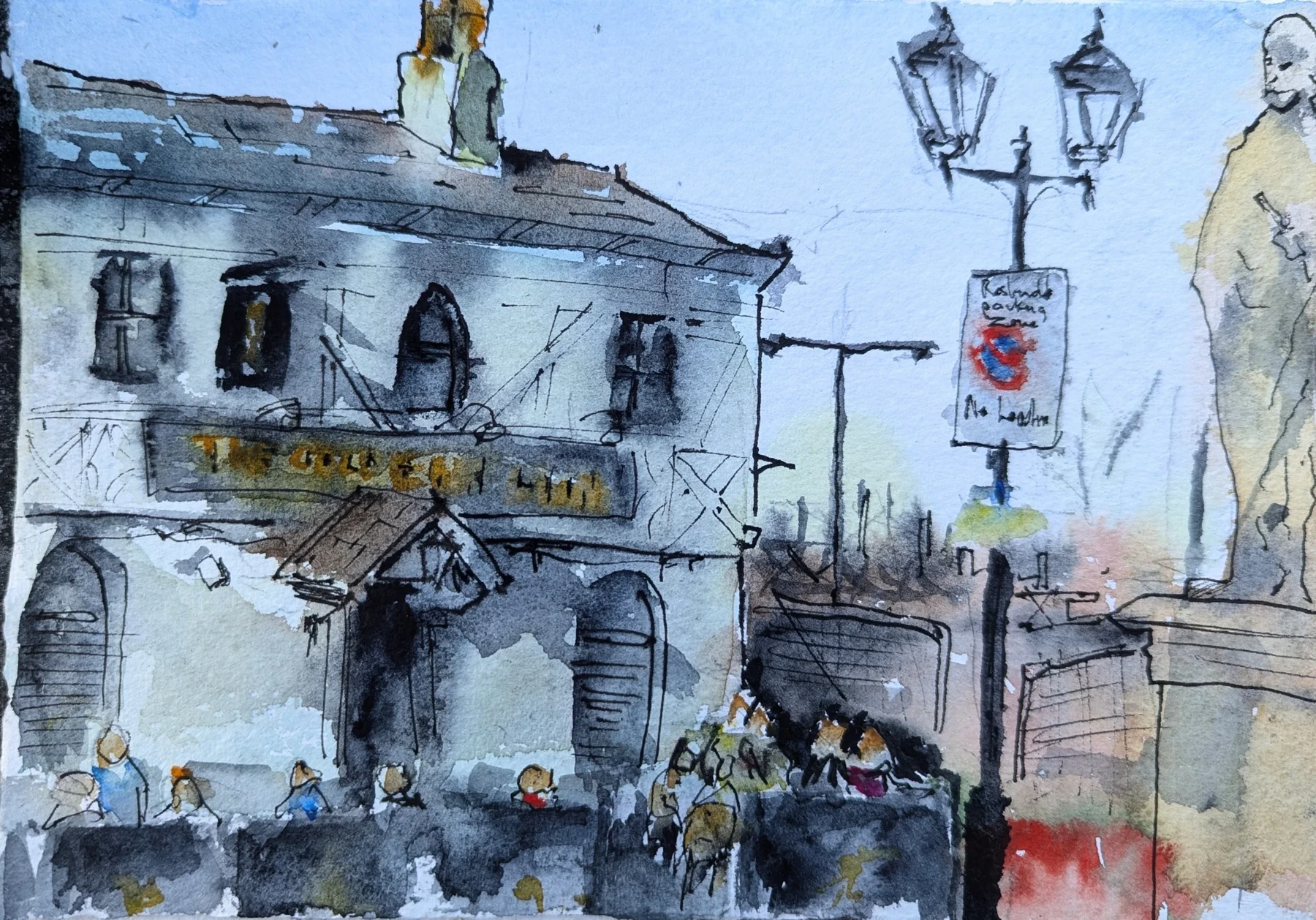
A busy street offers several drawings at once. One is about the sky between buildings. Another is about the market awnings. A third is about a single person waiting. Trying to give each equal importance produces a page where everything speaks at the same volume. Name the subject in a short sentence before choosing the frame: “the bright awnings against the brick”, for instance.
Three frames, one place
Make three thumbnails no wider than your thumb. In the first, include the whole scene. In the second, cut out half the sky. In the third, shift the main subject off centre and give its neighbour more room. Use blocks of tone rather than little pictures. A thumbnail is a decision tool, not a tiny commission.
Look at the edges. Does a pole divide a useful shape? Does a roof just touch the page awkwardly? A small movement sideways can separate overlaps. If moving is uncomfortable or impractical, change the crop instead. A seated viewpoint is a complete viewpoint; it does not need to apologise for being lower.
A place to stay
Choose a position you can keep without blocking doors or pedestrian movement. Look for shelter and a stable place for your materials. A lovely composition loses some appeal if you have to pack up every forty seconds. When the light changes, hold to the large arrangement you selected. You can note the change without rebuilding the drawing around each passing cloud.
Your turn · 20 minutes
Take it to the page.
- Draw three tiny frames of the same view: wide, close and shifted sideways.
- Use only white paper, a middle tone and one dark. Circle the clearest arrangement.
- Draw that version for fifteen minutes, leaving out details that weaken the main relationship.
Look back: Which crop makes the subject clearest? Did the spaces around it improve when you moved?
A companion film
Starting out · Sketching Scottie
How To Start URBAN SKETCHING For Beginners - FUNDAMENTALS GUIDE
Look for: Watch for the move from a broad composition to the main shapes.
Then try: Choose a corner of a room and draw its three largest shapes before any detail.
Watch on YouTube ↗Sources & further looking
Close-looking observations and practical exercises are this publication’s interpretation. Illustration credits are shown beside each work.