Choose a repeatable view
A sequence becomes useful when the viewer can compare like with like. Pick a comfortable, permitted viewpoint and record a landmark that will help you find it again: a doorway opposite, a public bench, the edge of a square. Make a modest frame you can repeat. A whole panorama gives you more to redraw and more opportunities to accidentally move the evidence.
Record what you actually know
A closed shutter is visible. The reason a business has closed may not be. Separate observed facts from explanations supplied by a sign, a conversation or a published source. Note where an explanation came from. When a person speaks to you, ask before publishing their words or identifying details. Reportage benefits from care as much as from a lively line.
Give the ordinary details a place
Temporary fencing, a new sign, different paving and the disappearance of a tree can all carry the story. Use a short caption to say what changed between visits. Retain the original date on each page. Avoid improving the earlier drawing afterwards until it resembles your latest view; the discrepancy may be precisely what makes the sequence valuable.
Make a three-visit project
One visit establishes the scene. A second asks what remained and what changed. A third lets you see whether your original question still matters. If nothing visible has altered, record the different use of the space or quality of light. A quiet interval is information too. The street is under no obligation to stage a dramatic finale for your sketchbook.
Your turn · 30 minutes
Take it to the page.
- Select one accessible view and draw a small establishing sketch.
- Return on two later dates, using the same frame and noting observed changes.
- Add sources beside any explanation you could not see directly.
Look back: Can a reader distinguish the visible evidence from your interpretation?
Sources & further looking
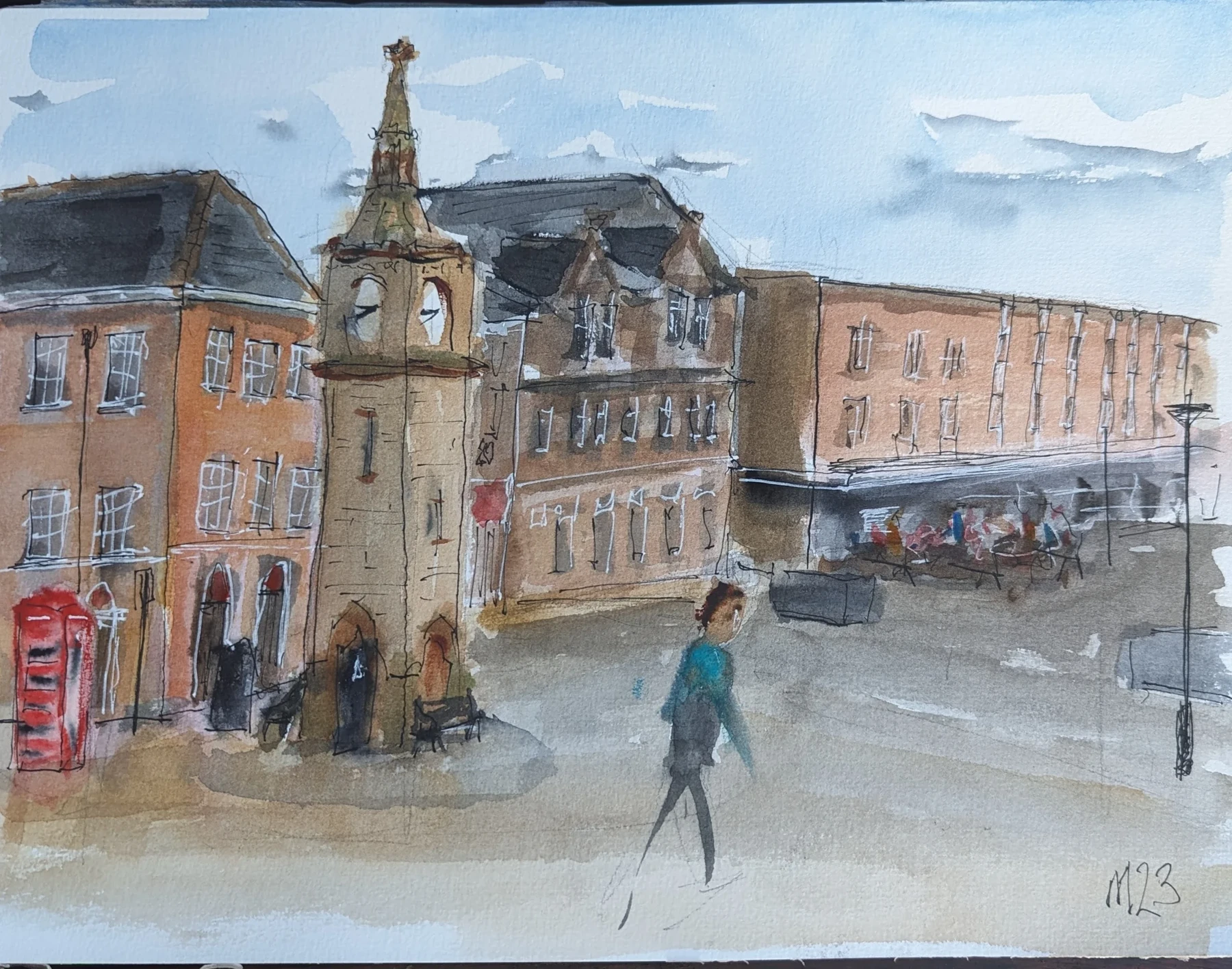
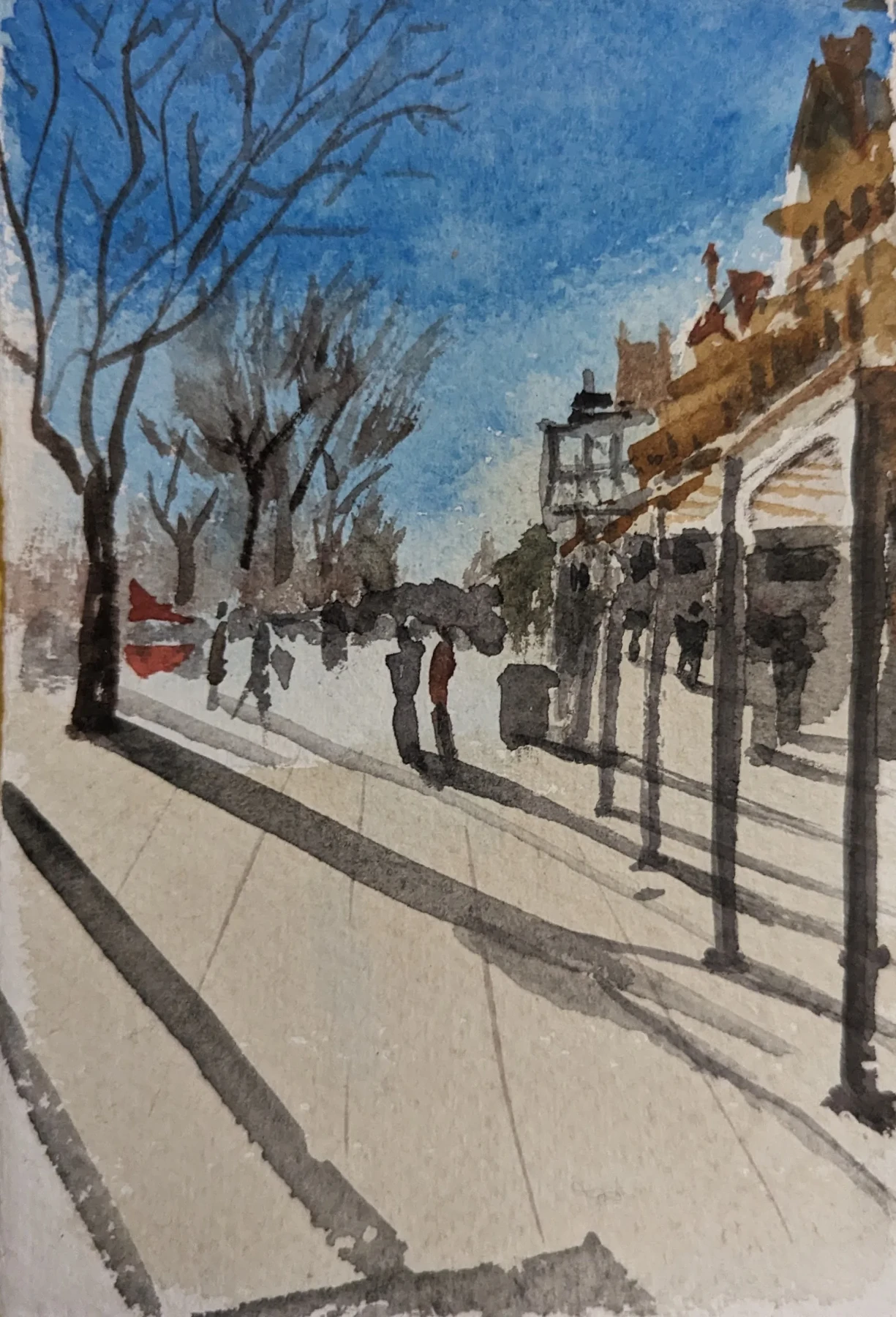
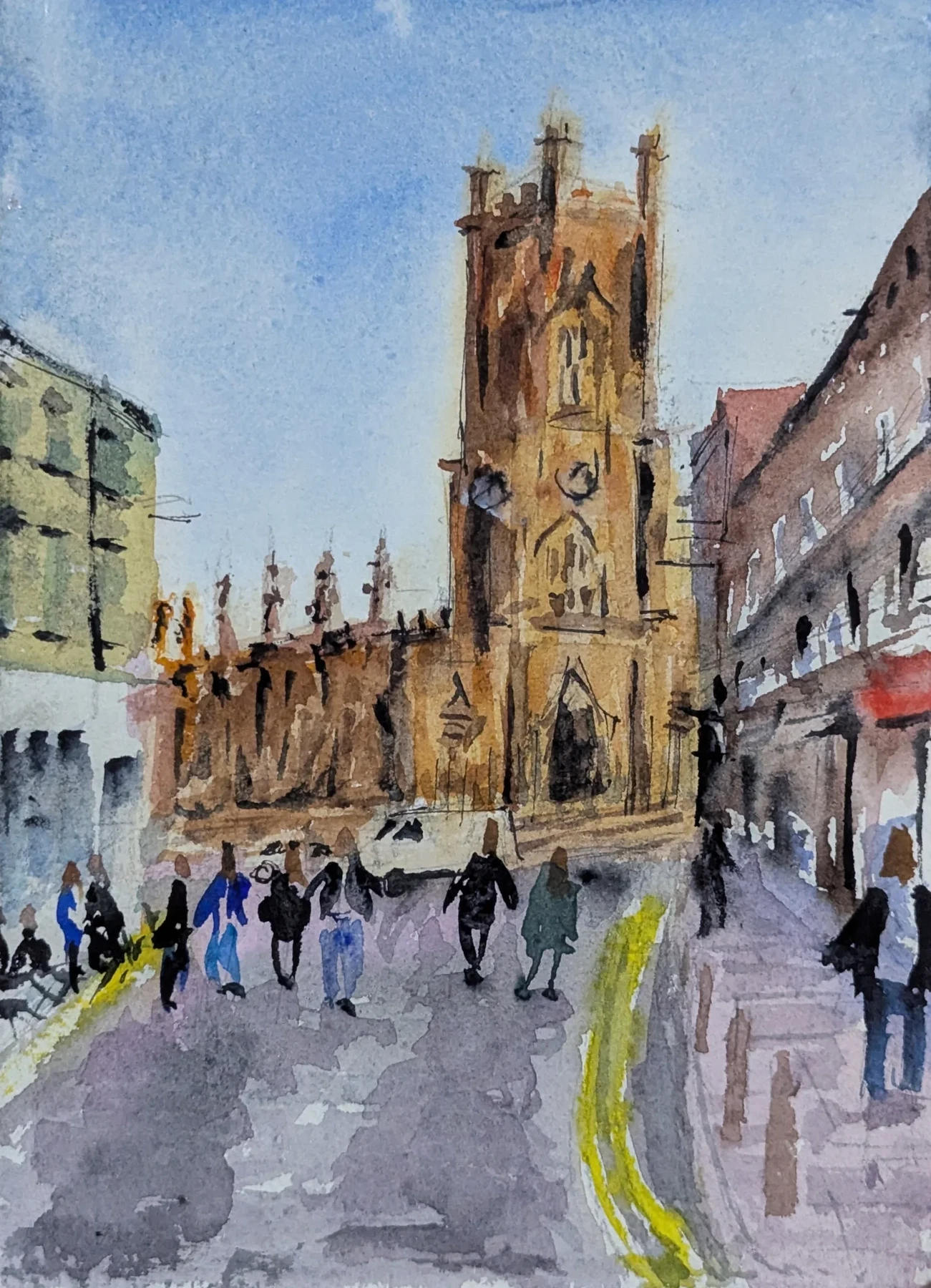
- Illustration: Exchange Station, Liverpool by Mark C Grant ↗
- Urban Sketchers: visual reportage and narrative context ↗
Close-looking observations and practical exercises are this publication’s interpretation. Illustration credits are shown beside each work.