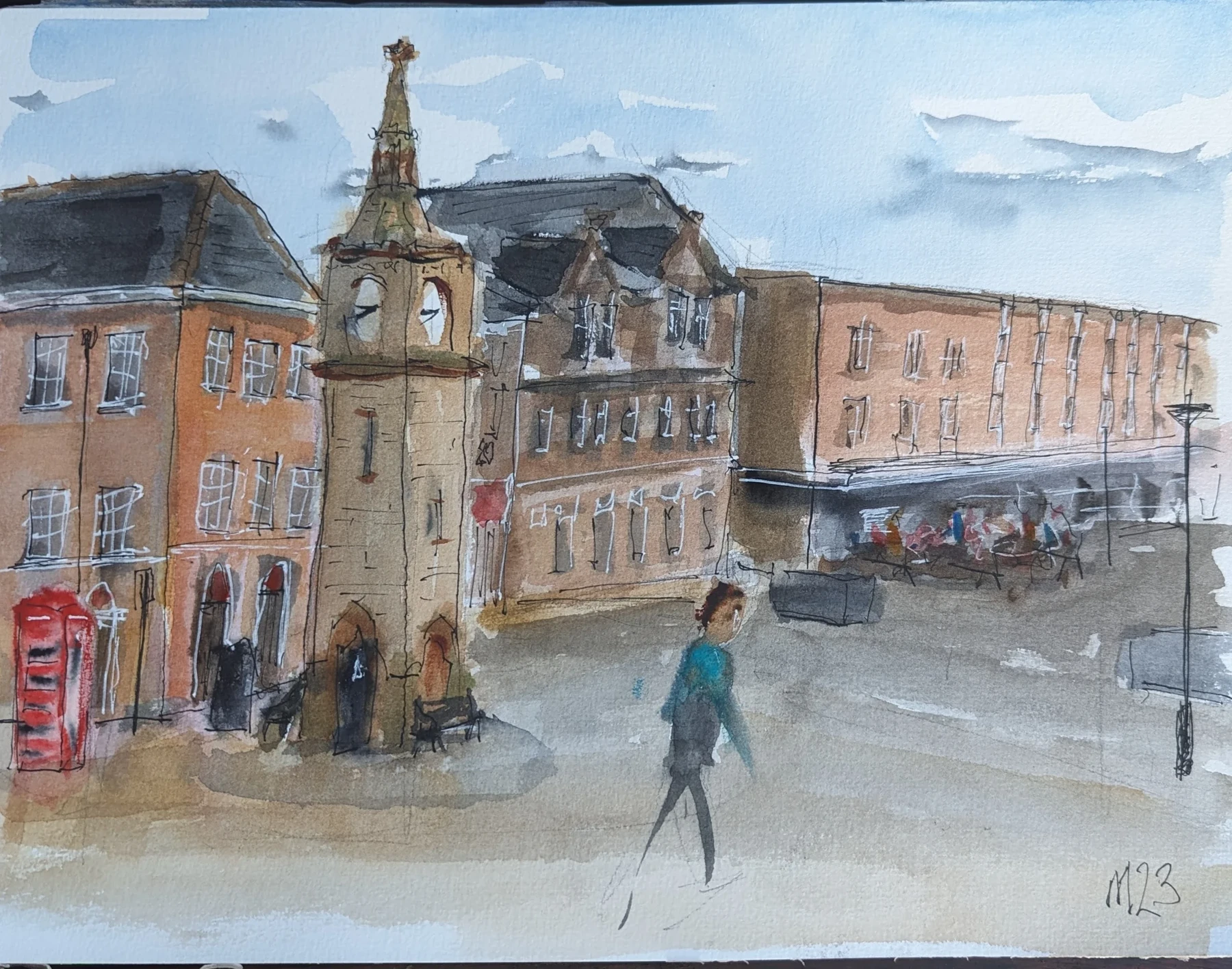
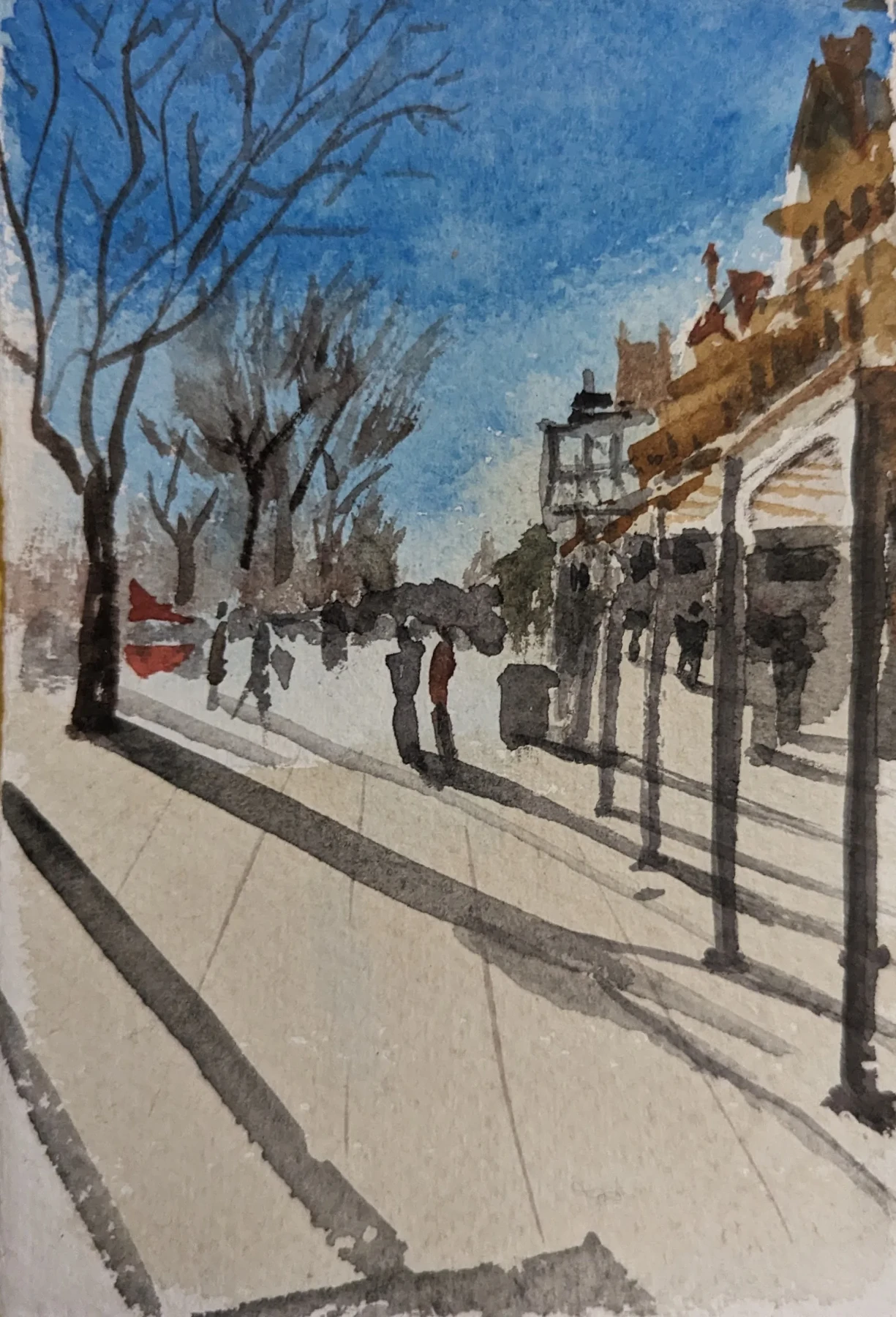
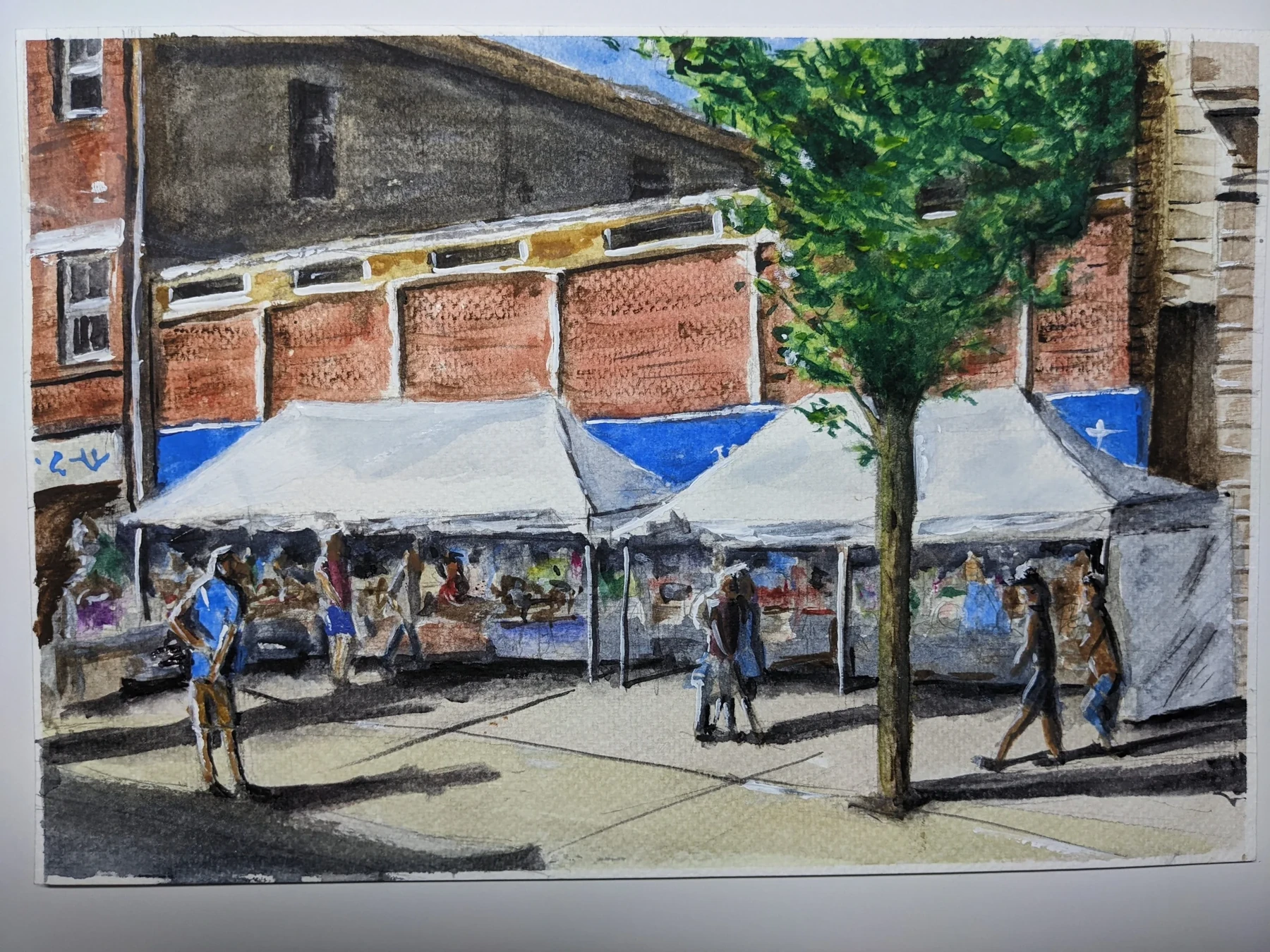
Keep the evidence of looking
An awkward page can contain an exact observation: the way a roof meets a wall, a colour relationship, the position of a shadow. If you discard every drawing that fails as a finished picture, you remove the record of learning that could make the next page better. Keep it and add a short diagnosis while the problem is still clear.
Describe the mistake precisely
“The building looks wrong” offers little help. “The right-hand face is too wide compared with the front” gives the next attempt a task. Put a small corrective thumbnail beside the original rather than endlessly working over it. Two drawings can explain a change more clearly than one battered drawing trying to conceal it.
Record the circumstances
Note location, date, approximate duration and the conditions that affected the page. Distinguish a direct observation from a later addition or a study made from a photograph. These notes are not bureaucratic decoration. They help you see why a quick pencil page may have more life than a long studio rescue.
Review a group of pages
After a few outings, lay out several drawings and look for a repeated strength and a repeated difficulty. Choose one specific experiment for the next outing. The aim is a working habit that can survive an ordinary week. A sketchbook that waits for a perfect day is an expensive way to store clean paper.
Your turn · 20 minutes
Take it to the page.
- Choose three recent sketches and write one useful observation beside each.
- Make a small corrective thumbnail for one repeated problem.
- Set one specific aim for the next outing and record the result afterwards.
Look back: Can you see a repeated decision across the pages? Is your next step small enough to try?
Sources & further looking
Close-looking observations and practical exercises are this publication’s interpretation. Illustration credits are shown beside each work.