The first drawing is not the whole place
A location has more than one useful scale. A square can be a network of rooflines, a rhythm of moving people or a small exchange at a stall. Returning to the same spot removes the pressure of finding a new subject and gives your attention something more interesting to do.
Change one condition
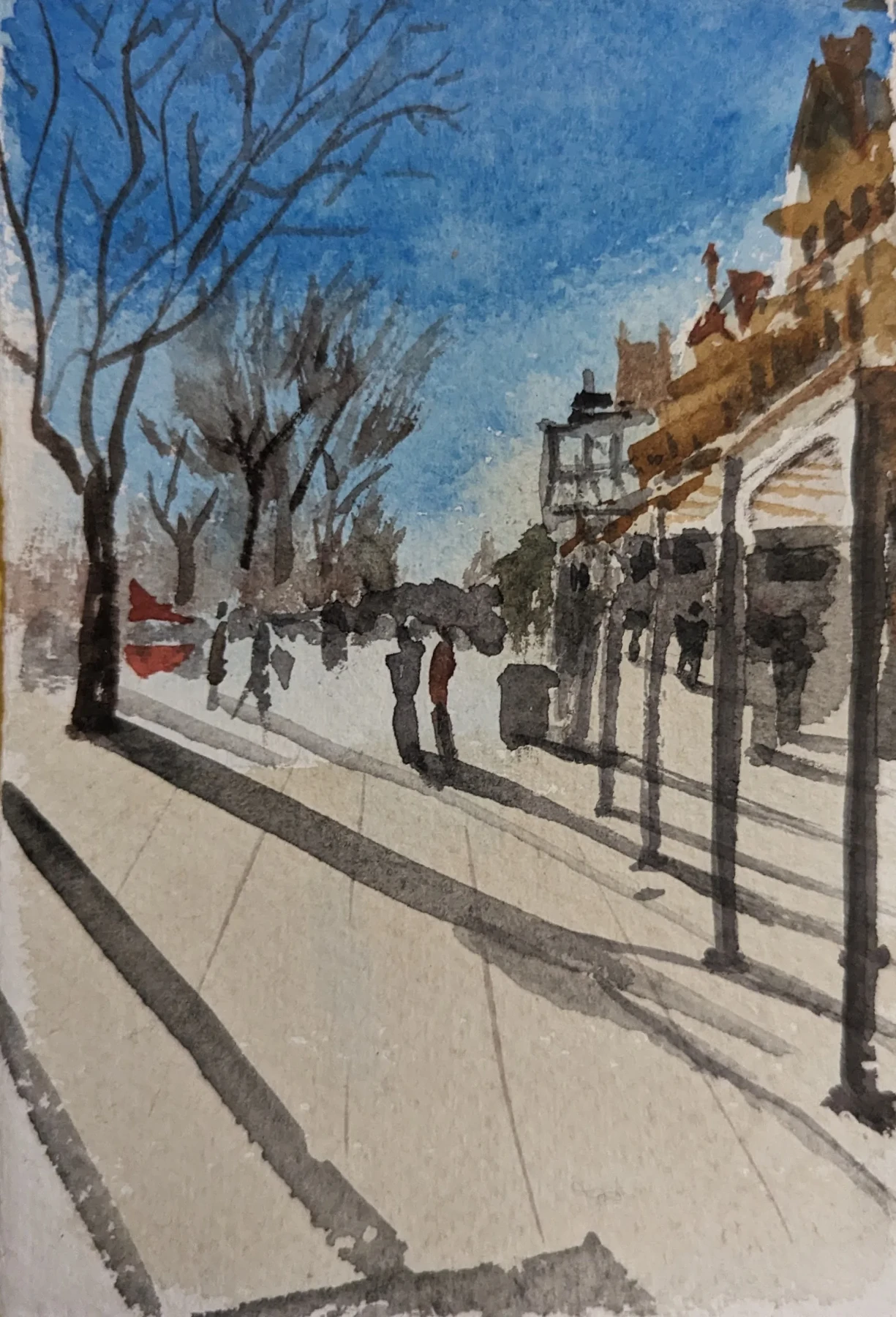
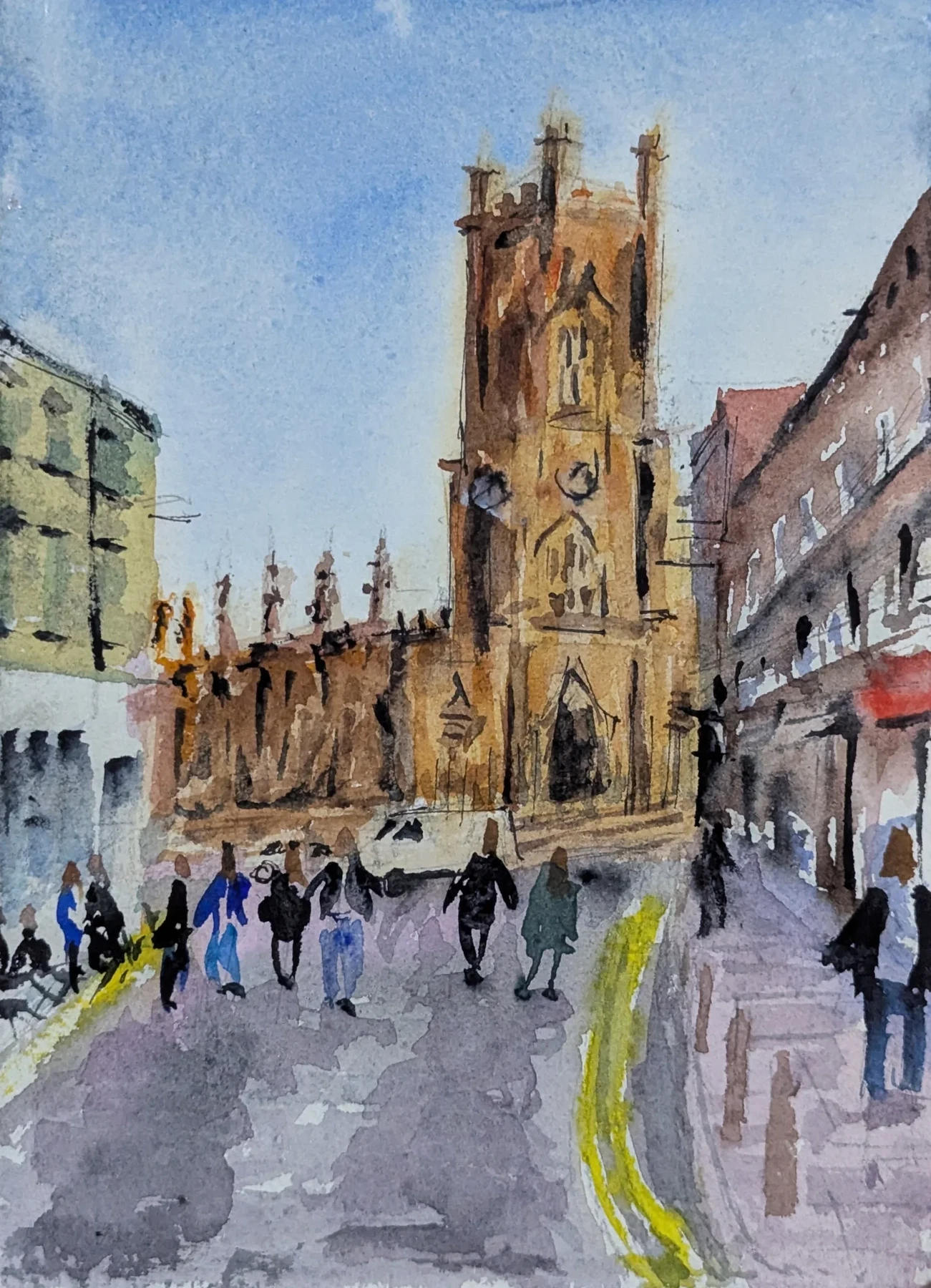
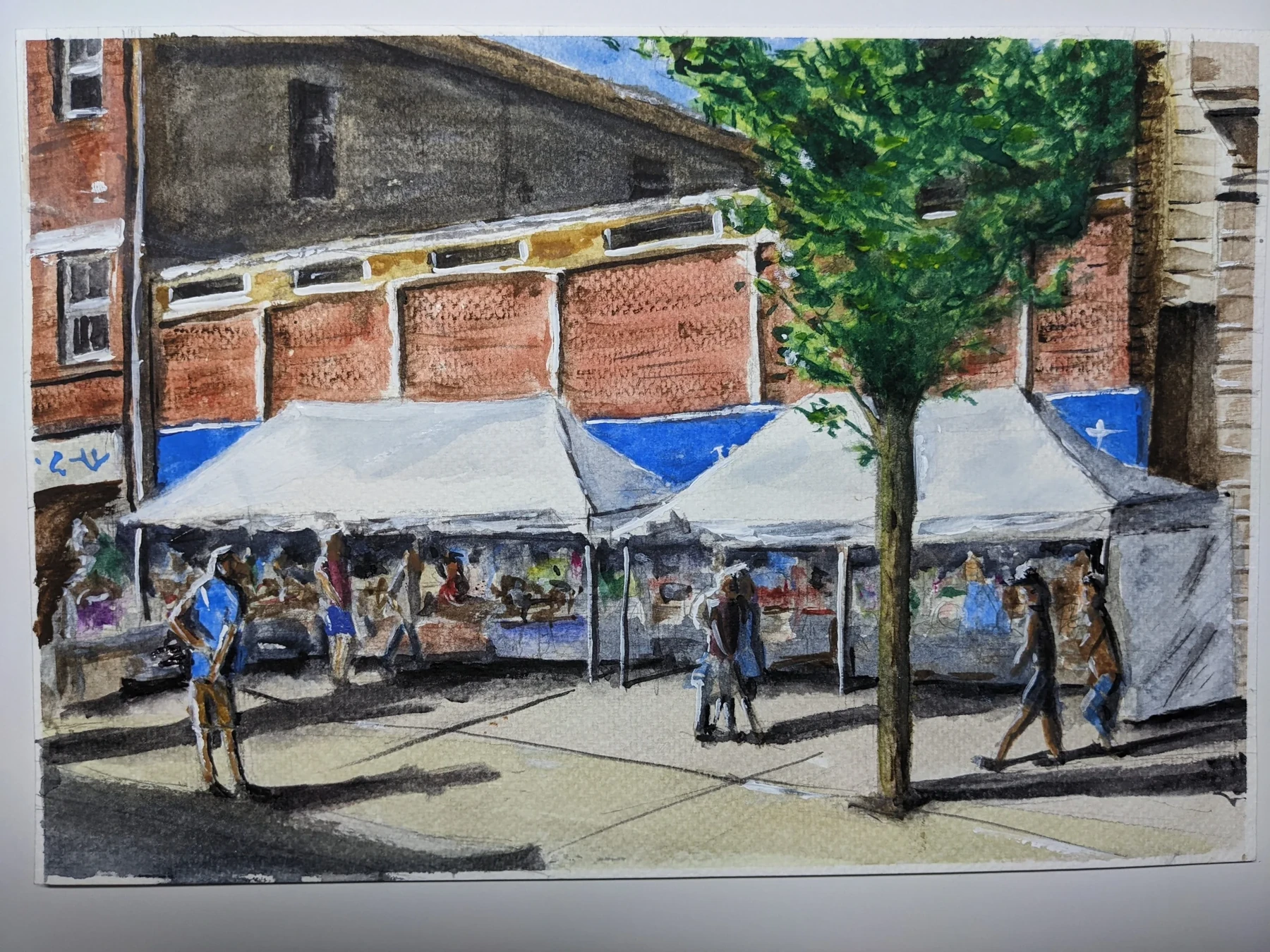
Make one drawing about the broad arrangement, one about a small detail and one about an event or movement. Keep the tools and total time similar. That way the difference is mostly in what you attend to. If you change everything at once, it becomes harder to understand why one page works.
Compare without choosing a winner
Lay the drawings beside each other. The broad view may explain the square while the close view tells you what its surfaces feel like. A figure study may hold the strongest sense of time. The pages can cooperate. An archive of places does not need each drawing to perform every job.
Make a sequence
Arrange the three pages in an order that leads a reader into the place. Add one short caption to each, identifying what is seen rather than claiming a story you do not know. A closed shop is a closed shop; the drawing alone cannot tell you why it closed. Observation gets more interesting when it keeps that distinction.
Your turn · 30 minutes
Take it to the page.
- Draw the whole setting for ten minutes.
- Draw one overlooked detail for ten minutes.
- Draw an observed movement or changing shadow for ten minutes, then sequence the pages.
Look back: What does each drawing add that the other two cannot? Are the captions observation or assumption?
Sources & further looking
Close-looking observations and practical exercises are this publication’s interpretation. Illustration credits are shown beside each work.