Start with the value
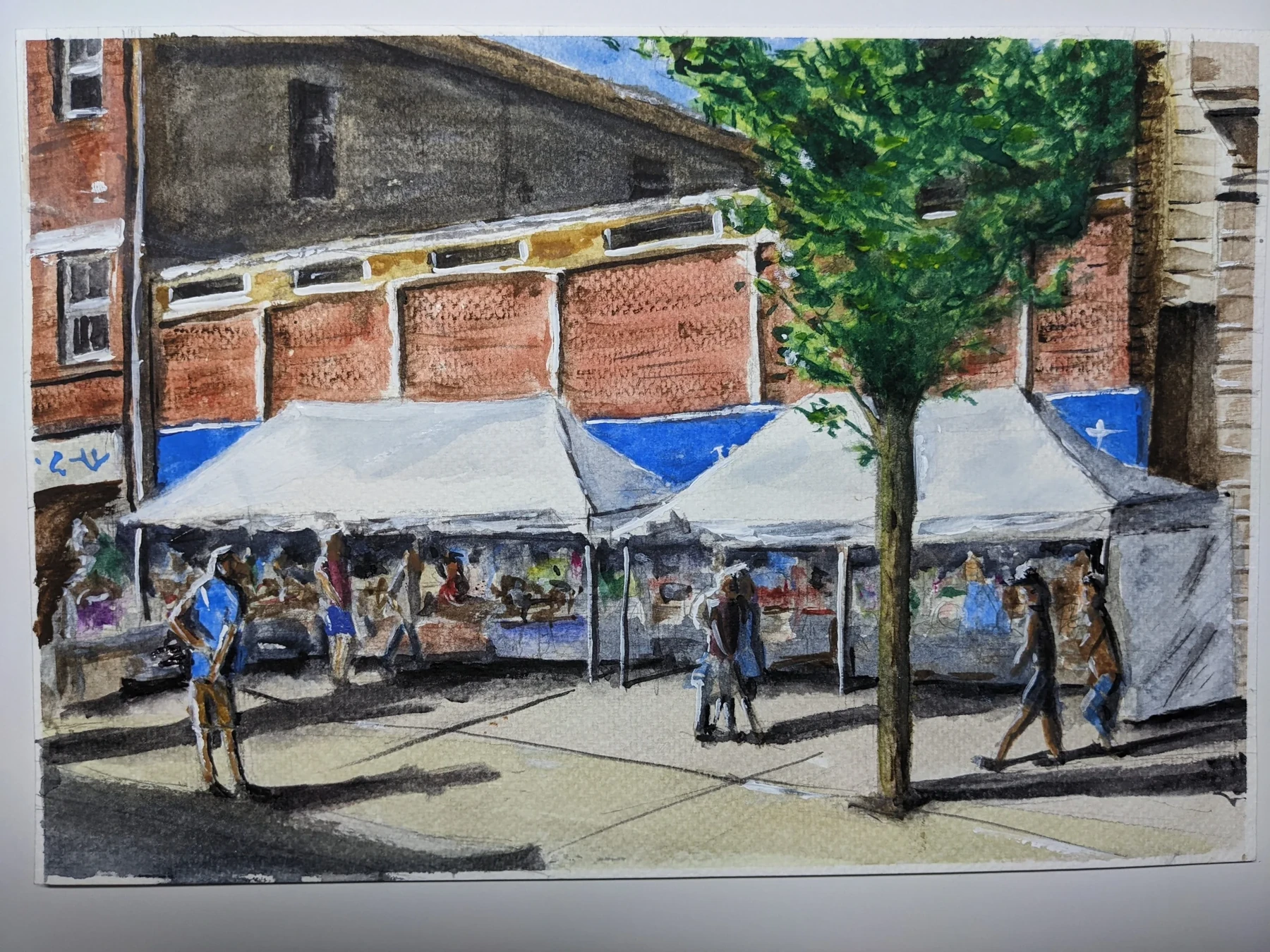
A tube labelled green has no idea what the weather is doing. Compare the foliage with the wall, pavement and sky before matching its hue. Is the tree a dark mass against a pale façade, or a light canopy in front of a shaded building? Establish that relationship in a small grey study. A plausible green at the wrong value can shout louder than the subject you meant to paint.
Mix a family
Begin with a blue and yellow you already know. Vary their proportions, then test a small addition of a complementary reddish mixture or earth colour to reduce intensity. The result depends on the pigments, so make swatches rather than trusting a name. Keep one dominant mixture and a few related variations. A tree does not need twelve unrelated greens to prove that it is alive.
Keep gaps and direction
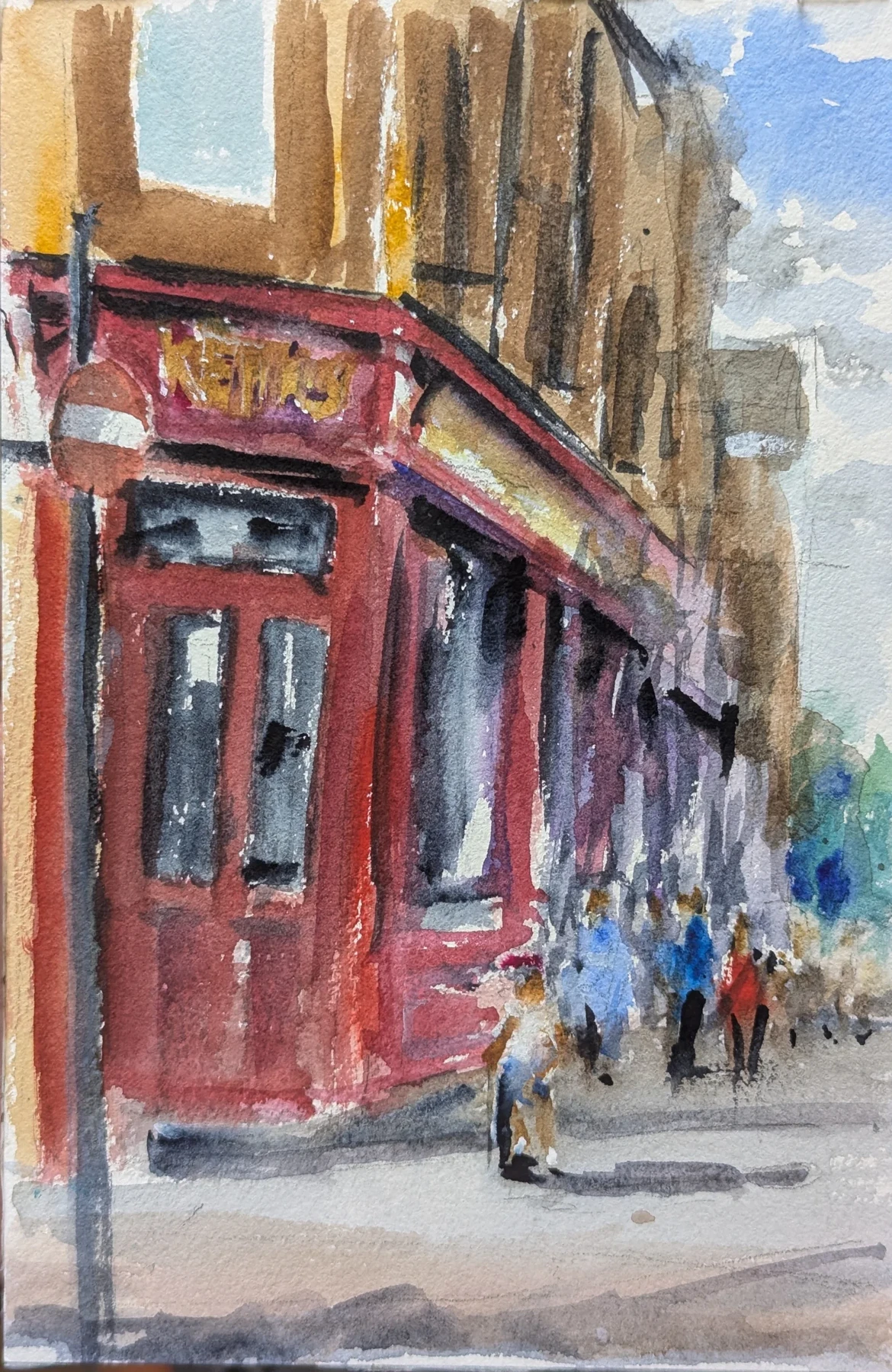
Paint the large canopy shape, reserving useful holes where sky or architecture shows through. Add a darker underside or branch connection after checking its place in the light. Avoid outlining every leaf. A few directional marks near the focal point can suggest foliage while broader passages carry the rest. Look at the planting around the pub in the companion painting and ask how much description is doing the actual work.
Your turn · 20 minutes
Take it to the page.
- Compare the foliage’s value with the building behind it.
- Mix three related greens from a limited palette.
- Paint one canopy as a large shape, keeping two observed gaps.
Look back: Does the tree belong to the light of the scene?
Sources & further looking
Close-looking observations and practical exercises are this publication’s interpretation. Illustration credits are shown beside each work.