Keep the measuring position steady
Hold the pencil at a comfortable arm’s length and use your thumb to mark a visible height or width along it. Close one eye if that helps you isolate the comparison. Keep your head, arm extension and viewpoint consistent when comparing another dimension. You are using the pencil as a relative measure, not converting a building into centimetres. Moving the pencil closer halfway through produces very confident nonsense.
Choose a useful unit
Use a prominent opening, a whole building width or the distance between two corners as your unit. Compare the total height with that unit. Then check where a major horizontal division falls. You only need a few comparisons to establish the broad shape. Measuring every window defeats the purpose of a quick study and leaves very little time to notice why the place interested you.
Return to the drawing
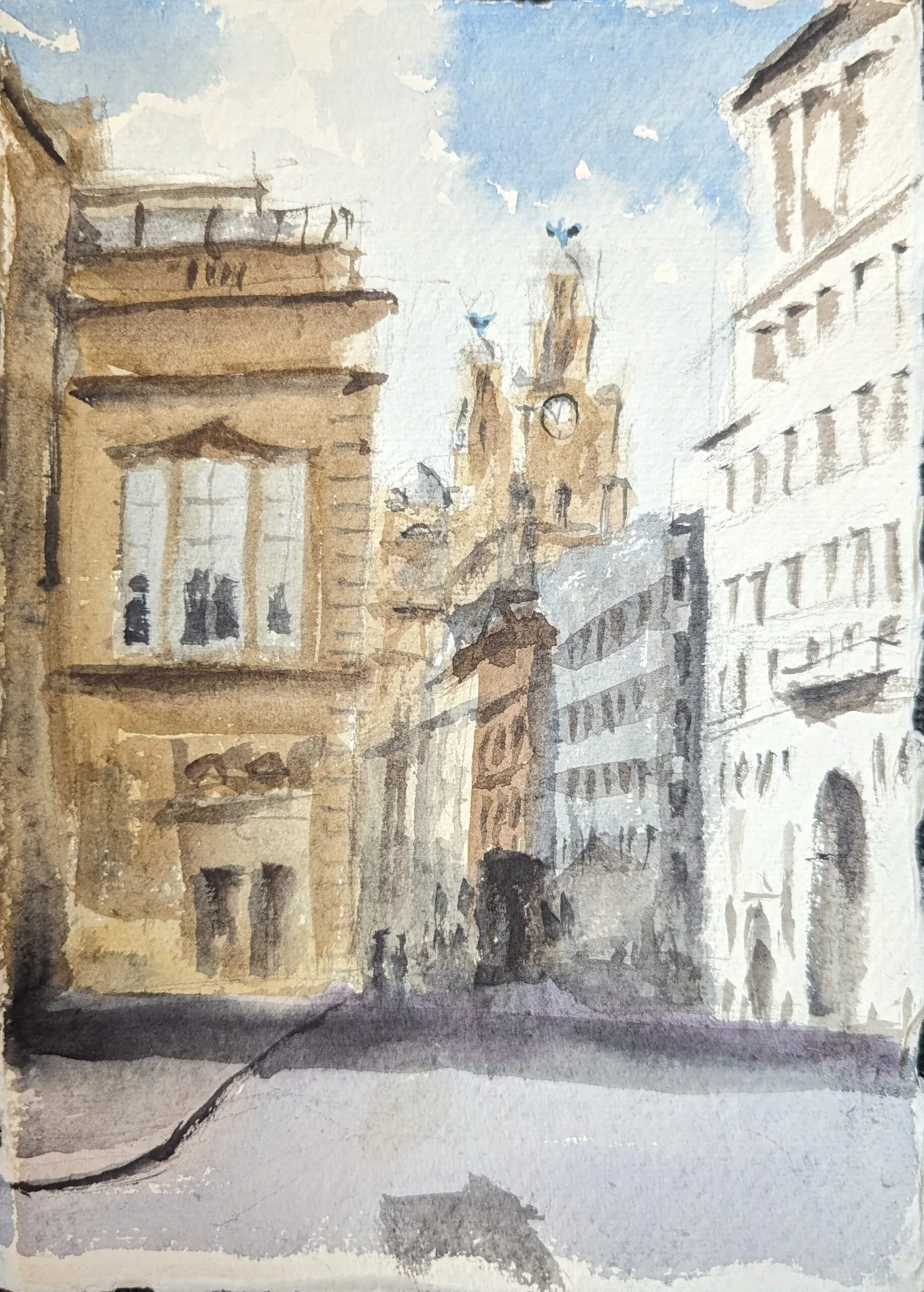
Put the pencil down and make the marks. Measuring should inform the drawing, not replace looking with a small outdoor calibration ceremony. If the main proportions feel wrong later, repeat the same comparison from the same seat. In a tall subject such as the Liver Building, checking the relationship between the broad body and its towers can prevent a page of attractive detail balanced on an implausible foundation.
Your turn · 15 minutes
Take it to the page.
- Choose a building width as one unit.
- Compare its height and one major division against that unit.
- Draw the large shape, then check only those three relationships again.
Look back: Did measuring solve a particular proportion, or merely postpone making a mark?
Sources & further looking
Close-looking observations and practical exercises are this publication’s interpretation. Illustration credits are shown beside each work.