Assign the roles
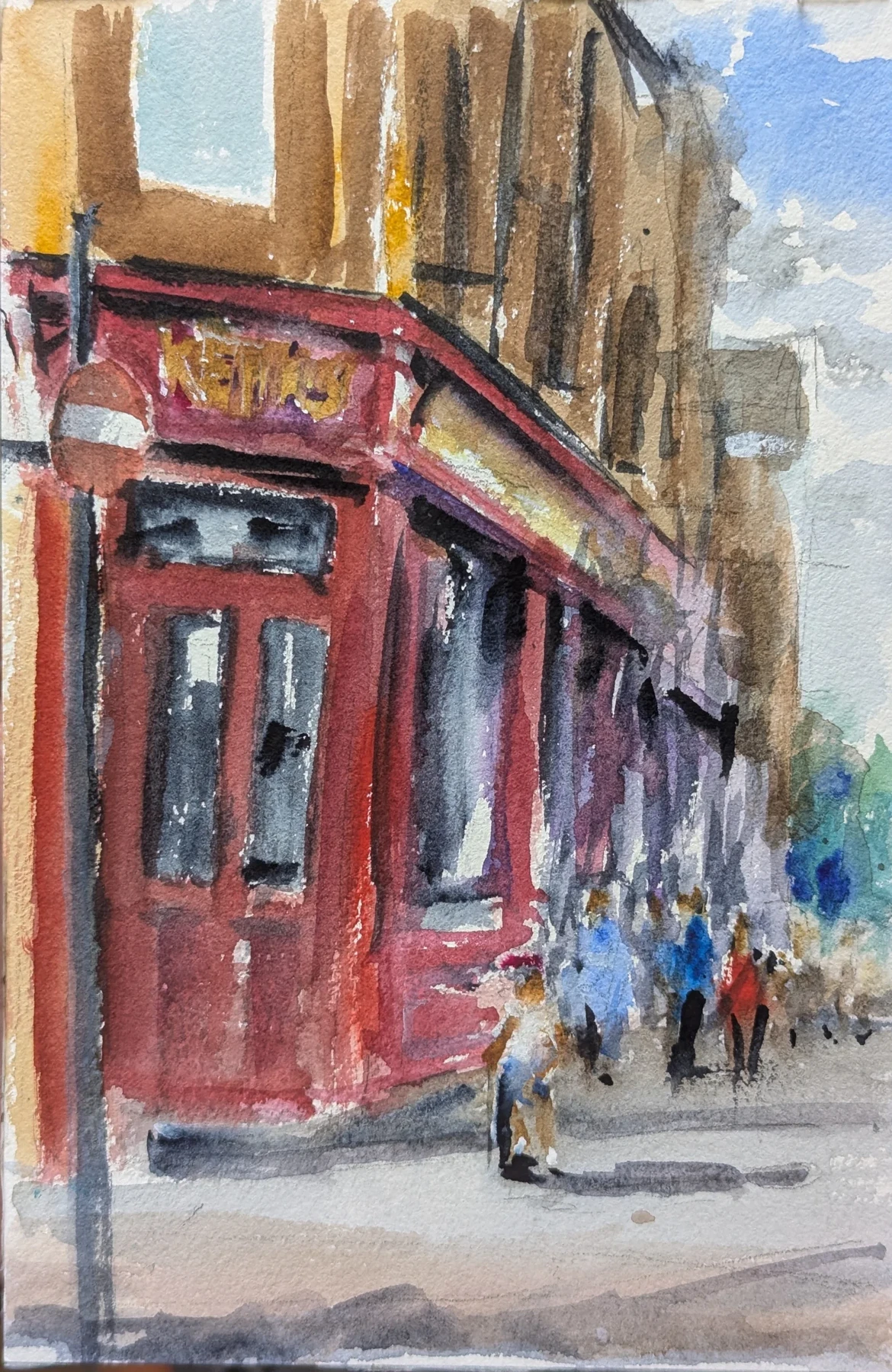
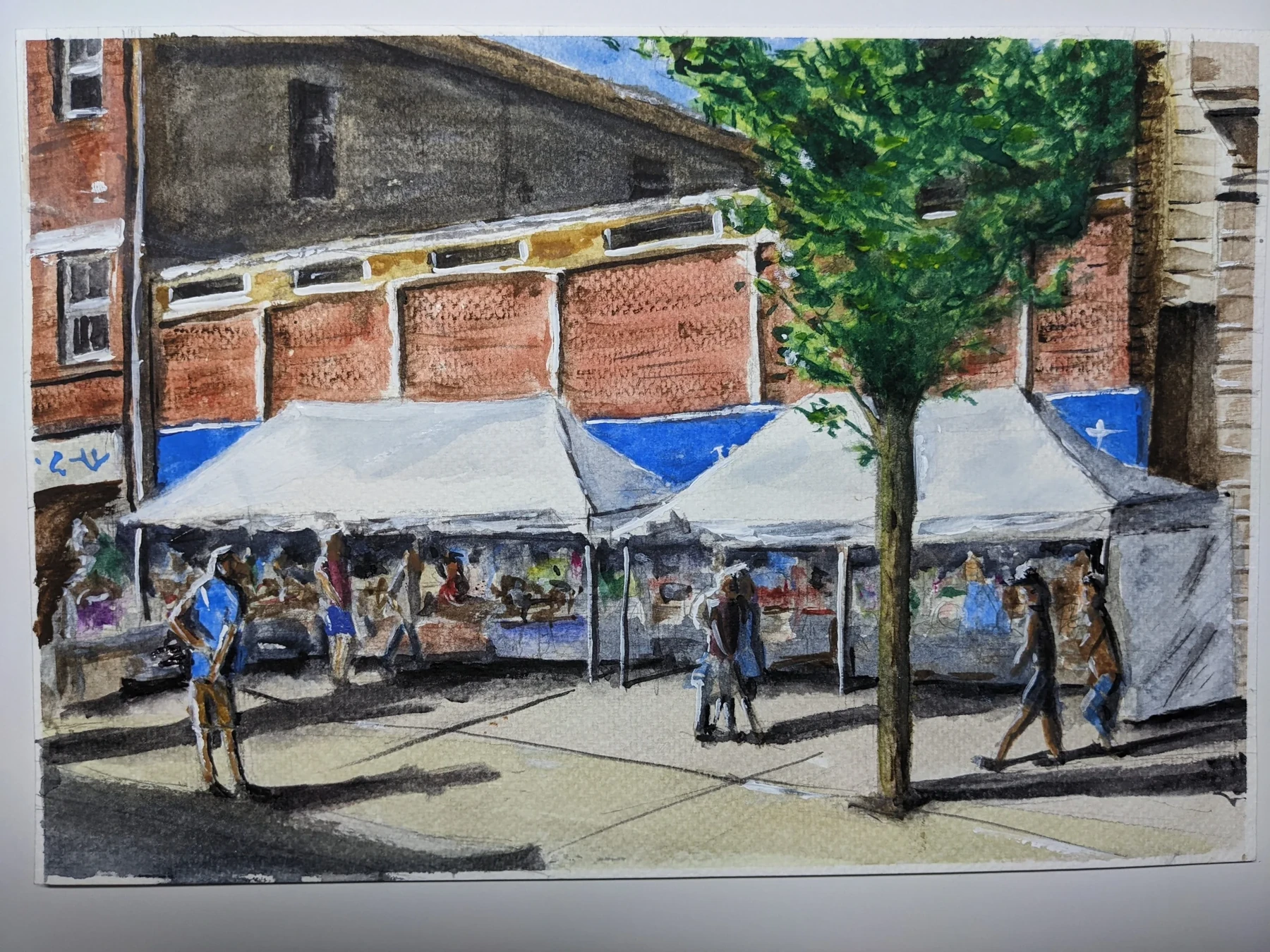
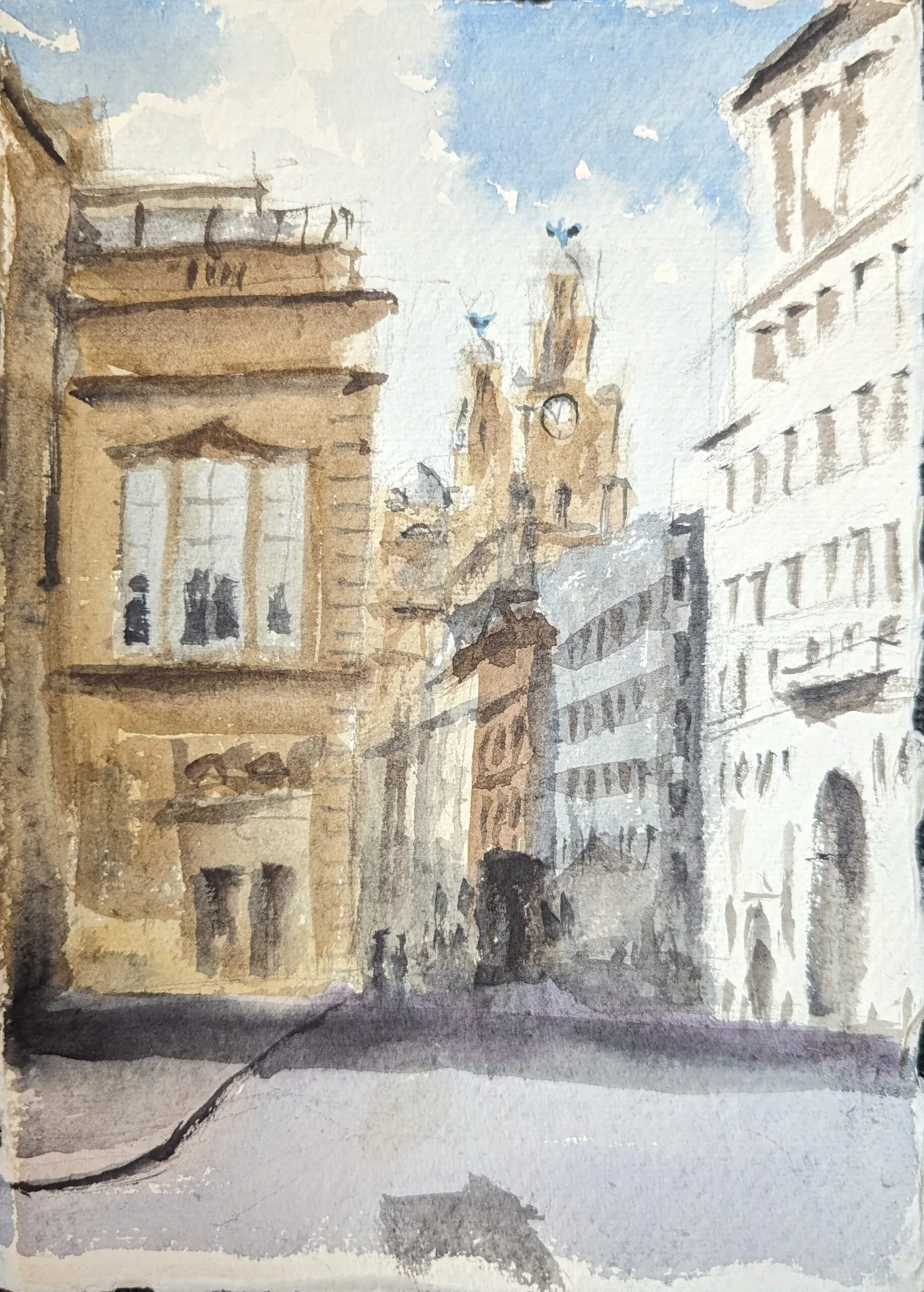
Choose what each medium will contribute. A pencil may establish soft structure, pen may clarify a few edges, watercolour may carry the main light, and an opaque pencil or gouache mark may restore a small accent. You do not need all four. Add a tool because the drawing asks for a particular kind of mark, not because a pocket in the bag looks under-employed.
Test the order
At the back of the book, try your intended sequence. Does the ink run under water? Does the pencil resist the wash or lift into it? Will the opaque mark grip the surface after the paint dries? “Waterproof” depends on the particular ink and adequate drying. Paper also matters. A tiny test prevents the main drawing becoming an expensive demonstration of incompatible assumptions.
Keep the first decisions visible
Layering can clarify a page, but repeated correction can conceal the observed structure under a busy surface. Use opaque accents sparingly if your aim is a transparent wash. If you choose a more covered, graphic result, let that be deliberate. There is no moral advantage in a supposedly pure medium. The useful test is whether the added mark explains something that needed explaining.
Your turn · 20 minutes
Take it to the page.
- Make three small tests of your tools in different orders.
- Choose two media and assign a distinct role to each.
- Draw one observed subject, adding the second medium only where it helps.
Look back: Can you say what each tool contributed to the page?
Sources & further looking
Close-looking observations and practical exercises are this publication’s interpretation. Illustration credits are shown beside each work.