Give the outing a small job
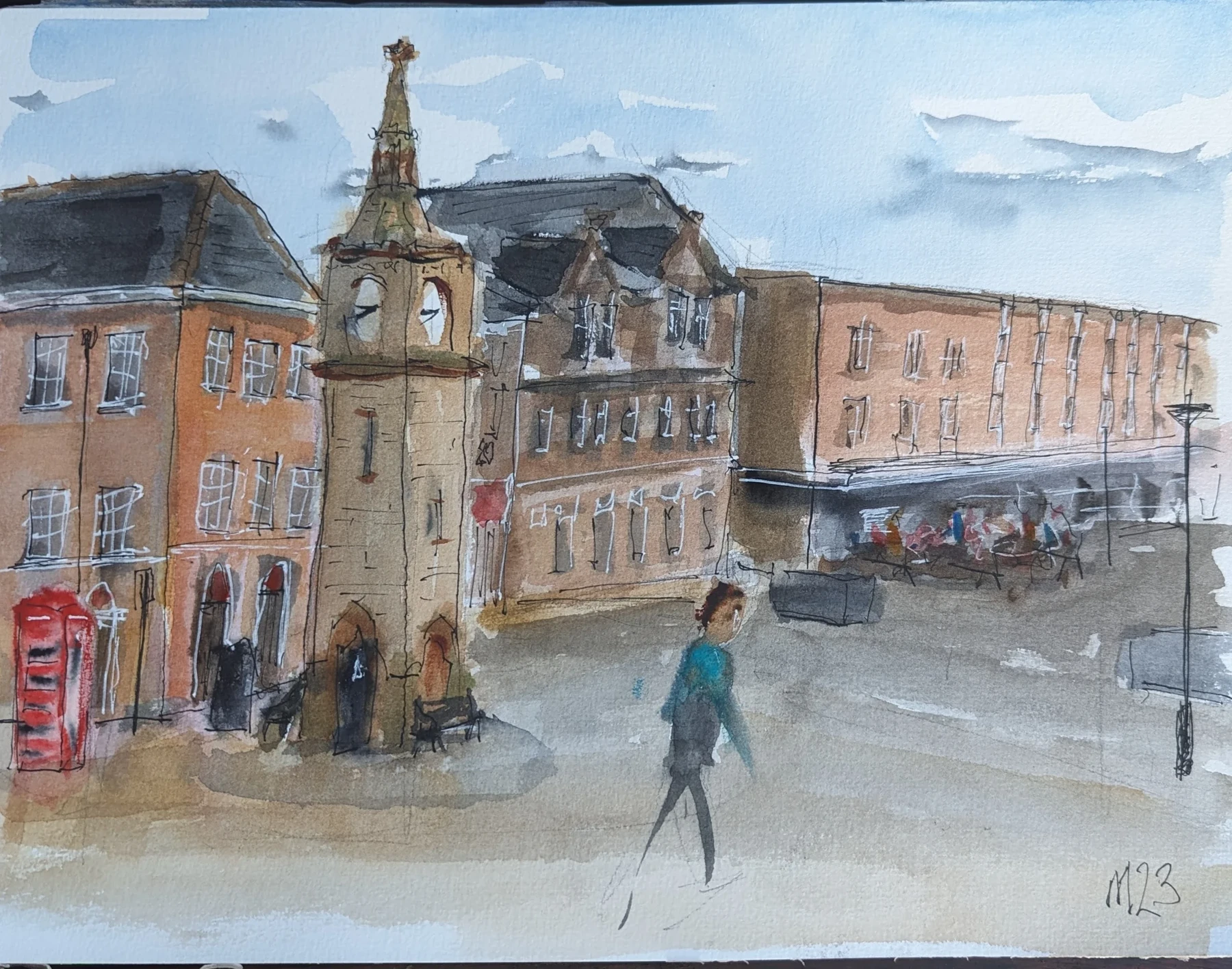
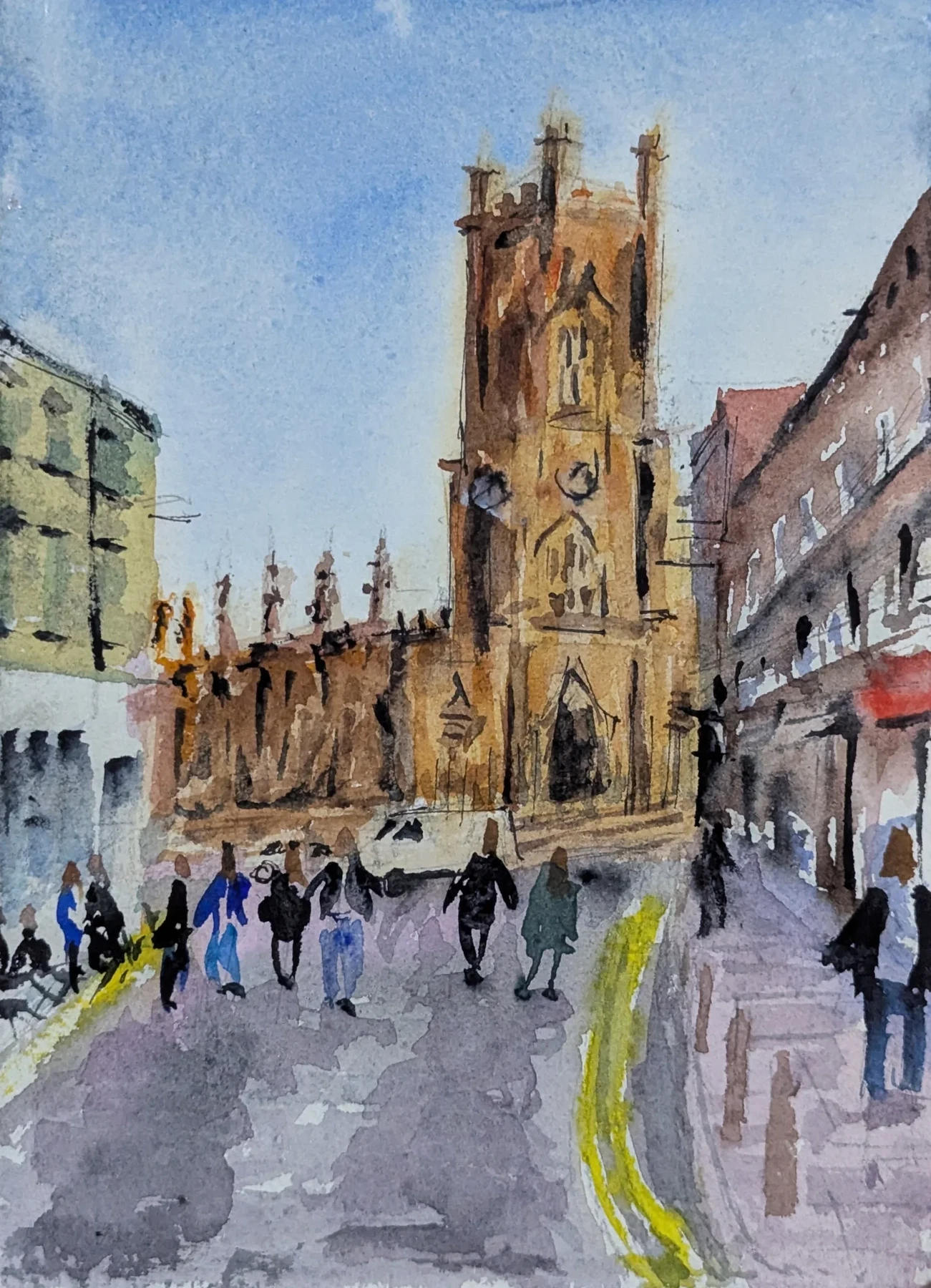
“Practise drawing” is a worthy intention with no obvious stopping point. “Can I make the tower feel tall without drawing every window?” gives you a subject, a problem and a way to review the result. A useful question fits the time you have. Ten minutes is enough to compare a few angles; it is a poor appointment for solving all of architecture.
Choose a visible relationship
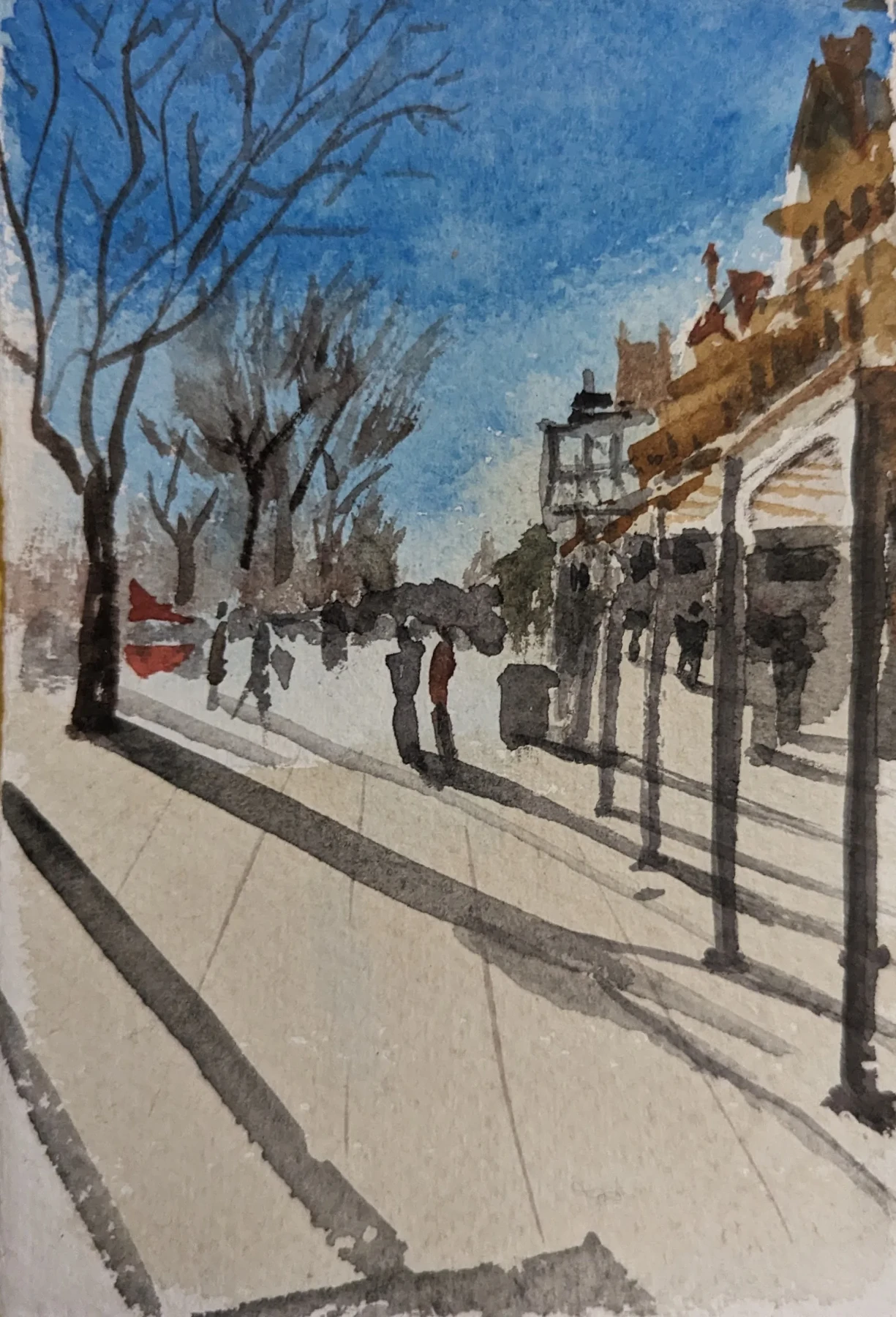
Ask about things you can inspect on the page: the size of a gap, the direction of a shadow, the contrast between a near edge and a distant one. Questions about whether you have developed a style are harder to answer before lunch. Style emerges through repeated decisions. Give it some decisions to work with rather than interrogating it at the door.
Keep the question while the subject changes
Try the same question in three places. If you are studying a strong dark against light, a shop entrance, a station arch and a café interior will each present a different version of it. Repetition does not require repeating a composition. The comparison helps you discover which parts of your method are reliable and which were simply fortunate on Tuesday.
Review by pointing
At the end, point to the part of the drawing that answers the question. If you cannot, make the question smaller next time. Write a short instruction for the next outing. A sequence of precise little investigations can take you much further than a stack of ambitious pages whose only shared purpose was to impress their maker.
Your turn · 15 minutes
Take it to the page.
- Write a question about one visible relationship before you begin.
- Draw for fifteen minutes without adding a second major objective.
- Point to the answer on the page and write the next question.
Look back: Was the question specific enough to answer from the drawing?
Sources & further looking
Close-looking observations and practical exercises are this publication’s interpretation. Illustration credits are shown beside each work.