Separate the kind of shadow
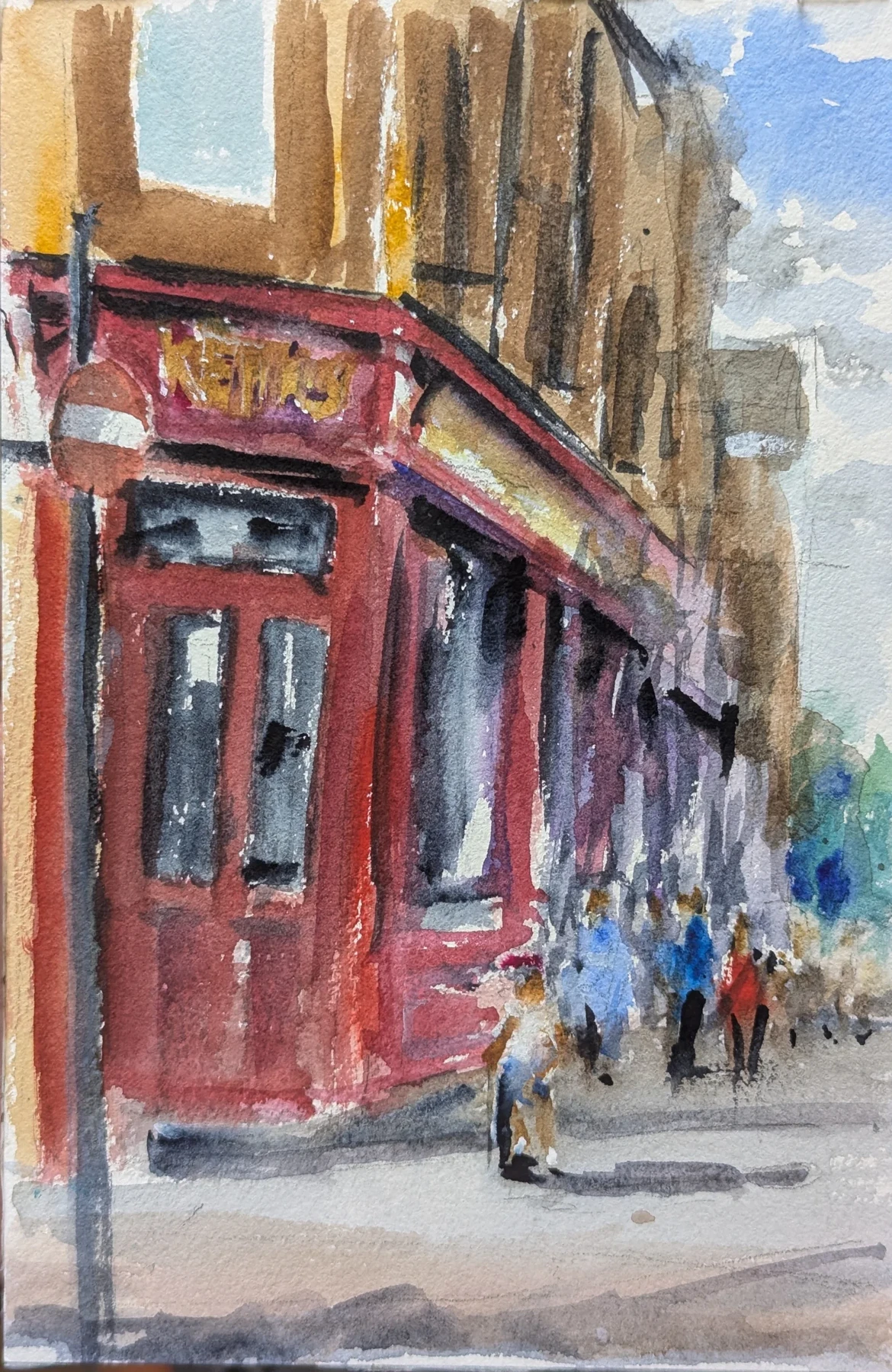
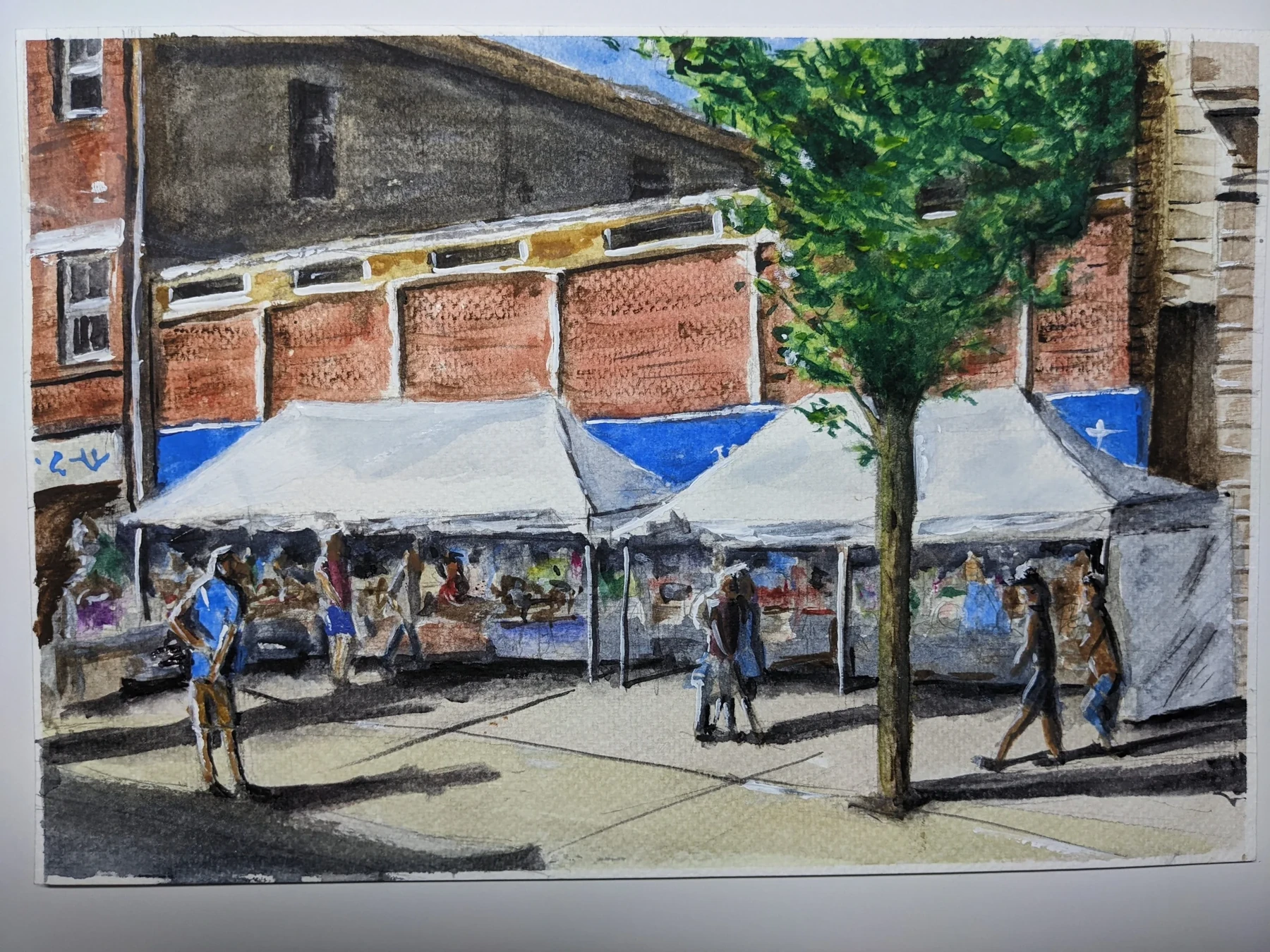
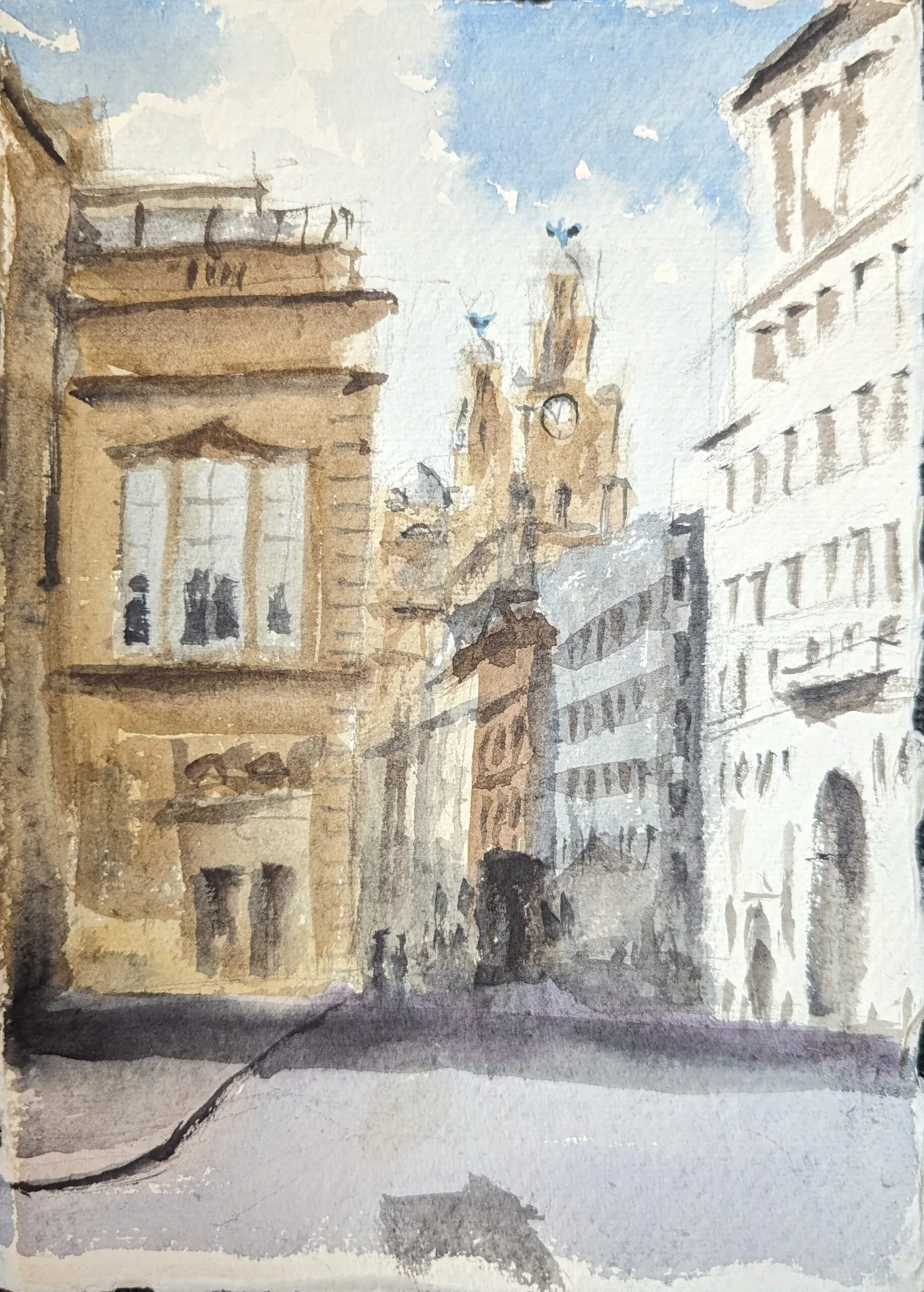
A form shadow lies on the turning surface of an object; a cast shadow falls onto another surface because light is blocked. On location they may connect visually. Identify the broad cast-shadow direction and the darkest contact points beneath feet, wheels and thresholds. These contacts often do more to ground an object than another line around its top.
Choose one moment
Sunlight moves while you draw. Make a small note of the principal shadow shapes early and use that arrangement for the study. Repeatedly updating every shadow to the latest minute can leave a street lit by several competing suns. If a cloud removes the pattern completely, keep your earlier observation or begin a different tonal study. Do not pretend the new light and the old shadow were simultaneous.
Keep the mixture related
A shadow is not automatically black or blue. Compare its value and temperature with the lit surface. Use a small test mixture, then lay a connected shape with as few interruptions as practical. Allow variations within the wash if they help describe the surface, but avoid fiddling until the paper starts drying unevenly. In the Southport companion painting, inspect how long dark shapes organise the ground before trying the same idea on your own pavement.
Your turn · 25 minutes
Take it to the page.
- Record the direction and outline of two cast shadows before details.
- Paint them as related shapes using one main mixture.
- Add only the contact accents needed to seat the objects.
Look back: Can you tell where the light came from, and which objects touch the ground?
Sources & further looking
Close-looking observations and practical exercises are this publication’s interpretation. Illustration credits are shown beside each work.