Draw the container first
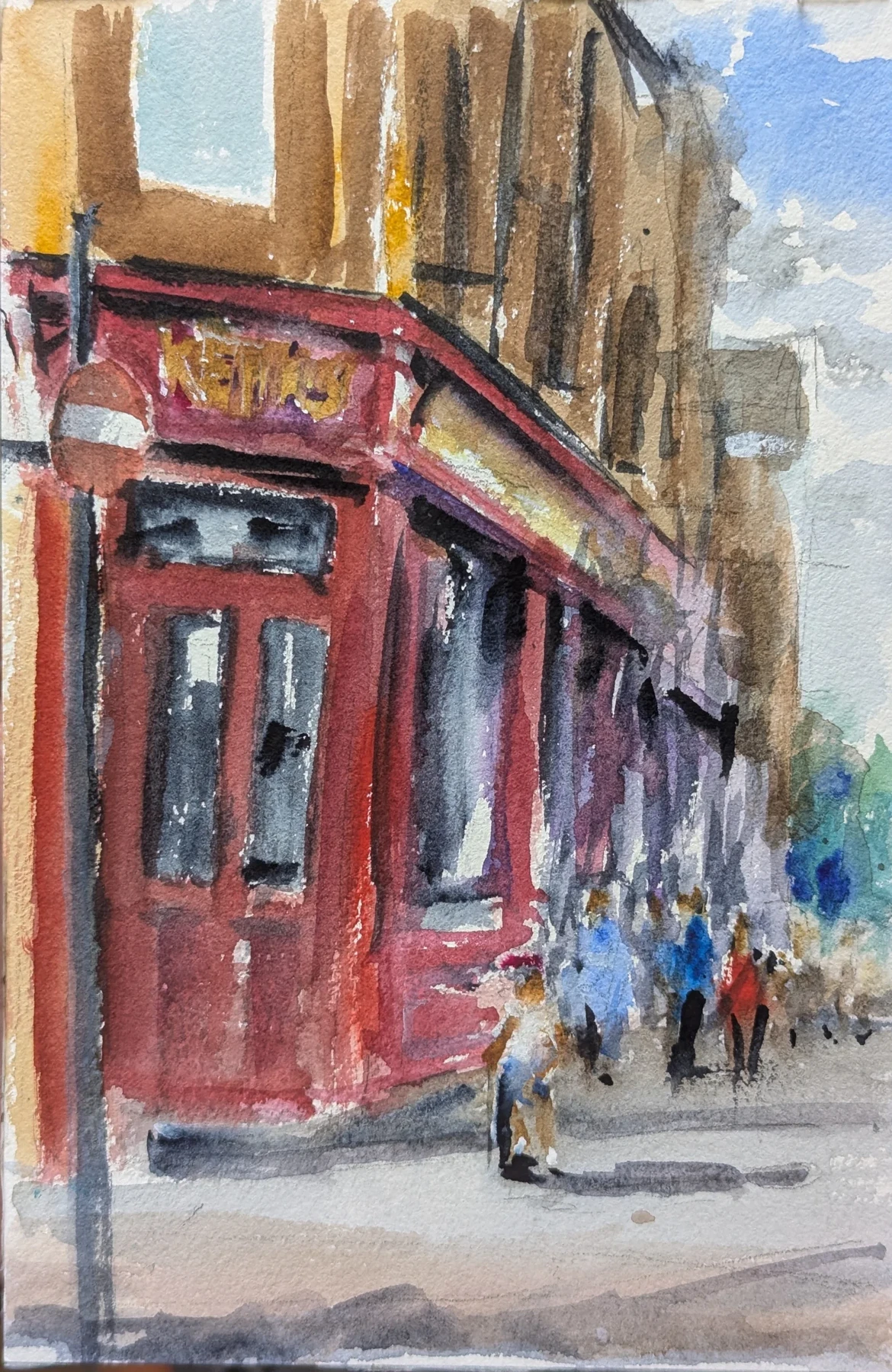
A sign belongs to a plane. Establish its rectangle, its angle and its relationship with the door or shopfront before writing. Lettering on a receding wall follows that wall’s perspective. If you begin by carefully writing the shop name in a horizontal line, you may discover that the building has politely turned away while the sign remained facing you.
Plan the word as a shape
Notice the overall length and height of the lettering. Mark its beginning, middle and end lightly, then distribute the most recognisable letter forms. On small signs, a rhythm of dark and light may be more appropriate than full transcription. If the actual wording matters to the story, record it accurately in a separate note as well. A sketch can simplify the appearance without inventing what the business calls itself.
Respect unfamiliar scripts
When you cannot read a script, avoid substituting decorative marks that pretend to be meaningful text. You can draw its observed overall rhythm at small scale, describe the sign in a caption, or verify the wording before featuring it prominently. Treat a language as language. Mark’s Chinatown illustration invites attention to the relationship between signs and architecture; use that question without assuming a decorative flourish tells you what a sign says.
Your turn · 20 minutes
Take it to the page.
- Draw a sign’s plane and boundary before any letters.
- Fit a familiar short word within it, checking perspective.
- For unreadable or unfamiliar text, make an honest visual study and record the limitation.
Look back: Does the lettering belong to the building, and is any quoted wording accurate?
Sources & further looking
Close-looking observations and practical exercises are this publication’s interpretation. Illustration credits are shown beside each work.