A collection of different decisions
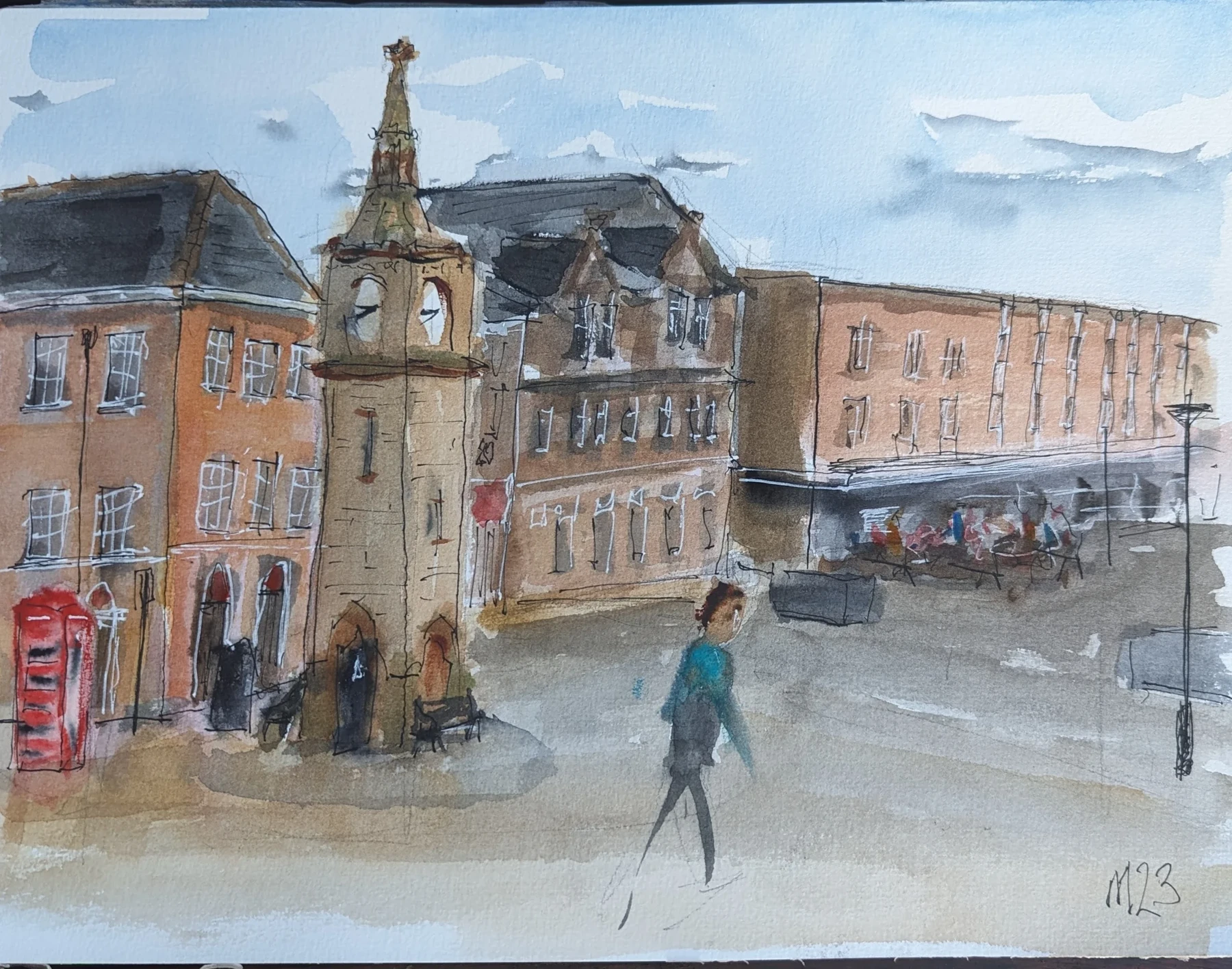
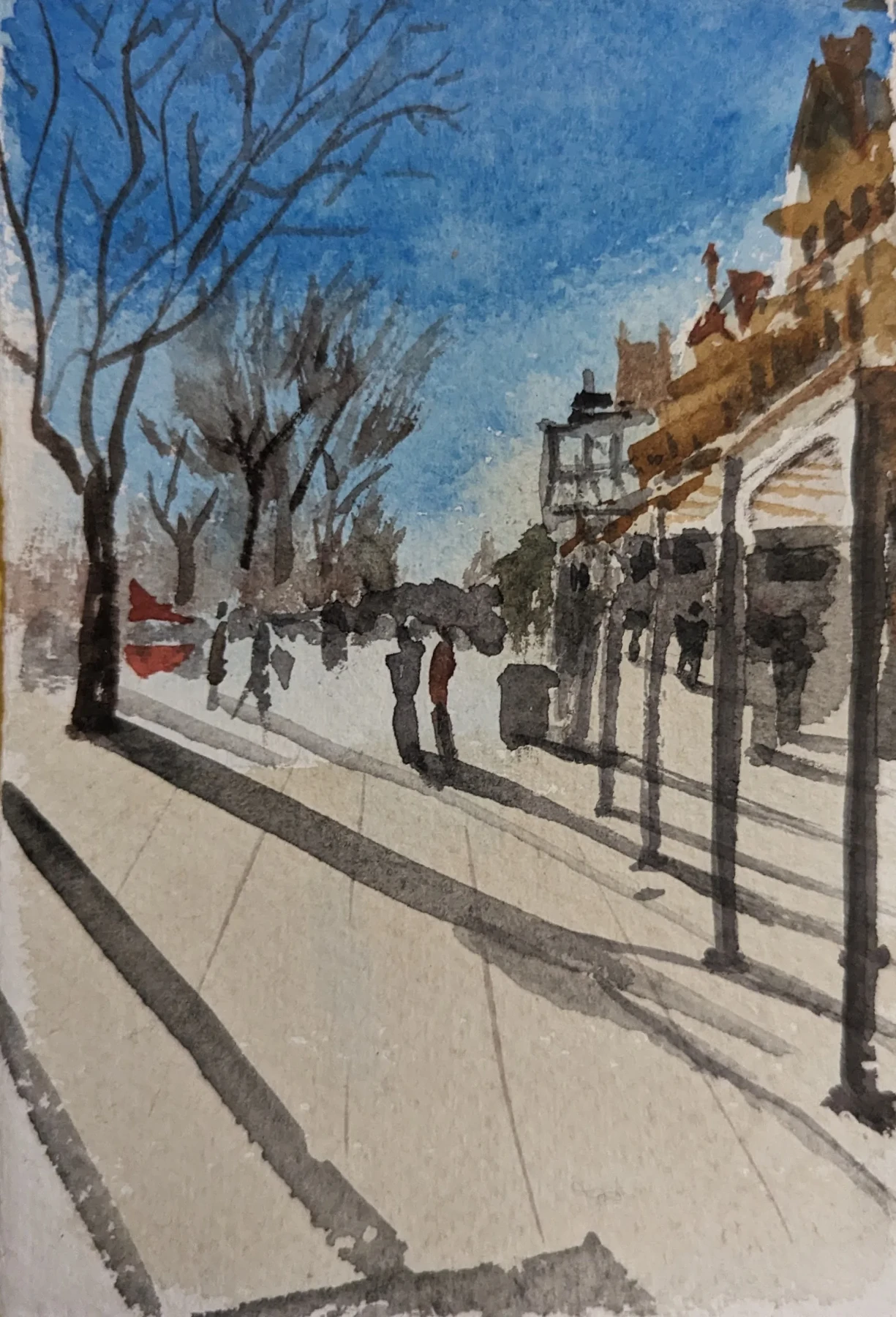
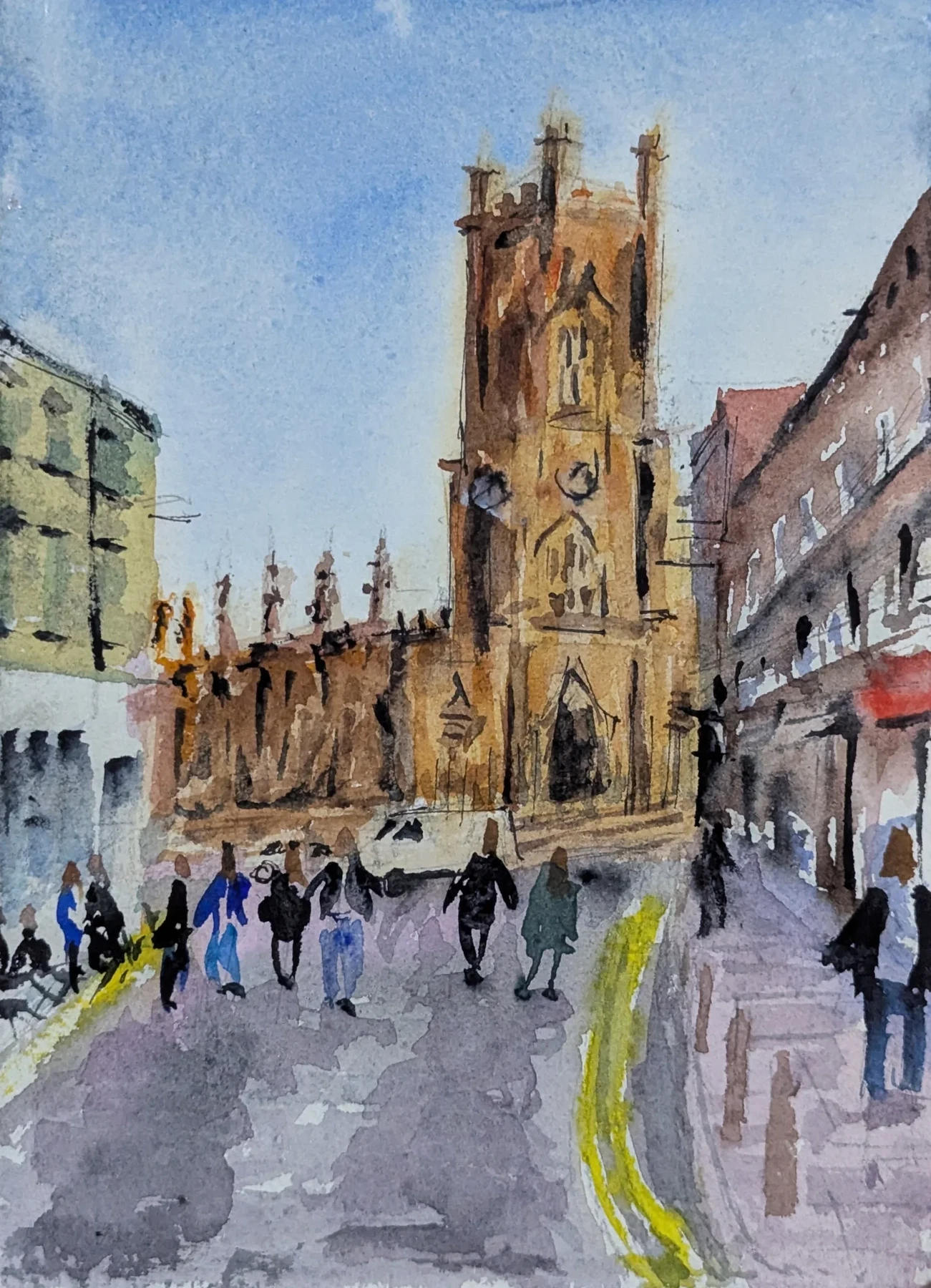
At a sketching gathering, a throwdown usually means laying the drawings out for everyone to look at. It can feel alarmingly like handing in homework if you have arrived with a page you were hoping to conceal beneath a scarf. Try treating the display as a collection of decisions. One person chose the whole street, another a doorway, another the people outside. They were not sitting the same paper.
Ask about something specific
“How did you decide where to stop the wash?” opens a useful conversation. “Why am I rubbish?” makes a stranger responsible for your entire creative future, which is a lot to put on somebody who is still trying to rinse a brush. Ask about a mark, a crop, a colour relationship or the order of work. The answer becomes something you can test rather than a judgement you must carry around.
Keep ownership of the page
You can show a drawing and say what you were exploring. You can also choose not to display it. Check before photographing other people’s work, credit the maker when sharing with permission, and follow the group’s own arrangements. Looking together is most useful when it makes the next drawing easier to begin. There is no need for a podium.
Turn comparison into a task
Choose one difference that interests you. Perhaps another sketcher left most of the sky untouched, while you filled yours with nervous weather. On the next outing, deliberately reserve half the page as open paper. Test the decision on your own subject. Copying the question is more useful than trying to borrow somebody else’s handwriting.
Your turn · 20 minutes
Take it to the page.
- Look at three different sketches of a place, with permission.
- Name one decision in each: viewpoint, tonal pattern or omission.
- Try one of those decisions on a new observed subject.
Look back: Did comparison give you a workable next step, or only a ranking?
Sources & further looking
- Illustration: Outside the Golden Lion, Ormskirk by Mark C Grant ↗
- Urban Sketchers: open, inclusive chapters ↗
Close-looking observations and practical exercises are this publication’s interpretation. Illustration credits are shown beside each work.