Make the problem smaller
Squint at the view until small detail becomes less insistent. Look for the lightest connected area, the main middle tone and a few dark shapes. These are groups, not three paints you must match exactly. A pale wall and the sky may belong to the same light group even though their colours differ. You are deciding which relationships carry the scene before giving every surface its own speaking part.
Draw the dark as a shape
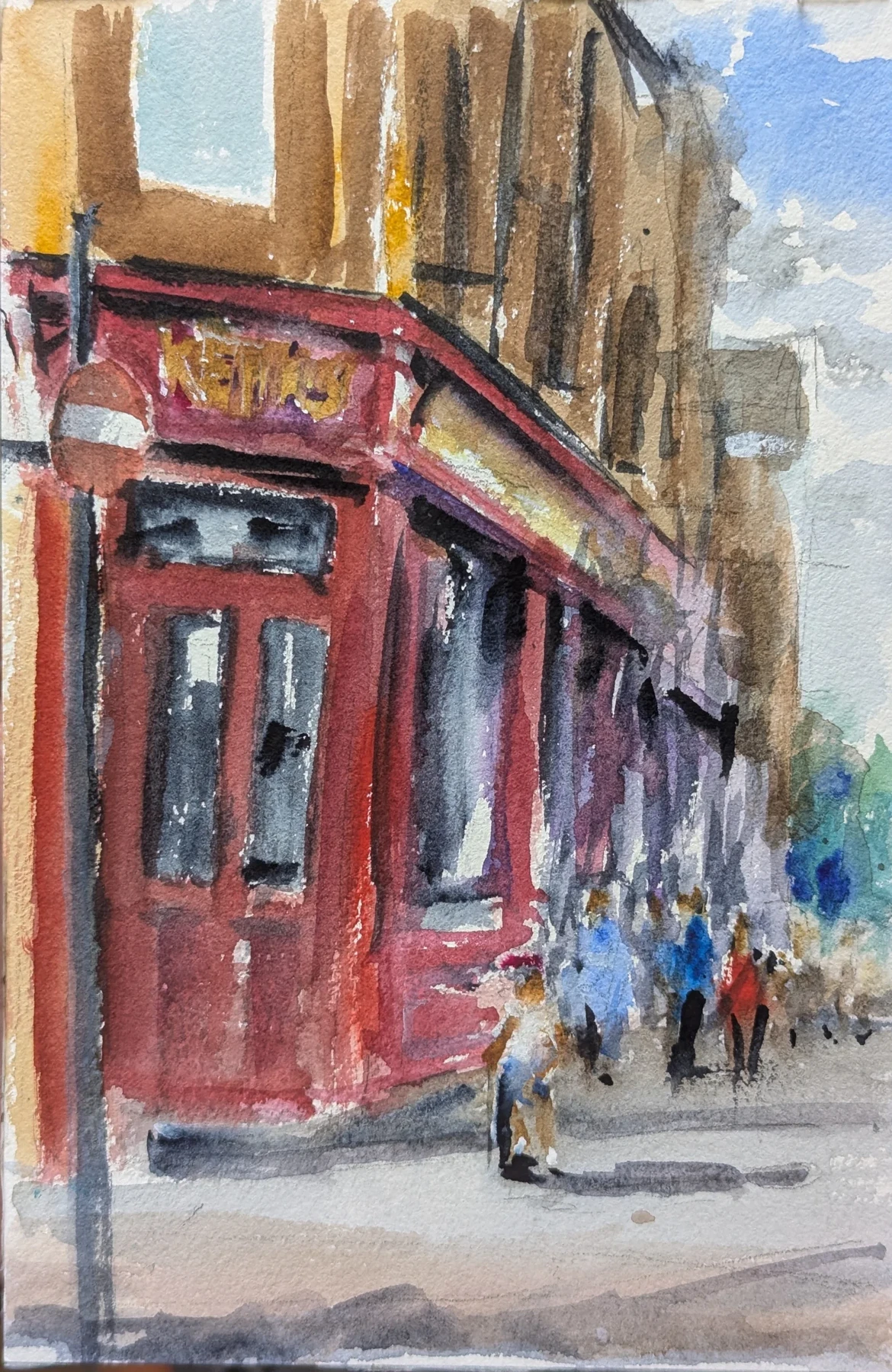
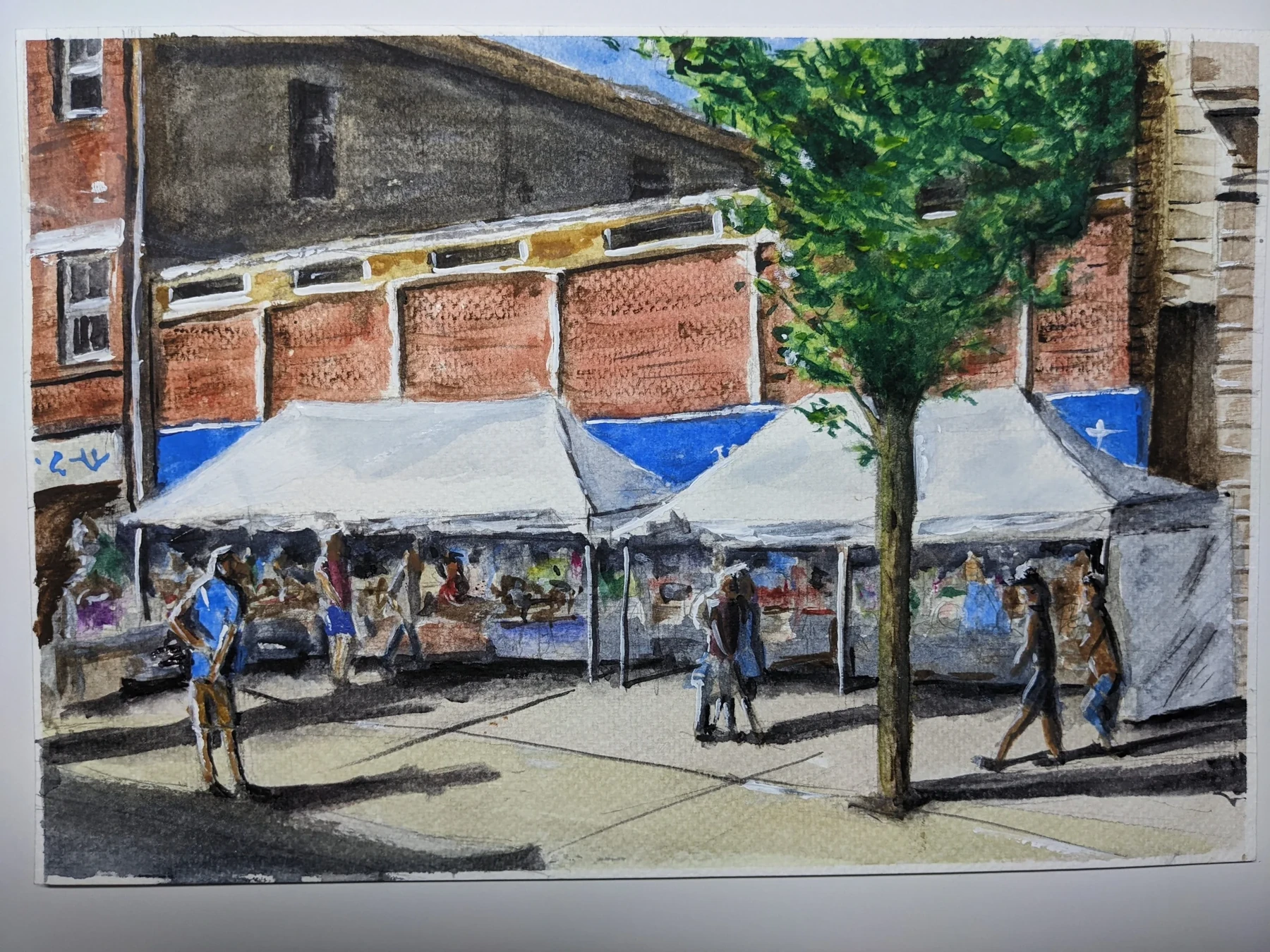
Make a thumbnail no bigger than a bank card. Leave the light as paper, use a diluted grey for the middle and a stronger mixture for the dark. Follow the outline of the shadow under an awning or inside an arch. Avoid colouring each object separately. If several objects join into one dark mass from your viewpoint, let the study acknowledge that connection. The drawing can remain legible without identifying every item in the shop.
Test before committing
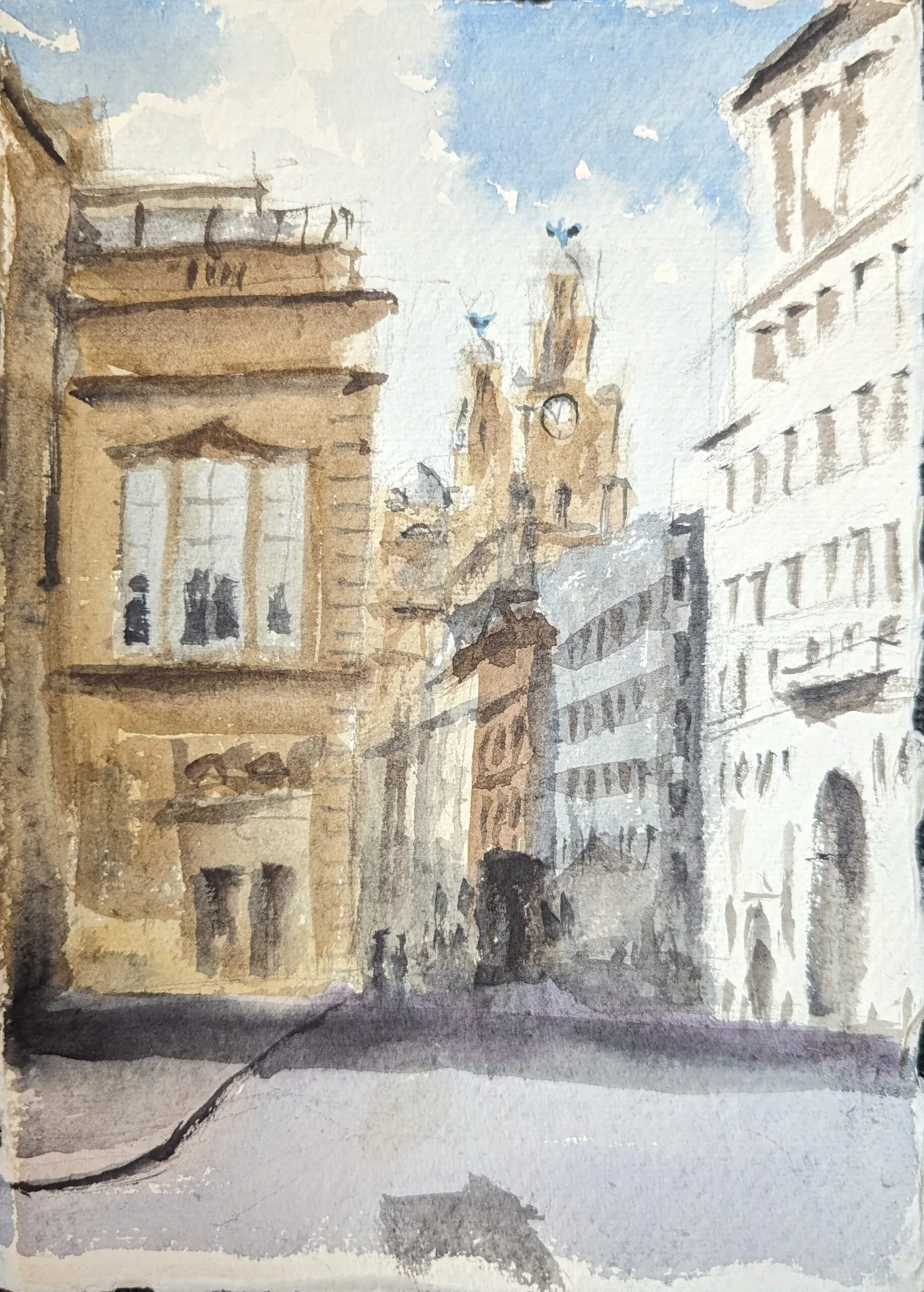
Hold the thumbnail at arm’s length. Can you find the intended subject? If the strongest contrast is at an irrelevant corner, change the crop or reduce that accent in the study. This is cheap information: a few small marks before a larger wash. In Mark’s Exchange Station painting, the building and its openings offer a useful example to inspect. Ask where the strongest dark takes your eye, then test the same question on location.
Your turn · 20 minutes
Take it to the page.
- Make three small frames of one view.
- Use only white paper, one middle grey and one dark in each.
- Choose the clearest arrangement before starting a colour sketch.
Look back: Does the subject still read when the thumbnail is held at arm’s length?
Sources & further looking
Close-looking observations and practical exercises are this publication’s interpretation. Illustration credits are shown beside each work.